Showing posts with label Writing. Show all posts

Monday, 12 March 2018

Where thoughtfulness lives: adelaide writers' week 2018 review

Monday 13 March 2018


It may be Australia’s longest-running literary festival, but Adelaide Writers’ Week shares little resemblance with the big-name east-coast counterparts that followed it a generation later. 

The event’s idiosyncrasies reflect much about the city that gave it birth: august, commodious Adelaide, temperate and traversable, capital of the festival state, with its surrounding circlet of parklands in which the Pioneer Women’s Memorial Garden could be an understated crown jewel. Far from the air-conditioned concert halls and crowded café venues of the Sydney and Melbourne festivals, Adelaide Writers’ Week passes in the open air and sunshine of this glorious garden. 


And it feels like a gathering in a forest clearing, an enchanted grove. You sit, encircled by a dwarfbrick wall and screens of greenery sun-washed and backlit, presided over by each panel as they hold court beneath the beneficent maternal gaze of Ola Cohn’s 1941 Waikerie limestone statue, a goddess of the glade. Overhead, a lacing of cables, fairy lights, tree branches and blue tarpaulin spans the space between six sentinel lampposts straight out of Narnia. There’s the constant imposition of planes passing above, and sun and shade sweep over you in shifts as the clouds roll on, offering the discussion cheerful or ominous punctuation. ‘That’s global capital,’ jokes the Wheeler Centre’s Michael Williams when a sudden darkness falls at Laleh Khavidi’s mention of gun stock divestment. ‘It doesn’t like what you’re doing.’ Beneath you are humble green plastic chairs like your nan has on the patio and, should they grow too hard on your backside, you’re free to plant yourself on the nearby grassy slope where locals snooze under hats and children periodically frolic a little too loudly. Kick your shoes off, lay back, close your eyes, and let the conversation wash over you. ‘It’s a pretty friendly festival,’ poet Pamela Brown summarises in response to an audience question. ‘The air’s good.’

Mem Fox reads from I’m Australian Too.

It’s simply different. Fanatical volunteers stand smiling guard over the bins, racing to intercede before any recyclable item is denied its rightful reincarnation by mistaken consignment to general waste. The dignified demountable bathrooms offer expensive soap and proper mirrors. For some reason, there’s a joey in the writers’ green room and, occasionally, in the audience.

And, indeed, everything about the event is free and easy. No pressure to attend pre-booked and paid-for sessions. You may come and go as you please between the twin stages that sit companionably close in the riverside park. Follow your fancy through a program as well-balanced and legible as Adelaide’s city grid—from the intimately personal to the sweepingly geopolitical, local to international, grand historical narratives to confessional poetry. Unbound by the confines of the indoors and its attendant fire codes, audiences expand and contract like a breathing organism according to the popularity of the speakers. Events at the more intimate west stage like The Life to Come with the radiant Michelle de Kretser send the crowd fanning out into the wings of shade beyond the garden walls and curling up the slope, while drawcards at the east stage such as insightful international heavyweight Barbara Kingsolver and the delightfully peculiar festival-favourite Robert Dessaix break the banks entirely to engulf the little island of the stage in all directions.


In such a setting, the thirty-third iteration of the festival assembled almost a hundred writers, loosely united, as outgoing director Laura Kroetsch writes in the event programme, by the concept of ‘change.’ Unlike the parkland setting, this theme is a convention endemic to all literary festivals, to any gathering of those most sensitive vessels of social anxiety and conscience that are writers. Aside from helping stimulate the book sales that sustain our wordsmiths, this, it could be said, is what writers’ festivals are for. They are time that attendees collectively set aside to pay attention to the things in our world worth writing about: the troubles plaguing democracy chronicled in a genteel Monday-morning dialogue between British philosopher AC Grayling and local journalist and commentator George Megalogenis. The fury and shame about Australia’s ‘extreme cruelty to refugees’ that inspired beloved and formidable festival dedicatee Mem Fox’s latest book I’m Australian Too. The capitalism-driven environmental destruction foreseen in the fiction of Cory Doctorow, Maja Lunde and Jennifer Mills. The institutional racism and radicalisation contemplated by Laleh Khavidi and Kamila Shamsie. The introspection and commitment to the common good Judith Brett finds missing in contemporary Australian politics. The threat of climate change to Pacific nations such as the Marshall Islands that poet Kathy Jetñil-Kijiner spoke of. And, most pervasively this year, the sense that somehow it is all going wrong. That meaning, the media, and politics have lost their way. That, in Kingsolver’s words, ‘the rules don’t apply any more.’ As literary critic Sean Hooks once wrote, ‘it’s all going south tout de suite—awry and amuck and astray, combustible, doused in petrol, the fuse already lit.’ 

Of course, attendees at such events tend to broadly agree on these topics, nodding and applauding so vigorously and universally that it is hard at times to understand why no one has done anything about them yet, to remember that this sample isn’t representative. We risk veering into self-congratulation, but we also remind ourselves we are not alone, steel our resolve, and reflect upon solutions. And, occasionally, answers arise. Australian Book Review editor Peter Rose’s eloquent question elicited one such (even more eloquent) answer from Queensland poet Sarah Holland-Batt: ‘Where does poetry sit in a world consumed by material objects, materialism, pragmatism, careerism, professionalism, managerialism, all those –isms?’ asked Rose. ‘How does poetry survive in a world so devoted to the object?’

‘Poetry,’ came Holland-Batt’s answer ‘really is the last […] vestige, the last bastion of a space where every word is consequential, where language is reduced to its most core purpose, to its most exacting, its most particular. A poem is a perfect machine where every word has its use, has its meaning […] Poems are the one place where sane and exacting language lives at the moment, in this morass of fake news and loose use of language.’

In other words, one of the ways we can save the world is: more this. More reading, more thinking, more discussion, more devotees to the compassion and rigour of literature and poetry, where standards of quality are cherished, not abandoned, where ethical engagement with the world persists, where meaning something still means something, where thoughtfulness lives, where we can learn the tools of discernment and critical thinking that allow us to dispatch the dissembling messages of governments and corporations and demand better. 

One of the ways the writers’ week instantiates this impulse is particularly fitting for the state where (white) Australian women first won the right to vote, the birthplace of Australian suffrage. Without explicitly stating it, without excluding anyone, it is on so many levels a festival by and for women. Dedicated this year to a woman writer, set in a garden memorialising the contributions of women, on and around International Women’s Day, it is a worthy alternative to a corporate breakfast agitating for more gender-representative economic inequality. This year the lost diary of Australia’s most influential woman writer Miles Franklin was even found during the proceedings. Among such auspices, it was impossible not to notice the makeup of the crowd—most abundantly middle-aged women, Australia’s largest reading demographic. A woman runs the festival, the discussions are most deftly facilitated by female chairs, and women appear onstage over half the time, often speaking on topics relevant to the cause. 

Next year’s Writers’ Week passes from Laura Kroetsch to Sydney Writers’ Festival CEO Jo Dyer. We can hope that, as an Adelaide native, Dyer will know how to preserve and enhance what makes Writers’ Week so unique and so very important as a home for careful thinking in a world of bombast and bluster.

Tuesday, 26 May 2015

Sydney writers' festival 2015

Tuesday 26 May 2015

I had an extremely limited, though, nevertheless, incredibly rewarding, experience at the Sydney Writers' Festival this year, mostly revolving around interactions with one of my favourite authors and the subject of my thesis, David Mitchell. Before the weekend was over, I would hear him speak at three events, meet him at two book-signings, and have my photo taken with him. 

Walking to see Mitchell a second time at the Theatre Bar at the End of the Wharf for Coffee and Papers with the Sydney Morning Herald and David Mitchell.


Mitchell and I after his third appearance (and my second book-signing) at the Roslyn Packer Theatre for 'Imagined Futures'.

My favourite interaction, however, was the first: Friday night at the City Recital Hall Angel Place event 'David Mitchell: Bending Time', where he was interviewed onstage by Kate Evans. The night had a number of highlights, including when Mitchell claimed to be, in fact, a novella writer rather than a novelist, an assertion Evans rebutted with a single heft of his latest 595-page behemoth, The Bone Clocks; when he revealed that the tea he was drinking was made accidentally with sparkling water (it happens to the best of us); and when he suggested that the key to avoiding the dystopian though all-too-plausible near future he depicts in The Bone Clocks is to 'vote in more idealistic politicians who will need to pass things that cause us some financial pain' and not to 'listen to demagogues that says, 'Vote for me and I'll scrap the carbon tax', met, of course, by enthusiastic applause from the predictably assenting literary festival audience.

Kate Evans interviewing David Mitchell, sparkling water tea in hand.

Two questions before the end of the interview, Evans invited audience members to start making their way to the microphones positioned around the hall. As she asked her final question, I noticed they were all still vacant, so I plucked up my courage and seized the opportunity. When I got to the microphone, Mitchell was still making his way through his answer. I felt conspicuous standing there, ten or fifteen metres away from where they were seated onstage, blocking the view of the audience members behind me with my not inconsiderable height, so I decided I would crouch in the aisle, which also felt somewhat ridiculous, but the best choice under the circumstances. 

Then came my moment. 'Now, is anybody going to make their way to—' began Evans, before I sprung up from my position like a Jack in the Box.

'Hello!' said Mitchell jovially, before assigning me seven years good luck for being his first questioner and offering me some of his (nearly entirely in tact) block of Cadbury's vegemite chocolate.

'That's actually kind of relevant to my question', I began. The whole event was recorded and broadcast by Radio National, and you can hear our full interaction from about 37:45 here (look for number 7. 'David Mitchell – The Bone Clocks'), but here's a summary, starting with my question:

'So, I just wanted to say thank you first for coming and speaking to us and your wonderful work. Cloud Atlas actually really changed my life ... mainly through kind of clarifying my personal ethics, just by thinking about it a lot and the ethics that I find embedded into it. One of the main things was that it kind of removed the last ethical blocks that I was putting up into vegetarianism and now veganism. So I couldn't take you up on your offer to eat the chocolate.' We laughed. 'You were talking before about how, you know, we make ourselves feel better by dehumanising those that we exploit. And I wondered if you have any feelings about the way that that would apply to eating animals and farming animals and killing animals.'

'Yeahhhhhhh ...' he said in a long, thoughtful sigh. 'Not a contentious question, then!' he added, eliciting a round of laughter from the audience. 'Uh, thank you. Yeah, you're right. Thin ice, because I'm not a strict vegetarian. I'm an occasional guilty lifeform-eater. I'm riddled with hypocrisies and this is one of them. I don't eat mammals any more, though, um, because—because they love their mums, and they don't wanna die.' 

We all laughed at this. 'I'm glad to hear it!' I enthused.

'And their mums love them as well', he added. 'I'm sort of working towards where you are, I suppose.' For some reason this struck us all as hilarious as well. Perhaps the incongruity of it all – that I had hijacked the event to talk about animal rights and, unexpectedly, I suppose, for many omnivores in the audience, Mitchell was agreeing with me.

The best response I could offer, as an aspiring writer speaking to one of his literary idols was, 'I'm working towards where you are as well,' which the crowd loved – the round of applause that followed is clipped from the Radio National recording, but it was there!

From there he discussed his progress in slowly crossing birds off the list, and then fish, and how it's interesting to think of the shock that would ensue if it became part of the syllabus to send secondary school students to abattoirs to learn about the process. He concluded his answer by saying something that took me quite by surprise:

'You seem incredibly healthy. You sort of radiate health,' he said. 'You're a walking advertisement for veganism,' prompting another burst of laughter. Personally I'd attribute any glow to the fact that I was talking to a literary legend and he was speaking positively about veganism, but I'll take it. 'You just seem one of those healthy people. You know sometimes you see someone and they're looking a bit "uhhhhh"' – here he made a groaning zombie noise. 'You had an enormous slab of cow for lunch, didn't you?'

For the rest of my interactions at the festival this question gained me some sort of notoriety. Immediately afterwards several people congratulated me on asking it, and everywhere I went afterwards people would say, 'You're the one who asked that question!' It also meant I stuck out in Mitchell's mind, so that he had some personalised messages for me when I got my books signed. I couldn't be happier that the man who wrote the book that set me on my current path, and who continues to delight me with his fiction, is of a similar mind to me, and is on his way to fully embracing the ethics that he so talentfully depicts in his work.


Helen Razer and Bernard Keane at the only non-David Mitchell event I got to attend.

My haul from the festival – all signed!


Thanks for reading!

LPL

Tuesday, 22 April 2014

Little garie and the hidden shack communities of sydney's royal national park

Tuesday 22 April 2014

For someone whose entire life can be characterised by migration back and forth between Wollongong and the Sutherland Shire, the obstacle that separates these two places, Sydney's vast Royal National Park, is a constant presence. In my nearly twenty-five years I've made the move on no less than five occasions, each time leaving behind friends and family who needed visiting, so I must've taken the hour-long journey around and through the park, by car or by train, thousands of times.

In the original sense of the word, then, the park has been geographically pivotal for me: the central point around which my whole life has swung. So in the spirit of 'writing what you know', this 16,000-hectare conservation area seemed the perfect space in which to hide the hermit protagonist of my inchoate novel 'The Innocuous Death of Irving Crabbe'. It wasn't until I was voicing this idea to my nan, though, that I was informed of the extraordinary fact that the world's second-oldest national park already secretes within its depths a handful of isolated shack communities.

But apparently I wasn't alone. Surprisingly few locals, whether Shirefolk or Wollongongers, seem to be aware of the four micro-communities of Little Garie, Era, Burning Palms and Bulgo, each accessible only by walking track, which have been established in the park now for over a century. It only took a little investigation to reach the conclusion that I needed to incorporate these idiosyncratic little colonies into my book in some way. I was sold.

And so it is that at 10am on an inclement Sunday, just over a year after that initial discovery, I find myself on the wind-blown grass of Garie Beach in the heart of the National Park, accompanied by a fittingly representative mix of friends and family from both its Sydney and Wollongong ends. My nan brings three other family members from the south, while high school friends and fellow Sydneysiders Charlene and Alexandra (who accompanied me on my first excursion to the communities a year earlier) drive in with me from the north. They have all kindly agreed to join me for the annual National Heritage Trust Festival walking tour of Little Garie (the most accessible of the four communities and therefore the only tour not to have been cancelled due to the weather), where I'm hoping to learn more about the lives and history of the shackdwellers.

The glorious view from Garie Beach on our previous (much more temperate) visit.

We huddle against the wind and I make my introductions as my filial and social worlds collide, milling about a picnic table while we wait for all the attendees to arrive. We are surprised by how many people show up, perhaps a couple dozen: active middle-aged couples in hiking gear, a young migrant family with an adorable baby, and the various other pleasant, solitary grey-haired oddballs you find at such events, enthusing politely and asking earnest questions like garrulous mature-age students at uni. My friends and I are conspicuously the youngest adults there, later earning us the moniker of 'the young ones' from the event coordinator Kerry, who soon makes herself known and leads us on a narrow path towards Little Garie nestled between the cliffs on one side and the beach on the other.

Family: Nan, Eddie, and great aunt and uncle Christine and Stewart bringing up the rear. The 'most accessible' though it is, all the materials that comprise and fill the shacks of Little Garie would have to have been carried along this narrow path, including the heavy old kerosene fridges and cast-iron fireplaces.

The view from the track, with the rocky plateau where the shackholders meet for elevensies in the foreground and some of the Little Garie shacks beyond.

Warm and quick to laugh, Kerry strikes me over the course of the day as the most socially conscious of the guides, trying visibly to keep speeches from her fellow guides on track, forewarning us of the more notoriously loquacious shackholders and hurrying along any groups that linger too long in any one dwelling. She guides us up a steep hill, which she assures us is the only one we will need to contend with, to the characterful Little Garie community hall and chapel, where we are to meet the rest of the guides and residents: Tim, Peter, James, Gary, Tony and more. I didn't take any photos on this occasion, but I did take some during the 2013 visit:


Kids playing with a kart outside the hall.

In the hall we learn that the first shacks in the area were holiday cabins built from 1910 onwards on land rented from the owners, forty years before its incorporation into the National Park. Later during the Depression, the communities swelled as unemployed miners from nearby Helensburgh moved into the area. Once the land was resumed in 1950 after lobbying from the shackowners to protect it from property developers, no new shacks were permitted to be built. The existing shacks could, however, still be bought and sold until the mid-1960s when the land came under the governance of the newly formed National Parks and Wildlife Service (NPWS), whose policy was to remove the shacks once their owners died. This led many families to just continue paying rent under the pretense that their deceased relative was now a decagenarian. Nevertheless, the NPWS succeeded in demolishing around 50 shacks during this time. Apparently the removal of the shacks ranked in the top two things former NSW premier Bob Carr wanted to get rid of during his time in office, during the same time heritage authorities were clamouring to protect them.

Today the shackholders are council workers, medicos, PhDs, engineers, sugarcane farmers, coal miners and all manner of other professions. Indeed, one of the most distinctive shacks we would see, brimming full of fantasy novels and half built of stones that leak when it rains, is cared for by a kindly Woolooware High School science teacher/archaeologist/Egyptologist. Each shackholder pays circa $3,000 a year in rent, and they are entitled to have up to four names on their leases. Very few of them live in the shacks fulltime, but they visit frequently on weekends and stay for long periods over summer and during winter holidays. The custodians of such a prized coastal idyll might be expected to guard their closed community jealously against outsiders, but the open day shows their attitudes to be the opposite. In fact, it is due to their efforts to the contrary, largely exercised through the Royal National Park Coastal Cabins Protection League (RNPCCPL), that the NPWS' policy of shack removal has latterly been overturned. The communities' demonstration and celebration of their unique cultural heritage has led to its recognition by several various heritage authorities, and the open day itself, we are told by bright, eloquent RNPCCPL president Helen Voysey, commemorates the listing of the communities on the State Heritage Register in 2012.

The promulgation of the shack communities' culture being one of the goals of the day, the shackholders are eager to impress upon us the importance of the shacks in their lives. 'We're very heartfelt. These aren't just some place we come and have fun, stresses Kerry. 'These are a part of our structure, our DNA.' She also emphasises the intimacy of the Little Garie community, noted among the four for its closeness, citing how quickly secrets spread among the shackholders, and their daily ritual of elevensies. Another community member adds that there are regularly five generations in a shack, and Helen concludes that 'Heritage is not just your big stone buildings and your government houses; it's your little shacks where people survived the Great Depression and where people carry on a kind of holiday recreation life.'

Another point to which the shackholders continually return is the effort involved in maintaining their seaside escapes. Possessed perhaps of an ingrained sensitivity from the parlous state in which the shacks existed for such a long time, they seem to want to prove that it's not all just the bucolic retreat and pleasant weekends surfing and fishing in the sun that visitors might think, that it's not only through the luck of birth or marriage that they come to enjoy their shacks, but that they have earned the privilege through their hard work preserving and maintaining them. Peter characterises the task as a fulltime job, battling the wind, storms, and vandalism. Their $3,000 a year is the price for the location alone; it doesn't buy them the amenities, roads, pathways, infrastructure the ordinary taxpayer expects, nor the community services ratepayers enjoy, nor the upkeep on which ordinary renters can depend. The shackholders seem to do most of this themselves. They constructed the stairway we trudged up to reach the hall, Kerry told us, when the NPWS wouldn't pay for it and visitors kept injuring themselves. My friends and I happened to be there that day on our previous trip as the men sweated, heaving rocks up from the river to sink into the earth as platforms to stand on. I even recognise some of the shackholders in the hall as the smiling faces of people who greeted us and wished us well as we passed through that day, giggling in their swimmers with champagne glasses in their hands.

One of the shackholders carries a stone up the hill to use in the construction of the stairs.

Throughout the day we would be regaled with such tales of the shackholders' diligent ingenuity and resilience, from the construction of the stone shack from boulders rolled down from the hills above to its more recent repair when the roof blew off in one piece. Fences have been erected to prevent rockfalls and protect and hold back plant species. Days have been spent clearing the brush of the decades worth of shattered glass from the beer bottles of the shackholders' antecedents. An agreement was made for the community to take over the upkeep of any shack whose owner grew too old to maintain it themselves. And then there is the shacks' most persistent enemy: whiteants.

Some of the shackowners of years past were more creative in their bottle disposal methods. Each of these show their brewing year on their base, some dating back to the forties and fifties.

We are informed the floor we are standing on in the hall has just been replaced for fear that it wouldn't hold up underneath us after whiteants (or termites) had been at it. The first shack we are led to in our smaller group, in fact, is a thoroughly comfortable and modern-looking, caravan-style dwelling which owes its contemporary feel to its previous degradation by the voracious little insects. The shack belongs to Tony, a friendly bloke jokingly referred to as a 'blow-in' for his measly two decades in the community who was invited in when the former owner of his shack was no longer able to care for it and had no willing heir to take up the responsibility. Tony restored the shack and, in the process, added a few mod-cons. The internal bathroom is tiled, the walls are smooth and a TV plays a DVD about shack life in the background.

Tony speaking to us in his 'beach shack'. Many of the shacks feature these little signs, which in another context might be considered tacky – cheap, mass-produced knick-knacks hawked by imitation-high end homeware stores to ironically adorn the holiday homes and beachside investment properties of affluent city-dwelling bourgeoisie. But somehow I think the shackholders are more entitled to make use of them than these usual purchasers.

The contemporary style of Tony's shack represents another theme that permeated the day. Kerry has encouraged us to ask questions of our guides, saying, 'They're passionate about their shacks and their ideas'. In the way of so many people who lead eccentric lifestyles, who harbour some desire to retreat from ordinary life, whether innate or bred into them by a lifetime of shack holidays, many of the shackholders seem to have eccentric or strongly held views. Of course, I only had a few hours contact with them, but even in that time I feel I was able to detect a few of these unguarded opinions, which seeped into the conversation at any opportunity, the way we vegetarians wait for any vague allusion to meat-consumption to pounce on. Kerry and the others hint laughingly a few times at the strife that arises between community members occasionally, as with any family, saying she thinks it's what makes them so close. One of the divisions I pick up on is between those who have updated their shacks and the purists who 'don't like the modernisation of the shacks' and prefer 'to keep them as humble as what they were when our parents had them', in Kerry's words.

Tony, I think, may be omitted from this mild resentment because his was a restoration of necessity, but when she takes us through her shack, passed down from her husband Gary's parents, Kerry remarks that some shacks even have Foxtel, adding, 'We ain't going down that path!' Later in the last shack we'll see we are astounded by the decorations. Books line every ledge and splay over every surface (I'm impressed by the presence of Winton and Dawkins). Entire walls are covered in patterns formed from wine corks, which seems a local fashion, while others are plastered with photos depicting festive evenings on the grog with not a few bared breasts and bottoms. Snake skins and cicada shells dangle from the rafters, dead sea animals hang in the windows, along with paraphernalia of every other kind scattered everywhere: a Navy sailor's hat that washed up on shore, artwork by the grandkids, ancient photo albums, a telescope. Awed as we enter, the owner says pointedly, 'Yeah. This is a shack. A real fisherman's shack', as if in distinction from the less authentic modern shacks that surround it.

This shack was the most exciting to me because my hermit protagonist's shack is similarly brimming with the objects he collects, and ideas were rich for the harvesting here.

All this conjures the image of a secret Little Garie cabin elite who behind closed doors thumb their noses at the unenlightened shackholders turning their abodes into the holiday-home equivalent of McMansions, and I tend to sympathise. Certainly the most unchanged old shacks are the most fascinating, both for my friends and me as a window into the past and as nostalgia for those of the older generation in attendance. Nan lights up when we enter one old shack with a hand-wound laundry wringer out front, still furnished in the old style within. Other people seem more interested in these older-style shacks as well – this shackholder proudly shows us the magazine article in which he featured, and Kerry tells me a Tropfest film was shot there last year.

Another strong and not-so-hidden view that pervades the community is a lingering contempt for the NPWS, understandable given the historical animosity between them. Helen describes the history as a pendulum swinging, and expresses a hope that one day it will eventually stop somewhere in the middle. At first the authorities liked the shacks, she says, because they wanted the revenue. Then the pendulum swung and the idea that national parks would be without people rose to prominence, before it swung back to recognise the value of human heritage. (It occurs to me that this is much more elegant and obvious metaphor for my 'stratigraphy of argumentation', which I later learned was an unconscious permutation of the Hegelian dialectic). Ever the PR liaison, Kerry speaks frankly about the rift but ends on a decidedly hopeful note, saying 'we're starting to get on an even footing now', only to be undercut by a more embittered community member who adds, 'Well, some of us are' in what is just one many veiled and unveiled digs at the (older) rangers and the NPWS throughout the day, and not without reason. In the hall after thanking us for our interest in the valley Kerry tells us it is 'important for us to get out our history, as in, the truth, let's say, not a skewed version.' We are told about one ranger who still works at the park who allegedly sunk an axe into a kerosene tank and, when asked why, reportedly answered 'So you bastards can't use it.' When bushfires swept through the region and the community evacuated, they came back to find the words 'Burn you bastards, burn' scrawled on their blackboard, supposedly by the same ranger.

The other strongly held beliefs of the community appear to be environmental. Kerry points out that the community has been forced to abandon their kerosene fridges for high-tech solar ones due to the unavailability of parts. We are introduced to at least one 'solar nut' and his solar-powered shack, as well as Peter, an affable 65-year veteran of the environmental movement, whose shack was one of the last legally bought Little Garie shacks . An engineering consultant by trade as well as a Landcare volunteer, Peter seems to be the resident historian of the community, claiming to have spent a lot of time researching to determine that the Royal National Park shacks are absolutely unique in Australia as non-road accessible coastal cabins built legally on freehold land. He distributes flyers about the communities entitled 'Living Heritage'. 

Peter's experience of the environmental movement is fascinating. It must be bizarre to have been in a movement from its inception as a fringe concern and watch it ascend to mainstream acceptance. 'I can assure you it was not very popular,' he says in the hall. 'You were considered to be a Grade-A screaming nutter'. This is a pertinent example of our tendency to underestimate how much things can change in one lifetime, and a reminder not to measure the worth of ideas by their extremity in relation to the current norm, but on their own merits. In sixty-five years there will likely be an entirely new norm that may embrace what once seemed radical. 

Peter's shack.

Peter.

Before Peter speaks in the hall we are jokingly warned not to ask him about climate change. He goes on to say that the environmental movement has been 'hijacked by radical nutters who really don't understand the issues'. He may have a point and his example of the protests against hazard reduction burning is hard to argue with, but I found myself hoping this friendly and knowledgeable figure wasn't a denier of anthropogenic climate change, although the warning not to ask him about it could be interpreted either way.

The tour over, the various smaller groups reconverge on the hall for the sausage sizzle the shackholders are putting on. Alexandra and I duck back to the car to retrieve our Eski full of a vegetarian feast and sit in the grass a short distance away, attracting gratifying comments from various passersby that they're jealous of our lunch. A Little Garien hawking raffle tickets offers me the 'lucky ticket' 69 (appropriately the one from the shack featuring the lewd photographs) and I purchase some giftcards featuring paintings, photographs and drawings by a local artist to add to the nascent wall collage next to my desk to inspire me. Meanwhile, Charlene prompts my nan to buy me a 'Shacks Forever' shirt by pretending I told her I really wanted one.

I thought myself lucky to find the two paintings of the swamp wallaby, as one significant section of my novel revolves around one such wallaby who lives in the park.

After that the weather finally gives out and the rain drives everyone back inside the community hall. Fearing that the locals would take issue with an outsider coming in to tell their story for them, I was hesitant to mention the novel to anyone. My nan, however, fearlessly informed both Kerry and Helen, who thankfully responded with nothing but polite enthusiasm, obligatory though that may. But I'm glad, because it got me both some tantalising traces of stories to follow up on, some regarding the real hermits who inhabit the national park, as well as some great contacts, especially Helen, who welcomed me to contact her when I needed more information, something I will definitely be doing when the time comes. I'll also, I'm sure, be making many more journeys to the National Park to continue learning about the extraordinary communities to be found in this place which is so central to the geography of my life. And maybe when I do, at Charlene's suggestion, I'll be wearing the shirt Nan got me. 

Shacks forever!


Thanks for reading

LPL

Note: If anyone depicted visually or textually in this post wishes their name or image to be omitted, please contact me. Feel free also to contact me with any questions, corrections or complaints.

Tuesday, 16 April 2013

Beginning with the title

Tuesday 16 April 2013
Edited Friday 23 August 2013

'The title always comes first, to me and to the reader. I’ve written many stories and articles just by doggedly following the title' – Guillermo Cabrera Infante.

Infante strains to devise one of his characteristic, diabolically paronomastic titles.

If there were such things as patron writers like there are saints, Guillermo Cabrera Infante would be the patron of titles. In a single interview in edition 75 of the fantastic 'Art of Fiction' series in The Paris Review, for example, the word comes up some 21 times. In fact, he seems to have been a little obsessed with them, making him a fitting epigraph for this post.

I can't say I'm as devoted as old Saint Guillermo to the art of the title, but I do of course appreciate its importance, and I do admire a good one. At some point I'll post the premise of 'The Innocuous Death of Irving Crabbe' here for those who don't know but, before I do, I'm interested in people's opinions of the title. 

To be honest, it's not the kind I would usually go for; my favourites tend to be interesting sentence fragments. In my own work they're usually resurrected little darlings lifted from within the body of the text during the drafting process from a place where I've taken it one step too far, overstated something, as with 'These dying hours'. That, or a fragment from a relevant quote like 'All these, all our meagre losses' from Lina Sagaral Reyes' poem 'The Story I Would Have Told You Had I Met You Yesterday', or 'Some have entertained angels' from Hebrews 13:2, 'Be not forgetful to entertain strangers: for thereby some have entertained angels unawares'. (And then, of course, there are the times you happen to be writing an article defaming a public figure named Bede, which also happens to be the name of a seventh/eighth-century monk whose title, 'the Venerable Bede' is just begging to be inverted.)

Infante might be the most enthusiastic titler but, when it comes to the fragment title, Hemingway is the undisputed champion. All his titles are amazing, but especially stellar exemplars include The Sun Also Rises, A Farewell to Arms, For Whom the Bell Tolls, A Moveable Feast, 'Hills Like White Elephants' and 'A Clean, Well-Lighted Place'. I love the way these titles suggest belonging to something larger, or contain within them a verb or the suggestion of a verb, or just use any other form than the standard, 'The XYZ'.


When Hemingway's titles do follow the more conventional format, they're always redeemed by the interesting words contained therein, often poetic, curious combinations, slightly discordant in their adjacency, fabular in their construction: The Old Man and the Sea; 'The Gambler, the Nun, and the Radio'; 'The Faithful Bull' – what do these words have to do with one another? How do they come together? Good titles, I think, provoke such questions, and chime euphonically in the ear and the mind. Other examples include Arundhati Roy's The God of Small Things, Merlinda Bobis's The Solemn Lantern Maker, Markus Zusak's The Book Thief, Jean-Dominique Bauby's The Diving Bell and the Butterfly, and David Mitchell's Cloud Atlas. There's something magical in all of them.


Dull offenders of this kind include Orhan Pamuk's The Museum of Innocence, David Wroblewski's The Story of Edgar Sawtelle, and Carlos Ruiz Zafón's The Shadow of the Wind (though perhaps this last sounded less clichéd in the original Spanish).


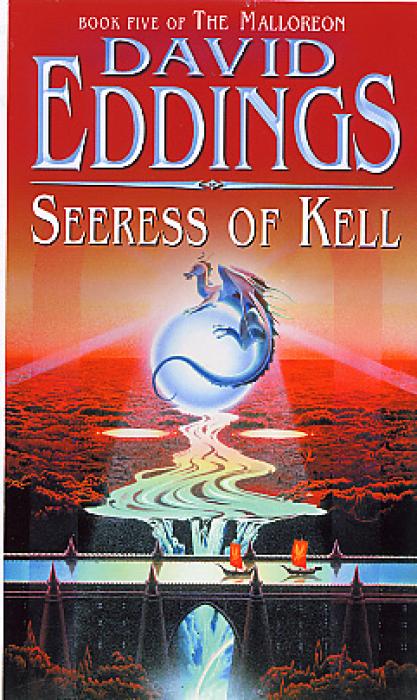
And I don't think the curiosity-piquing 'magic' of these titles when they work can be replaced with references to made-up peoples and place names that nobody knows or cares about until they read your books. David Eddings' Malloreon springs to mind, featuring such obscure, repetitive, banal titles as Demon Lord of Karanda, Sorceress of Darshiva, Seeress of Kell or, rather, Magical Person of Bad Made-up City Name 1, 2 and 3.


Goodreads has a list of the 100 best book titles as voted by users, and I think they largely get it right (with the notable exception of Khaled Hosseini's A Thousand Splendid Suns, which I cannot abide). The list is topped by Philip K Dick's Do Androids Dream of Electric Sheep?, Seth Grahame-Smith's Pride and Prejudice and Zombies and Ray Bradbury's Something Wicked This Way Comes, also including such favourites as Jonathan Safran Foer's Extremely Loud and Incredibly Close at number 49 and Italo Calvino's If on a Winter's Night A Traveler at 84. I was surprised the omission of Lionel Shriver's We Need to Talk About Kevin and David Foster Wallace's Infinite Jest, though. And there are also very few or no one-word titles, which suits me. I'm generally not a fan, excepting perhaps JM Coetzee's Disgrace and AS Byatt's Possession. I'm really interested in this at the moment, so I'd love to hear some of your favourite book titles and the rationales behind them.

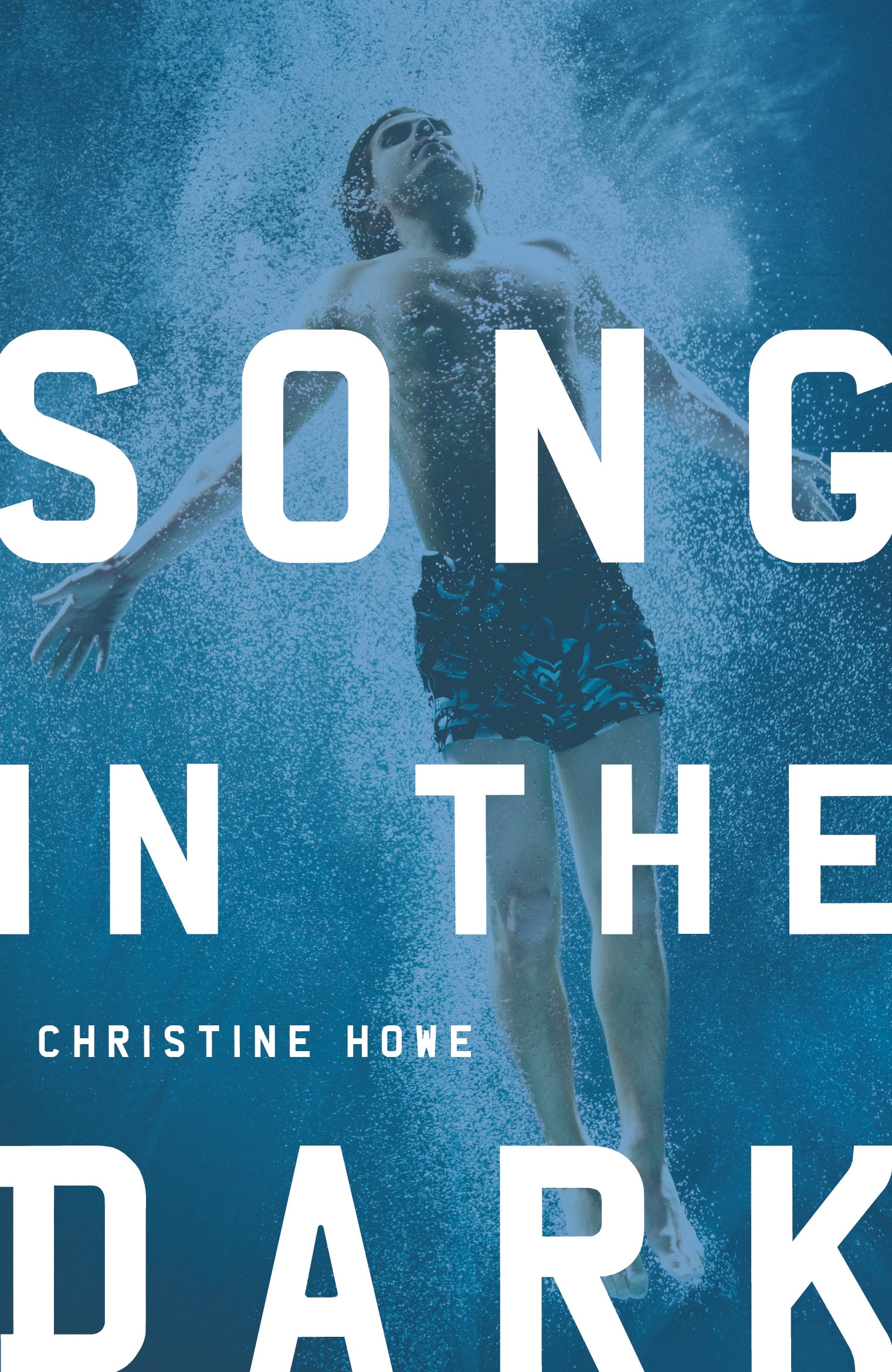
I recently had the chance to ask two authors about their titles when I attended a panel for the recently published novels The Railwayman's Wife by Ashley Hay and Song in the Dark by my old Creative Writing lecturer at the University of Wollongong, Dr Christine Howe. The Railwayman's Wife is very romantic, and Song in the Dark is equally evocative, so I asked about the significance behind them. I wondered especially why, in a book in which the author professed to have created a strong female character, she chose to situate that character's identity in her husband in the title, half suspecting the answer to be 'publishers'. And it was. Apparently it was originally to be titled after a line from a Triffids song, but the publishers objected and suggested The Railwayman's Wife. Luckily Hay didn't feel this was a betrayal of the heroine's character and accepted the suggestion. The origin of Chrissy's title was more organic. She said she actually woke up in the middle of the night and knew it was the one.


After much Facebook-friend consultation and confabulation with her publishers, another of my old lecturers, Dr Shady Cosgrove, has finally announced the title of her latest work: 'What the Ground Can't Hold', which I think sounds like an instant classic, very Hemingwayesque, and vastly superior to the other more pedestrian contenders, 'The Missing' or 'The Disappeared'.

But 'What the Ground Can't Hold' started out under a different name, if I remember correctly: 'The Necessary Tango'. In fact, Shady told us that title was the original kernel from which the rest of the novel grew. And yet I think it's skipped up a step from a great example of the enticing, provocative 'The XYZ' title, to an even better 'fragment' title.

Perhaps the same is in store for me. Like Shady's and Infante's, my novella began with the title, or the notion of a title. I was watching a trailer one day in 2007, unaware of the film's title and trying to guess what it would be, when I came up with 'The [Adjective] Death of Harold Crick'. Its actual name was Stranger than Fiction, but the title I had invented stayed with me. Or rather, the format 'The [Adjective] [Noun] of [Proper Noun]'. This was around the time I was trying to decide on an idea for my English Extension 2 major work, so I spent a little time theorising it before ultimately abandoning it in favour of a (very poor) fictionalisation of the 1989 Tiananmen Square riots. I did so by trying to fill the gaps in the title, then imagining what such a story would be about. First I replaced 'Harold Crick' with a similarly quirky name, 'Norman Crabbe' ('Irving' didn't come until first year when I reimagined and wrote the story for my first Creative Writing assessment), but I always retained the word 'Death'. Then I played around with the adjective, which I found the most stimulating part of the exercise. I knew I wanted an 'in-' or 'un-' word, and tried 'inconsiderate', 'inoffensive', 'unintrusive', 'unconventional', 'unexpected', 'unfortunate' and 'indisputable' before coming to 'innocuous', dreaming up the different stories each adjective connoted.

So the title 'The Innocuous Death of Irving Crabbe' has been with me since at least the first half of 2008, with predecessors a year older. It has lived in a couple of radically different incarnations since then, first as a short story for Merlinda in first year, then as a novel outline and first chapter for Shady and Jill Jones in second year, but the name has stuck. Guillermo would be proud. Perhaps now that I am finally working on the novella in earnest, though, it will outgrow it. Maybe there's a better name, and I shouldn't 'doggedly follow the title', I don't know. Would you pick up a book called 'The Innocuous Death of Irving Crabbe'? What do you think of it? Good? Bad? Memorable? Forgettable? Devastatingly bromidic? Inexplicably erotic? What does it put you in mind of? What kind of story does it conjure? I'd really appreciate any feedback.

As an aside, when attempting to think of a title for this post, the utterly obvious 'what's in a name?' reference came to mind. Not that I ended up with something much better. But here's a selection of posts and articles that went down that road, heedless of those millions who had gone before them:
Thanks for reading.

LPL

References*
Guillermo Cabrera Infante in Alfred Mac Adam's interview 'Guillermo Cabrera Infante, The Art of Fiction No. 75' in the Spring 1983 issue of The Paris Review, number 87, reproduced on The Paris Review website.

Verse 2, chapter 13 of the Epistle to the Hebrews of the New Testament of the King James 'Authorised Version', Pure Cambridge Edition of the Holy Bible, as reproduced by The Official King James Bible Online website.

*Click on images to be directed to original location.

Saturday, 6 April 2013

The innocuous death of irving crabbe

Saturday 6 April 2013

Greetings, dear reader.

This is a short post to formally announce that I, L Phillip Lucas, have officially commenced writing my first piece of long fiction, a novella titled 'The Innocuous Death of Irving Crabbe'.

The makeshift cover I have mocked up for myself, using some image stolen off the internet somewhere years ago.

With a grand total of 2,878 very raw words so far, it's not much, but it is a start. (At the risk of exposing my feeble mathematical skill to the scorn and ridicule it deserves, I believe this equates to 5.756% of the wordcount of the finished project, which actually sounds much more impressive). The plan is to get that number to six thousand by Monday.

It's not without a sense of guilt that I admit that, since studying abroad at the University of East Anglia for the first half of 2011, I have neglected fiction. First I was distracted by finishing my studies in literature and linguistics. Then work got in the way. But finally I applied for and have been accepted into a Master of Creative Arts by Research at the University of Wollongong under the supervision of the magnificent Dr Merlinda Bobis, and I can't convey how much I'm enjoying (after only one semester away from uni) escaping the hideous, lucrative corporate world of business English and offices and technical editing, and returning to the wonderful world of research, reading and writing. 

And I actually believe the hiatus has done me good. I have a much clearer vision now of how to write than I did when I finished the Creative Writing portion of my degree. Those few extra years to think, work, mature, read, and write in other forms have left me a slightly different person, I believe, and a slightly better writer (though still, I constantly fear, not better enough).

I plan to blog often about the process along the way, but I don't want it to get in the way of actually writing, and I don't want to be blogging utter rubbish, so not too frequently. But please, stay tuned. Get involved. Tell me what you think. I'd love to hear from you.

Thanks for reading.

LPL

Monday, 28 November 2011

Moleskinoisseurs, markerholics and penophiles

First written Tuesday 29 December 2009
Tweaked and added to Tuesday  29 November 2011

When I go to Miranda Fair on my own, I go into survival mode. My stride lengthens and my pace quickens. If I get in on the quarter-to train, then by god I'm getting out on the quarter-past. But go with a girl, and I can bet at some point I'm going to get forced, by whatever means she finds necessary, into a stationery store. The thing with stationery though, as opposed to clothes or jewellery, is that I might just enjoy myself.

The near-universal appeal of stationery is a curious phenomenon. It's something to which, I suspect, we can all relate in some way – an infatuation that transcends age, race and gender. But why? Why is it that a virgin notepad, or an electric pencil sharpener, or an eraser in the shape of a bunny rabbit that smells like chocolate (I daresay the office-supply addicted amongst you are exhaling lustily just reading that list) is so appealing?

Well, I've taken it upon myself to find the answer. How, you ask? Through rigorous sociological research and countless surveys? Um, no. That would be a lot of work. I thought, instead, I'd harness the extraordinary power of the internet to solve this great mystery – and from the comfort of my own spinny chair, no less.

I wanted to start at the beginning, and it's a well-known fact that the internet begins with Google.* Once I got past the disturbing fact that 'stationary obsession' returns about thirty thousand more results than 'stationery obsession' (I chose not to waste time on the results of the former search – how obsessed with anything can someone really be if they can't even spell it correctly?), I began my descent into the odd and strangely alluring world of the writing-implement enthusiast. 

*As opposed to the way it ends, according to Irish musical comedian David O'Doherty, the only person I know of who alleges to have 'finished' the internet. Apparently, a smiling Bill Gates appears and you get to enter your initials, although this claim is unsubstantiated.


What I discovered was, I have to say, not actually that surprising, considering the types of people that froth over letterheads and liquid paper – a veritable buttload of blogs and websites that act as 'support groups' for the stationerily addicted. I trawled through what must have been a good ... three or four of them looking for answers. 

My first port-of-call, Stationery Fetish, was decidedly unhelpful, if amusing. 'My love of office supplies', writes blogger Cinderberry in her 'Stationery Fetishist's Manifesto', 'is irrational, but it is pure. Don't ask me to explain it, just hand over the multi-coloured index cards.'

The writers of Heymiki's blog and ich Kalliope, however, do suggest causes as the roots of stationery obsession. '[I]sn't this compulsion just another guise of my incessant procrastination?' asks Miki in 'My Stationery Obsession':

     Can there be any justification for this oft[-]repeated ritual: 
     deciding what colour Uniball Signo DX 0.38 would be 
     most fitting to capture the thought currently scuttling 
     through my head?' 

Kalliope seems to prefer stationery for its distraction value, saying in 'I heart New Notebooks' that it takes her 'mind off the actual thought of going "back to school".'

In her post 'Stationery Heaven' on Style Treaty, blogger Marion proposes nostalgia as the force behind statio-mania, writing longingly of the days of 'smelly paper' and 'fancy pens', adding that she 

     used to love those pencils where there were all different
     colours within the same pencil and you would remove
     the colour from the bottom and stick it into the top, 
     and if you wanted one of the colours that was at the
     top you'd have to keep pulling them out from the 
     bottom and stuffing them into the top

Okay, Marion, calm down ...

I wasn't too far into my stationery wanderings (Geddit? Hardee har har) when I came across an interview with Kristina Karlsson, wanky stationery name: Kikki K. I was beginning to think all statio-maniacs had to come up with funky alternative names for themselves. I mean really, if Kikki K translates to Kristina Karlsson, then what the hell are Marion, Miki, Kalliope and Cinderberry? But surely the Kikki K would have some answers! Well, yes. Yes she did. 'There is something about a freshly sharpened pencil or a new clean pencil case and notebook that signals a fresh start to the year', she says. And this was a recurring theme in the blogs of my specimens. Cinderberry, if that is her real name, says 

     spiral notebooks whisper to me about the promise of a
     new term at school, new things to learn, new things to 
     write. With a spiral pad, with a pen clipped inside the 
     coil, I'm ready to take on the world

which, correct me if I'm wrong, is just a little creepy. But so-called Kalliope says she loves 'the promise of staying organised' that comes with new stationery, which I have to say, I totally get.

At this point, I was starting to feel a bit weird stalking all these chicks' blogs, so I decided to turn to my own friends in the real world (through the medium of Facebook), ahem. I like the way my friend Sonja put it: 'new stationery makes me feel like things will be different that year. Productivity will increase, and I'll be so epic at everything I do. Just 'cause of all my flash new stationery ... It's all lies, though.'

The only other response I got (out of 391 Facebook friends; is that sad?) was actually from a friend, Melanie, who works at kikki.K and, unsurprisingly, hates it. I say unsurprisingly because any reasonable person opposed to conspicuous consumerism of an insane level would hate it – I once got dragged in there by a friend and the only way I could get her to leave was by exclaiming, loudly enough that the cashier could hear, that no A6 notepad was worth $49.95, no matter how Swedish. I shit you not. A6 notepad. $49.95. Anyway, I thought Mel's insights were poignant: 'lots of people now use stationery as a fashion accessory', she said, 'and they like to spend their money on something with the excuse that it is functional.' Agreed.

As for myself, I think I come into contact with more statio-mania than the average person, being an aspiring writer. We are more prone to that sort of thing, and it has been noted by myself and others that an excessive concern with the trappings of being a writer is often the sign of a poor one. It was while I was interning for Hachette Children's Books, I think, that an industry insider told me about a writer whose manuscript wasn't even considered because of the ridiculous letterhead he'd fashioned for his cover letter. 'Anyone who spends that much time on their letterhead isn't spending enough time writing,' they told me. 

So you can imagine my panic in my first Creative Writing class during my exchange semester at the University of East Anglia, eager to meet people and make a good first impression, when I unpacked my bag and realised that sitting in front of me was a Moleskine and a Parker pen. I'd bought the Moleskine ten minutes earlier from the bookshop on campus when I realised on my way to class that I didn't have anything to write in, and the pen, engraved with my writing pseudonym, had been given to me as a twenty-first birthday present by my friends back in Australia just before I left. Luckily I was able to pre-empt any judgement I might've garnered (I think) by declaring when we did the obligatory first-class-of-semester 'go around the room and say one thing about yourself' thing that I was not, despite my try-hard accoutrements, a wanker.


But maybe after that slightly cynical rant, I should end on a nicer, more philosophical note. I do like stationery, after all. I mean, it's not like I'm going to change my name to Lukokobelle and start a new blog about binders whispering to me, but I do like it. I don't think writers, or anyone else for that matter, should be ashamed of their love of leather-bound books and quills and papyrus, they just should be careful not to turn up to their writing classes and announce that they only write using typewriters on brown paper bags (something one of our lecturers told us actually happened once).

A writer's paradise: best friend Gilly and girlfriend Tilly in an Oxford stationery shop.

And don't fool yourself, you like it too. What's not to like? The distraction, the potential for procrastination, the fresh feeling of a new start, the comfort of knowing you're writing on a pad that cost half your week's pay ... In the words of our old friend Miki (Michaela? Maxine? ... Jane?), 

     It has been said that "language is a tool of thought".
     Thus stationery, in enabling us to record and 
     communicate our words, is a conduit of thought! 
     The journey of ideas from the brain to the page is
     no easy task. Thoughts flit and fly. They are 
     ephemeral. Only the best conduit will do. My 
     obsession is not mere indulgence. It is a necessity!

 This article as it originally appeared in Canvas, the 'zine Matilda Grogan, Kaitlyn Carlia (who now has a business crafting greeting cards with Dani Yannoulis) and I put together as an assessment for WRIT216: Introduction to Editing for Practising Writers.