Showing posts with label Politics. Show all posts

Monday, 19 March 2018

And hail they did: welcome to night vale’s ‘all hail’ review

10 February 2018*


If you’ve never heard of Welcome to Night Vale, you could surmise a lot from the crowd outside Melbourne’s Comedy Theatre last night. It seemed the entirety of the fandom’s local contingent had descended on the corner of Exhibition and Lonsdale in full devotee regalia—geeky, affable youths in official merchandise, gothic corsets and steampunk goggles, bafflingly obscure costume homages, and hair dyed in every hue. 

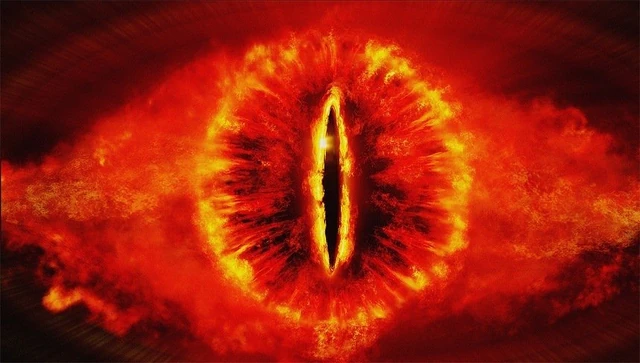
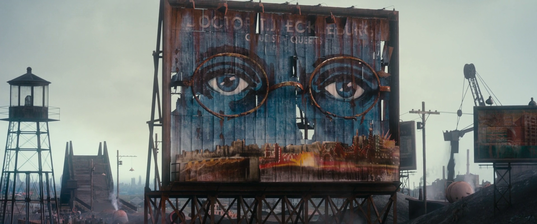
But the prevailing colour of the night, sported by almost every second attendee, was undoubtedly the signature purple of the long-running US podcast’s logo: a runic, crescent moon–pupilled eye hovering ominously above familiar water tower and powerline emblems of rural America, part-Sauron, part–Dr TJ Eckleburg.


Each episode of the bi-monthly internet series represents a broadcast by fictitious radio host Cecil Palmer, beloved commentator on the weird, nonsequitur, Lovecraftian happenings of Night Vale, an imagined desert community populated by mysterious forces and agencies competing to terrorise quiescent townsfolk. Fans of the show are drawn to its potent combination of creepy paranormal tropes, deeply ironic and self-aware humour, and Tumblr-style progressive politics promoting a message of universal acceptance for self and other alike.

In the currently touring live show ‘All Hail,’ the sudden inexplicable appearance above the radio station of ‘the Glow Cloud’—according to the Night Vale Wiki ‘an eternal deity predating reality and currently serving as the president of the Night Vale School Board’—instigates abject worshipful prostration and mindless recitations of fealty from the town’s populace, sending Cecil on a mission to determine its motives and appease the malevolent nebula.

The quest is punctuated by regular segments imported from the podcast such as an infomercial from ‘sentient patch of haze’ Deb, a collection of comically moribund horoscopes, a forecast of the delightfully bizarre events scheduled on the Community Calendar and, of course ‘the Weather’—a performance by the charming pint-sized musician Erin McKeown, who over-estimated the melodic and mnemonic aptitude of the average Melburnian theatregoer with admirable consistency and patience. The show also features appearances from new and recurring characters in the Night Vale universe—snobby local music store proprietor Michelle Nguyen, shapeshifting sixteen-year-old Josh Crayton, bibliophile teen militia captain Tamika Flynn, and time-travelling intern Jeffrey Cranor.

Erin McKeown as 'the Weather.'

Perennial motifs from the podcast find expression once again in ‘All Hail,’ among them a recurrent anxiety about the rapid consumption and disposal of culture and the pace of contemporary life. After entrapping the audience into laughing at how ‘2014’ vaping is, the charismatic show-opener Meg Bashwiner quips, ‘It’s just like a millennial podcast audience to throw shade at something that was four years ago.’ And in the show proper, Nguyen references in stereotypical upward inflection ‘super-old retro music like The Killers and Usher.’ The obnoxious hipster persona Nguyen’s character satirises is itself a little stale in 2018, though her appearance yields such highlights as the fourth wall–breaking real-time, part-improvised narration of sounds from the audience and a description of her so-called business plan as ‘a crude sketch of Noel Gallagher being consumed by a golem made of cocaine.’

Likewise, the show seeks with some urgency to initiate the audience into the experience of human connection so central to its ethics, reminding us continually of the communality of viewership. ‘The sound of 950 people together in a room sharing an experience’ is one of the sounds Nguyen identifies from the audience, a sentiment echoed more pointedly in Cecil’s later ironic jibe, ‘Who wants to go out in public and share physical space with other people?’ Like ‘The Investigators,’ the last Night Vale live show to reach antipodean shores in 2016, ‘All Hail’ exploits opportunities for audience participation to drive this message home, enforcing hand-holding and protracted group recitations, albeit with a little less success than its predecessor.

Loyal listeners will recognise in ‘All Hail’ the formula of several arc-ending episodes of the podcast, which often conclude with emotive diegetic exhortations from Cecil that have clear real-world political parallels. The show ends on an impassioned plea to convert our good intentions into positive action if evil is to be thwarted. ‘Books,’ Tamika Flynn says, are ‘potential human action,’ and ‘filled with empathy, which is much more heart-shattering than any bullet.’ And ‘good,’ we are told, ‘is an action, not a description.’

While timely, timeless and true (Bashwiner includes in her opening address the embarrassed Trump apology fast becoming a standard convention for every international American performance), this message is not so elegantly grounded in the preceding performance as it is in past podcast episodes or in ‘Investigators,’ and feels superimposed rather than earned—a coda by deus ex machina. Without spoiling the final act completely, plot events might have lent themselves much more naturally to a conclusive sermon on the importance of communication and making space for understanding one another than a tenuously (or, dare I say, non-existantly) linked monologue on activism.

But the minds behind Night Vale know their audience and, judging by the uproarious cheering, hyena-cackling, standing ovation and double encore this audience bestowed on the performers, it was not inclined to register the maladroit delivery of a message it so firmly agreed with after an hour and a half of such skillfully targeted entertainment. I’m not inclined to try to disabuse them, but I would advise caution on behalf of those considering taking along friends uninitiated in the Night Vale universe like I did, lest the audience’s Glow Cloud–like adoration fail to take root in them.


*Note: I would've put this up this sooner, but I was delayed by talks with the editor of a website. It appears here with their permission.


Thanks for reading

LPL

Wednesday, 28 February 2018

Firebrands and double-edged flaming (s)words: the wheeler centre gala 2018 review

Wednesday 28 February 2018


Monday’s eighth annual Wheeler Centre Gala saw eleven intellectual incendiaries light up Melbourne’s Athenaeum theatre with variations on the likely theme—for an institution dedicated to the holy trinity of books, writing and ideas—of ‘words on fire.’ The characteristically malleable topic incited diverse interpretations from an estimable ensemble of writers, performers and activists, ranging from personal parables to political polemic, performance and poetry.

And diversity truly was the word of the night. Excepting the transitory appearance of Centre director Michael Williams, who seized the stage long enough only to make his obligatory thanks, gracious self-deprecation and inevitable lefty in-jokes about African gangs and the definition of ‘partner,’ the lineup was a veritable straight white male–free zone. Indeed, holding forth as the speakers did on such progressive subjects du jour as environmentalism, disability rights, Indigenous oppression, the trans experience, class politics and even a content warning or two, the roster could well have emerged wholesale from the very nightmares of Miranda Devine.

Any outnumbered conservatives in the crowd might have snatched hungrily at Aunty Carolyn Briggs’ portents of overzealous offence-taking and language-policing as a slippery slope toward censorship, but the Boon Wurrung Elder’s discussion of privilege and disadvantage in language use revealed a position far removed from the typical PC-bashing proponents of Brandis’ ‘right to be bigots.’

Briggs’ extended Welcome to Country offered a sedate start to the evening, with reflections on the history of words as weapons used both by and against Indigenous Australians, pointing to the subversive meanings said to hide in Aboriginal names such as Coonabarabran (putatively ‘white man’s shit’) and the Moomba festival (folk-etymologised not as ‘let’s get together and have fun’ but rather ‘up your bum’). 

Briggs concluded by inviting the audience to use the language of the land—wominjika for ‘welcome’—and to fulfill the obligations traditionally attendant on that welcome: ‘not to harm the lands and waters and not to harm the children.’ It was an exhortation later taken up by Indigenous author Tony Birch in his address, an admiring paean to Wangan and Jagalingou spokesperson Murrawah Johnson and her incendiary words to author–activist Naomi Klein on Adani’s proposed Carmichael coal mine: ‘We have seen the end of the world and we refuse to accept it.’ Birch traced the violence enacted upon Johnson’s ‘personal and genealogical history’ through the language of Terra Nullius and the Acts of Parliament that have governed Indigenous lives to illustrate the heroism, the injustice, and the irony of her leadership in the fight against the mine.

My view of the stage through the perfectly curled wave of another spectator’s hair.

Before thirteen asymmetrical bars of light flaring and fading between performances like the still-glowing trunks of bushfire-blackened trees, each speaker took to the stage in succession, without the intrusive inelegance of any master of ceremonies offering aggrandising introductions. This lent the night the dreamlike intimacy of yarns around a transfixing campfire, each one free to roll into the next and build upon it without any break in the spell.

Commencing the official program was writer, actor and director Leah Purcell’s lively autobiographical narrative, a touching and comic recount of the words and phrases that marked her lifetime journey from poor rural daughter and young caretaker of an alcoholic single mother to the acting career she had always dreamed of. Replete with a reenactment of the dance she performed impromptu down the main street of Bergen after a compliment from a stranger, the tale at moments challenged even Purcell’s polished performance skills with tears. Malaysian-Australian poet and rapper Omar Musa likewise gave a stirring personal account of his lived experience, counterbalancing the poetic drama of the oration to come with a casual ‘’S’goin’ on?’ as he arrived onstage. He spoke of his lifelong battles with a father fervently devoted to the Word of God, and the secret words of inspiration imparted by his mother in stolen eight-minute car rides on the way to school. And in the night’s penultimate speech, blogger and activist Carly Findlay drew on her (ever-political) personal experiences to question whether social justice movements actually live up to the buzzwords of inclusivity, diversity and intersectionality when it comes to disability.

A persistent motif, of course, was the power of words. The power of a politician’s well-crafted speech to inspire a lifetime of loyalty in the case of writer and anthropologist Sally Warhaft’s Republican niece, or Warhaft’s own affection for the rhetoric of Paul Keating, which preceded a writer’s lament for the declining communicative power of today’s politicians at home and abroad. Or the power of writing to give a child control and escape from an unstable upbringing that a garlanded and needlessly bashful Rosie Waterland—she of the famed Bachelor recaps—conveyed. Veteran of the Melbourne Workers Theatre Patricia Cornelius too demonstrated the potency of words forcefully in the opening of her crowd-pleasing ode to profanity, with a rapidfire fuck-and-cunt-laden tract from her play SHIT (a linguistic challenge to which the Auslan interpreter rose admirably). In the comedic highlight of the evening, Cornelius delivered an insightful interrogation of the class politics of snobbery about swearing, railing against the bourgeois insistence that the theatre remain a polite, expletive-free middle-class space and the notion that the underclasses should never express legitimate rage through swearing. 

Other presenters built on Briggs’ earlier meditation on the nature of words as double-edged (flaming) swords – their ability, in Williams’ terms, to burn and to heal. From honey, darling and sweetheart to dude, bro, mate and man, queer nonbinary activist and writer Nevo Zisin reflected on the usefulness and limitations of words and labels in defining and limiting their identity pre- and post-transition, while actor Rachael Maza powerfully contrasted narratives of her grandfather from biased official records against family memory and empathetic deduction, lingering over the difference between the concept of history and the past itself.

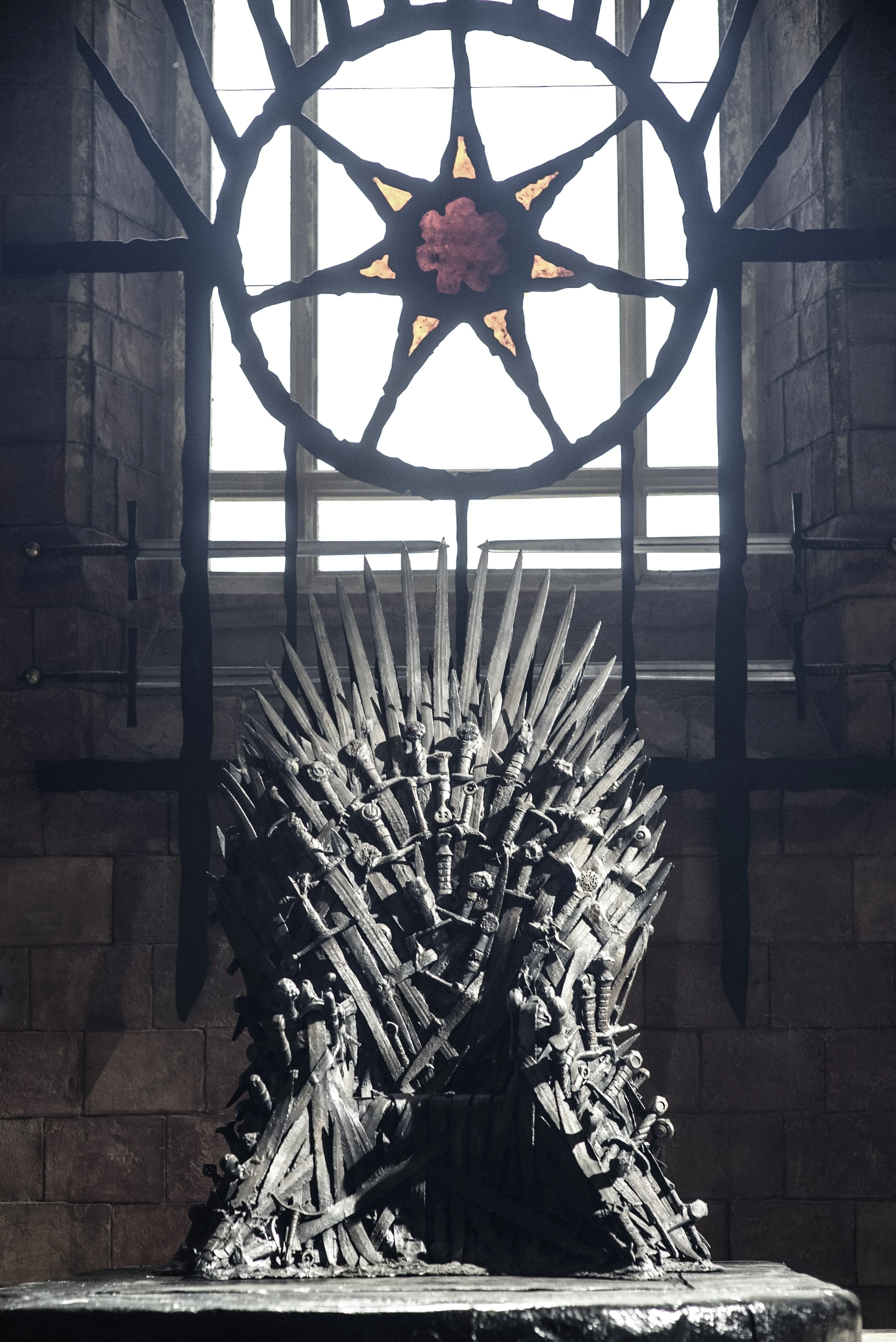
The crescendo of the pyrotechnic spell which the speakers had been steadily constructing over the course of the night came in the final empyreal performance by Moira Finucane, who fully earned her description as a ‘writer, director, performer and creator of volcanic and magic realist worlds … and intimate theatrical spectacles, internationally renowned for her arresting mix of provocation and entertainment.’ Bedecked in a shimmering black gown and headdress somewhere between the Statue of Liberty’s aureolic diadem and Westeros’ Iron Throne, she emerged onstage swaying and arm-waving in time to cosmic strains. ‘Kingdom Animalia,’ she intoned in the commanding resonant boom of an elven queen. ‘Phylum Chordata, just like us. Not like us, Class Aves,’ she continued as if reciting words of power. ‘Family Alcidae, Genus Pinguinnis, Species Impennis.’ This scientific classification of the now-extinct great auk launched an abstracted traipse through humanity’s relationship with the planet as viewed through writings both dramatic and innocuous, from Proverbs 26:11, to the cruel 1794 words of sailor Aaron Thomas on the ill-fated penguins, to Charles William Beebe on extinction in 1906, to Rachel Carson in 1962, to 2018 personal correspondence from another Indigenous environmental firebrand, Eleanor Dixon (‘a genius with 60,000 years of understanding of her land’) to Stan Grant in 2016 and Desmond Tutu in 1999.

Though her declamatory style courted the absurd and at times dipped into the ridiculous, Finucane performed with such ardor and conviction that a possibly skeptical audience stayed with her, tittering only, perhaps, as intended, when the monologue descended abruptly from the grand themes of environmental destruction to supplying the tangible details of how to contact the Northern Territory Chief Minister’s Office to express concern over the impact of fracking on the tourism industry, all while maintaining its grandiose delivery.

Paraphrasing Tutu as she slowly departed (perhaps significantly to stage left), she encouraged her viewers to keep ‘trending, trending, trending towards the good,’ and left the audience in the lingering strings and darkness to awaken with the lights as if from a dream.

If the gala is a sign of what we are to expect from the Wheeler Centre in 2018, it will be an impassioned, diverse, provocative, progressive year indeed.

Thanks for reading

LPL

Tuesday, 26 May 2015

Sydney writers' festival 2015

Tuesday 26 May 2015

I had an extremely limited, though, nevertheless, incredibly rewarding, experience at the Sydney Writers' Festival this year, mostly revolving around interactions with one of my favourite authors and the subject of my thesis, David Mitchell. Before the weekend was over, I would hear him speak at three events, meet him at two book-signings, and have my photo taken with him. 

Walking to see Mitchell a second time at the Theatre Bar at the End of the Wharf for Coffee and Papers with the Sydney Morning Herald and David Mitchell.


Mitchell and I after his third appearance (and my second book-signing) at the Roslyn Packer Theatre for 'Imagined Futures'.

My favourite interaction, however, was the first: Friday night at the City Recital Hall Angel Place event 'David Mitchell: Bending Time', where he was interviewed onstage by Kate Evans. The night had a number of highlights, including when Mitchell claimed to be, in fact, a novella writer rather than a novelist, an assertion Evans rebutted with a single heft of his latest 595-page behemoth, The Bone Clocks; when he revealed that the tea he was drinking was made accidentally with sparkling water (it happens to the best of us); and when he suggested that the key to avoiding the dystopian though all-too-plausible near future he depicts in The Bone Clocks is to 'vote in more idealistic politicians who will need to pass things that cause us some financial pain' and not to 'listen to demagogues that says, 'Vote for me and I'll scrap the carbon tax', met, of course, by enthusiastic applause from the predictably assenting literary festival audience.

Kate Evans interviewing David Mitchell, sparkling water tea in hand.

Two questions before the end of the interview, Evans invited audience members to start making their way to the microphones positioned around the hall. As she asked her final question, I noticed they were all still vacant, so I plucked up my courage and seized the opportunity. When I got to the microphone, Mitchell was still making his way through his answer. I felt conspicuous standing there, ten or fifteen metres away from where they were seated onstage, blocking the view of the audience members behind me with my not inconsiderable height, so I decided I would crouch in the aisle, which also felt somewhat ridiculous, but the best choice under the circumstances. 

Then came my moment. 'Now, is anybody going to make their way to—' began Evans, before I sprung up from my position like a Jack in the Box.

'Hello!' said Mitchell jovially, before assigning me seven years good luck for being his first questioner and offering me some of his (nearly entirely in tact) block of Cadbury's vegemite chocolate.

'That's actually kind of relevant to my question', I began. The whole event was recorded and broadcast by Radio National, and you can hear our full interaction from about 37:45 here (look for number 7. 'David Mitchell – The Bone Clocks'), but here's a summary, starting with my question:

'So, I just wanted to say thank you first for coming and speaking to us and your wonderful work. Cloud Atlas actually really changed my life ... mainly through kind of clarifying my personal ethics, just by thinking about it a lot and the ethics that I find embedded into it. One of the main things was that it kind of removed the last ethical blocks that I was putting up into vegetarianism and now veganism. So I couldn't take you up on your offer to eat the chocolate.' We laughed. 'You were talking before about how, you know, we make ourselves feel better by dehumanising those that we exploit. And I wondered if you have any feelings about the way that that would apply to eating animals and farming animals and killing animals.'

'Yeahhhhhhh ...' he said in a long, thoughtful sigh. 'Not a contentious question, then!' he added, eliciting a round of laughter from the audience. 'Uh, thank you. Yeah, you're right. Thin ice, because I'm not a strict vegetarian. I'm an occasional guilty lifeform-eater. I'm riddled with hypocrisies and this is one of them. I don't eat mammals any more, though, um, because—because they love their mums, and they don't wanna die.' 

We all laughed at this. 'I'm glad to hear it!' I enthused.

'And their mums love them as well', he added. 'I'm sort of working towards where you are, I suppose.' For some reason this struck us all as hilarious as well. Perhaps the incongruity of it all – that I had hijacked the event to talk about animal rights and, unexpectedly, I suppose, for many omnivores in the audience, Mitchell was agreeing with me.

The best response I could offer, as an aspiring writer speaking to one of his literary idols was, 'I'm working towards where you are as well,' which the crowd loved – the round of applause that followed is clipped from the Radio National recording, but it was there!

From there he discussed his progress in slowly crossing birds off the list, and then fish, and how it's interesting to think of the shock that would ensue if it became part of the syllabus to send secondary school students to abattoirs to learn about the process. He concluded his answer by saying something that took me quite by surprise:

'You seem incredibly healthy. You sort of radiate health,' he said. 'You're a walking advertisement for veganism,' prompting another burst of laughter. Personally I'd attribute any glow to the fact that I was talking to a literary legend and he was speaking positively about veganism, but I'll take it. 'You just seem one of those healthy people. You know sometimes you see someone and they're looking a bit "uhhhhh"' – here he made a groaning zombie noise. 'You had an enormous slab of cow for lunch, didn't you?'

For the rest of my interactions at the festival this question gained me some sort of notoriety. Immediately afterwards several people congratulated me on asking it, and everywhere I went afterwards people would say, 'You're the one who asked that question!' It also meant I stuck out in Mitchell's mind, so that he had some personalised messages for me when I got my books signed. I couldn't be happier that the man who wrote the book that set me on my current path, and who continues to delight me with his fiction, is of a similar mind to me, and is on his way to fully embracing the ethics that he so talentfully depicts in his work.


Helen Razer and Bernard Keane at the only non-David Mitchell event I got to attend.

My haul from the festival – all signed!


Thanks for reading!

LPL

Wednesday, 14 August 2013

What's wrong with 'sex appeal'

Wednesday 14 August 2013


Opposition Leader Tony Abbott instigated a Twitterstorm yesterday when he listed 'sex appeal' as one of the assets shared by Fiona Scott and Jackie Kelly, the current and former Liberal candidates for the seat of Lindsay. Predictably, commenters and commentators of the Right, such as my own personal bête noir Miranda Devine, have since responded to the criticisms with lamentations about 'political correctness gone mad'* and 'confected outrage' and, of course, the usual deluge of abhorrent eructations from Andrew Bolt fans:

Comments from Bolt's readers, as tweeted by the good people at @BoltComments.

*I've previously discussed (and mounted a small defense of) political correctness here.

The point of this post isn't to condemn Tony Abbott, as condemnable as I think he is. Aside from his history of misogyny and his lack of expressed compunction I actually don't believe what he said is that personally reprehensible, just inappropriate and symptomatic of a larger issue. What I want to try and do is explain to those people inclined to agree with Devine, Bolt and company, why the Left finds the comment so objectionable. 

But first I want to address what's not wrong with the remark. Firstly, no one's claiming there was any malice in it. I think there's a common misconception that the lack of intention to offend excuses someone from having done so, as indicated by Opposition assistant treasury spokesman Mathias Corman's explanation that '[i]t was just a light-hearted comment, which I'm sure was not meant with any offence' (news.com.au). But this is an oversimplification. What this kind of thing reveals is not the speaker's unkindness or immorality, but rather their ignorance, often of how words, acts and omissions can reinforce cultural attitudes that privilege some and disadvantage others. 

Think of that disgusting 'Trayvoning' trend that's taken off recently, to much obloquy. Realistically, I'm sure most of the boys posing in those pictures are otherwise reasonably good people, who'd probably respond to criticism by saying it was all just a joke and they didn't mean any offence. Their wrongdoing is not a deliberate intent to mock a murder victim, but rather an unthinking insensitivity to a tragic and politicised issue and a grieving family, a selfish, immature transformation of a tragedy into a source of entertainment, posted thoughtlessly online.

To return to my personal holy text, David Mitchell's Cloud Atlas (or rather, the Twyker–Wachowski film adaptation), it puts me in mind of the casual, unintentional sexism spouted by smarmy would-be architect of a nuclear disaster Lloyd Hooks, as portrayed by Hugh Grant, to Halle Berry's Luisa Rey:

This kind of talk belongs in the '70s.

Secondly, I don't have an issue with the fact that Tony Abbott or anyone else has appraised Fiona Scott as possessing 'sex appeal', that anybody finds her attractive. Human beings are always going to find other human beings attractive, but there's a difference between thinking someone is attractive and saying it, and that distinction takes us to the heart of the issue.

As I said above, I find Abbott's comment inappropriate. Not deplorable, not opprobrious, not disgraceful, just inappropriate. Whatever Abbott thinks of Scott's and Kelly's physical appearances, it should not have been brought into the discussion of their merits as candidates. What business does anybody's attractiveness have in a list of their qualifications to represent an electorate? 

Abbott's comment doesn't show us that he's a cruel person who consciously believes women are inferior to men. What it does give us is a direct window into his worldview, a worldview he may not necessarily have that much control over (how much do any of us really decide our worldview?), but one that he nevertheless holds and must be judged by if he wants to be the leader of the country. It shows, unsurprisingly for a conservative of his generation, that at a fundamental and unconscious level, Abbott cannot see women in the same way he sees men. This attitude I am able to overlook in people of a certain age who grew up in a different era, the way we forgive our 'racist grandparents', but not in the leader of our country.

If you still disagree, just think about what it means that, when called upon to list some of the similarities of his female colleagues, which he must necessarily accept as an opportunity to list their assets, the first things that come to mind are their youth, 'feistiness' and sexual appeal. He's struggling in that video. As we all know from his comments about scripted and unscripted commitments, his conspicuous absence from interviews and television programs like Q&A (despite an open invitation) over the past few months, the 'suppository of wisdom' contretemps, and that 'bizarre 28 seconds of silence', Abbott isn't the best with impromptu speaking. You can tell he's grasping for positive adjectives in that video, buying time with a string of ums and ahs, and in the top three he comes out with is 'sex appeal', something that would never occur to him had he been speaking of men. Abbott himself knows this, as you can tell if you listen to him stressing the words 'smart' and 'hardworking' (proper qualities) when he's asked about it later, after he's had some time to think.

'Sex appeal' is the descriptor getting all the attention, but I'd argue the others weren't that flattering, either. 'Young', I'm sure, is supposed to connote enthusiasm and energy, but it's a dubious distinction if that's the primary positive similarity you share with your predecessor.

Then there's 'feisty', the suspect implications of which Elizabeth Reid Boyd has already discussed (I agree the word is condescending, with the suggestion that women have to be feisty in the big, rough boy's game of politics, but I completely reject the notion that its long-forgotten etymology has any impact on its meaning today).

Then comes 'sex appeal'. It's as though what Abbott wanted to say when the interviewer asked about the comparability of the two candidates was, 'Well, the similarity is obvious: they're both women ...' Would you ever say 'They're both men' in that situation? No, because maleness is the standard state of being, while muliebrity is a distinguishing condition to be remarked upon.

Even Abbott's final and most relevant compliment, that the two women are 'connected to the local area' reflects very little agency grammatically. They aren't active, agentive leaders in the community, prepared to make the tough calls and fight on behalf of the electorate. They're just passively 'connected' to the local area ...

I've seen Bolt commenters and others saying they've heard male politicians being referred to as sexy without any such backlash, but we rightfully hold our leaders to higher standards. Was it by a private citizen or media personality, or was it by someone holding high public office? Can you imagine Julia Gillard endorsing a local candidate in comparison to a predecessor by saying, 'They're both young, scrappy, and strappingly handsome'? I can't see it. What about Rebecca Shaw's example:

'It is unequivocally true that if Abbott had been asked a similar question about a male candidate, he would never say: “Well, um, well, Andrew Laming is young, feisty, has great hair and a very nice jawline”. If you are saying something about a female candidate that you would never say about a male candidate, you are treading on dangerous ground in the scary swamp of sexism.' (Shaw 2013)

We live in a society that consistently judges women by different standards to men (speaking of Julia Gillard), especially in terms of their appearance, a fact the Right fights against remedying at the worst of times and seems blind to at the best. The very fact that large segments of our society are held in the grip of an ideology that teaches them it is normal and natural to behave this way prevents their being able to see it. What the Left objects to about this incident is that it violates the principle that women in this day and age should be able to be enter the political sphere subject only to the same amount of attention to their physical appearance, whether positive or negative, as men are (i.e near none). The rules shouldn't suddenly change when it's a woman politician, so that it becomes a matter of public importance how she dresses, what she looks like, whether she's married or anything else. It's not so much what Abbott said, it's what his comment shows about him: that he is incapable of seeing the world in this way.

Thanks for reading

LPL
L Phillip Lucas (Facebook page)
@LPhillipLucas (Twitter profile)

References

Screenshot of Bolt Comments' (@BoltComments) twitter feed.

Amalgalmation of Simon Chillingworth's image and Warner Bros. Pictures' image.

News.com.au's 5:38pm AEST 14 August 2013 article 'Abbott cites exuberance in latest gaffe'.

Rebecca Shaw's 9:49am AEST 14 August 2013 The Guardian article 'Sexygate: how Tony Abbott should have complimented Fiona Scott'.

Tom Twyker, Andy Wachowski and Lana Wachowski's 2012 film Cloud Atlas.

Saturday, 10 August 2013

Murdoch, the market and the myth of consumer choice

EDIT: I received an email threatening me with a $1,350 (+GST) out of licence fee for using several NewsCorp front pages in the original version of this post, so I've now removed them. I thought they might be covered under the 'criticism and review' fair dealing exceptions, but wasn't in a position to look into it any further at that point. Wishing the guys at News Corp well in their continuing endeavour to pander to the masses, disregard all journalistic principle, capitalise on people's fears and erode democracy.

Saturday 10 August 2013

In a move that unexpectedly became the talk of Twitter this week, Wallabadah General Store owners Glen and Kim Sheluchin announced on Monday they would no longer stock News Corp papers, citing the company's 'blatant' and 'long-standing' political bias (Nickell 2013). Owned by Australian-born media tycoon Rupert Murdoch, the corporation's front pages have been devoid of any pretension to objectivity since Sunday's election date announcement, giving credence to Prime Minister Kevin Rudd's claim that editors have been instructed: '[G]o hard on Rudd, start from Sunday and don't back off' (Grattan 2013).

(Refer, for example to the Daily Telegraph frontpage from the 2013 election reading 'Finally, you now have the chance to ... KICK THIS MOB OUT' and the other featuring Photoshopped images of Craig Thomson, Kevin Rudd and Anthony Albanese as characters from Hogan's Heroes, accompanied by the caption 'THOMMO'S HEROES' and the headline 'Albo's explanation for German beers with Thomson: I KNOW NUTHINK!')

As I've mentioned in the past, I believe along with many others that the two arms of a functioning democracy are a robust media and rigorous universal education, so watching the descent of Murdoch's tabloids, especially The Daily Telegraph and The Courier-Mail, from populist mouthpieces to full-blown propaganda over the past few years has been extremely disturbing. It was only in 2010 on my first trip to Britain when I encountered the shameless (and shamefully popular) likes of The Sun (News Corp) and The Daily Mail (DMGT) that I thanked heaven the media discourse in Australia was not so woeful,* that you'd never see such openly biased headlines here. It seems I was wrong to put it down to anything more than antipodean backwardness: we've finally caught up.

*Of course, at this time, I'd never yet seen an edition of the NT News (News Corp), which is known for its outrageous headlines (see the edition featuring an image of a shirtless man drinking a beer with a snake coiled around it accompanied by the headline 'WHY I STUCK A CRACKER UP MY CLACKER').

I first became alarmed in early 2012 while on a business trip in Brisbane. There the political temperature allowed The Courier-Mail to trumpet anti-Gillard sentiment in a way I suspect no other state (excepting perhaps Western Australia) would have tolerated at the time, stirring up even more of the public vitriol demonstrated when local colleagues would whip around in their chairs at the mere mention of the PM, ready to criticise the way she spoke or dressed at any opportunity.

The Sheluchins may have already overturned their ban after a smarmy diplomatic mission by the Tele (discussed in all its quease-making detail here), but hearteningly, not before they received a deluge of 'calls and messages of support' (Nickell 2013) and inspired other vendors to follow suit. The management of Brisbane's Slightly Twisted Refreshment Lounge, for example, which never sold the paper but had it available for customers to read, revealed on Twitter yesterday that they're now displaying this sign in-store:


But there have of course been negative responses to these small business boycotts, most of them bizarrely labelling them acts of 'censorship' (a term the Tele was more than happy to throw around in the gloating victory speech linked to above). For example:



This, of course, is nonsense. As I pointed out on Twitter, the argument is essentially that a newspaper's existence demands its supply or else it's censorship. The Sheluchins said themselves they don't stock Fairfax's The Financial Review. Presumably they don't sell Green-Left Weekly or Uganda's Daily Monitor, either. Censorship? Of course not. The difference, some might argue, is that there's an established demand for the Tele, but I'm afraid there's still that much-vaunted principle at the heart of capitalism to contend with: choice. There might also be a demand for child pornography or cocaine, or even cigarettes. That doesn't make it 'censorship' to refuse to sell them because of your 'own personal political views' that child pornography/cocaine/cigarettes are unethical.

Because unfortunately, that's what capitalism does to truth: commodifies it. The newspaper is a product like any other, and if the vendor of that product decides it is of substandard quality, they are free to cease selling it, and their customers are free to shop elsewhere if they don't like it.

It's curious the disproportionate amount of concern the objectors seem to have about this one supposed form of obfuscation of the truth through 'censorship' in comparison to the potential obfuscation of the truth Murdoch's papers might have through, say, shoddy journalism, lies, dubious ethics, bias, editorial influence, vested interests and market monopoly (as the management of the Slightly Twisted Refreshment Lounge noted, 'there are no local publications not controlled by Mr Murdoch' in their area; what does that say about the influence of one man over an entire community?)

Here is one of the multifarious failings of capitalism: it's as though in its animalistic mimicry of the system of evolution (competition, survival of the fittest, etc.), it has also taken on Freud's eros drive, that biological urge 'to combine organic substances into ever greater unities' (1920, page 50), realised in the inescapable corporate gravitation towards monopoly, the ineluctable upward accumulation of wealth and power. 'He's earned his influence', free marketeers, Libertarians and minarchists will protest. 'He's powerful and wealthy because his papers are popular!' Truth by popularity. 

Which is what's so strange about these objections: they controvert the basis of the Right's usual disagreement with 'regulations' and 'red tape' and 'big government', that one golden principle I referred to earlier which it mistakenly apotheosises as the way to determine all truth and quality and morality: consumer choice. As far as I can see, these News Corp boycotts are one of the few examples of consumer choice actually working as it is supposed to. Every time the quality or ethics of a product is questioned and the suggestion of more regulation is proposed, the Right turns to the touchstone of consumer choice: 'We don't need big government interference – the consumers are our regulators. If consumers don't believe what Rupert Murdoch's papers say, they won't read them ... If consumers don't like the way cage eggs are produced, they won't buy them ... If consumers think reality television is vacuous fluff, they won't watch it.' 

Under capitalism, your dollar is your vote, and (in the fantasies of Randists) the market is supposed to adjust itself to align with consumer opinion as businesses consumers like succeed while businesses they don't fail. As though we are all moral philosophers, thoroughly conscious of the ethical ramifications of our every purchase. As though we have the time in our busy lives to research whether every product we buy is tested on animals or contributes to the deforestation of the Amazon or is made by third-world child sweatshop labourers working eighteen hour days for infinitesimal pay. As though in the moments before we put each item into our trolleys, bombarded by psychologically manipulative advertising and marketing and packaging designed to conceal anything untoward, dogged by a hundred other disparate velleities and cravings and distractions and concerns, we are our best rational and ethical decision-making selves. As though the majority of us are even concerned with right and wrong when we are shopping. As though we haven't been taught that the only value worth considering is monetary value. As though most of us even have the ethical fortitude to resist purchasing products we know involve unethical practices. This system is demonstrably flawed.

So here, in the form of a few small business owners rejecting the low-quality products of a powerful multinational corporation which will probably get its own chapter when historians write about the downfall of the United States (notoriously evil American television network Fox News, panderer to climate change deniers, Creationists, second-amendment nutjobs, Tea Partiers, Republicans and other fundamentalists, is also Murdoch's handiwork), we have one rare instance of an actual deployment of consumer choice for a reason other than price, one time where the consumer has looked at a substandard product and said, 'No, this isn't good enough; I refuse to sell this', and the internet commenters of the Right denounce it.

Jeff Sparrow, editor of left-wing literary journal Overland, is optimistic about the recent slew of rubbish front pages from The Daily Telegraph, and claims the reaction to them online is a signal that 'Murdoch's spell is breaking' (2013). But it's easy to convince yourself you're in the majority when you're surrounded by sympathisers, when you're caught up in the outrage of the Twitter intelligentsia. Growing up in the safe Labor seat of Throsby I'd never met anyone who voted Liberal and couldn't even imagine anyone voting for Howard, and yet he'd won every election in my lifetime until '07. I'm sure Sparrow has the deductive powers to see past those in his immediate political surrounds; I just can't share his optimism in this.

Besides, it's not the engaged people I'm worried about. Not the ones who spend time reflecting on these issues, reading political articles, tweeting their outrage, and slowly constructing a worldview from a number of sources like world news from other countries, independent media, books, discussion, Q&A and Lateline. It's the ones who can't be bothered with politics most of the time, the reluctant voters, the uninformed but stubbornly opinionated who concern me. The ones who glean their political views incidentally from here and there: the mainstream news, the Sunday paper, what other people seem to be saying, a bit of Alan Jones here, a bit of The Bolt Report there. Because when you don't seize control of the discourse, when you just cruise through your intellectual life on autopilot receiving whatever comes your way, the vested interests take control for you, and you've got nothing against which to contextualise your information. The chances are that the vast majority of news these 'uninformed opinionated' come into contact with is produced by the Murdoch media and they don't even know.

So I think Sparrow might be giving people a little too much credit. People don't want facts and truth and expert opinions from people smarter or more specialised than them. They don't want hard questions about right and wrong that might require them to change their behaviour. They want entertainment. They want fluff. And 'consumer choice' on its own without any other barometers of quality or truth usually ensures they get it. Consumer choice alone results in pandering, like a divorced glory parent who only takes their child on weekends and spoils them with gifts and sweets and amusement parks instead of necessities and vegetables and homework, making the other parent seem boring. Given the choice, who might the child prefer to live with? What lifestyle would they choose to adopt? Do they want to watch Big Brother or Lateline? Do they want to read celebrity gossip or serious policy discussion?

This is why it would've been useful to have a real media inquiry in this country. But the howls of 'freedom of the press' that issued from the papers, accompanied dutifully by the Coalition, saw the death of that. You might disagree it was needed, but let's just imagine that it was. One wonders how we would ever get such an inquiry given the corrupt media would use its opinion-forming power to turn public sentiment in its favour with whichever party was in opposition to give it credibility.

No, my feeling is that we're stuck with tabloids that will become ever more like Britain's now, at least as long as the newspaper format survives. All we can do is try to avoid ending up with the Australian equivalent of Fox News that we already know prominent conservatives and conservative organisations like 'Lord' Monckton and the IPA are gunning for. And, of course, to save the ABC from privatisation or, in other words, dumbing it down as much as the commercial networks. I only pray it doesn't come to that.

Thanks for reading

LPL
L Phillip Lucas (Facebook page)
@LPhillipLucas (Twitter profile)

References

The Daily Telegraph's Monday 5 and Thusday 8 August 2013 front pages.

Harry Dellavega's (@NastyHarry) 9:11am 9 August 2013 Twitter tweet.

'Didie's' comment on Ms Alena Nickell's 4am Friday 9 August 2013 The Northern Daily article ''Be fair or you'll be binned''.

Sigmund Freud's 1920 book Beyond the Pleasure Principle in Volume 18 of James Strachey's 1953 –1974 series The Standard Edition of the Complete Psychological Works of Sigmund Freud, published by Hogarth Press, London.


NT News's Tuesday 31 July 2012 front page.

Alena Nickell's 4am Friday 9 August 2013 The Northern Daily article ''Be fair or you'll be binned''.


Slightly Twisted Refresment Lounge's (@Sl1ghtlyTw1sted) 8:23am Friday 9 August Twitter tweet.