Showing posts with label The Wheeler Centre. Show all posts

Monday, 12 March 2018

Where thoughtfulness lives: adelaide writers' week 2018 review

Monday 13 March 2018


It may be Australia’s longest-running literary festival, but Adelaide Writers’ Week shares little resemblance with the big-name east-coast counterparts that followed it a generation later. 

The event’s idiosyncrasies reflect much about the city that gave it birth: august, commodious Adelaide, temperate and traversable, capital of the festival state, with its surrounding circlet of parklands in which the Pioneer Women’s Memorial Garden could be an understated crown jewel. Far from the air-conditioned concert halls and crowded café venues of the Sydney and Melbourne festivals, Adelaide Writers’ Week passes in the open air and sunshine of this glorious garden. 


And it feels like a gathering in a forest clearing, an enchanted grove. You sit, encircled by a dwarfbrick wall and screens of greenery sun-washed and backlit, presided over by each panel as they hold court beneath the beneficent maternal gaze of Ola Cohn’s 1941 Waikerie limestone statue, a goddess of the glade. Overhead, a lacing of cables, fairy lights, tree branches and blue tarpaulin spans the space between six sentinel lampposts straight out of Narnia. There’s the constant imposition of planes passing above, and sun and shade sweep over you in shifts as the clouds roll on, offering the discussion cheerful or ominous punctuation. ‘That’s global capital,’ jokes the Wheeler Centre’s Michael Williams when a sudden darkness falls at Laleh Khavidi’s mention of gun stock divestment. ‘It doesn’t like what you’re doing.’ Beneath you are humble green plastic chairs like your nan has on the patio and, should they grow too hard on your backside, you’re free to plant yourself on the nearby grassy slope where locals snooze under hats and children periodically frolic a little too loudly. Kick your shoes off, lay back, close your eyes, and let the conversation wash over you. ‘It’s a pretty friendly festival,’ poet Pamela Brown summarises in response to an audience question. ‘The air’s good.’

Mem Fox reads from I’m Australian Too.

It’s simply different. Fanatical volunteers stand smiling guard over the bins, racing to intercede before any recyclable item is denied its rightful reincarnation by mistaken consignment to general waste. The dignified demountable bathrooms offer expensive soap and proper mirrors. For some reason, there’s a joey in the writers’ green room and, occasionally, in the audience.

And, indeed, everything about the event is free and easy. No pressure to attend pre-booked and paid-for sessions. You may come and go as you please between the twin stages that sit companionably close in the riverside park. Follow your fancy through a program as well-balanced and legible as Adelaide’s city grid—from the intimately personal to the sweepingly geopolitical, local to international, grand historical narratives to confessional poetry. Unbound by the confines of the indoors and its attendant fire codes, audiences expand and contract like a breathing organism according to the popularity of the speakers. Events at the more intimate west stage like The Life to Come with the radiant Michelle de Kretser send the crowd fanning out into the wings of shade beyond the garden walls and curling up the slope, while drawcards at the east stage such as insightful international heavyweight Barbara Kingsolver and the delightfully peculiar festival-favourite Robert Dessaix break the banks entirely to engulf the little island of the stage in all directions.


In such a setting, the thirty-third iteration of the festival assembled almost a hundred writers, loosely united, as outgoing director Laura Kroetsch writes in the event programme, by the concept of ‘change.’ Unlike the parkland setting, this theme is a convention endemic to all literary festivals, to any gathering of those most sensitive vessels of social anxiety and conscience that are writers. Aside from helping stimulate the book sales that sustain our wordsmiths, this, it could be said, is what writers’ festivals are for. They are time that attendees collectively set aside to pay attention to the things in our world worth writing about: the troubles plaguing democracy chronicled in a genteel Monday-morning dialogue between British philosopher AC Grayling and local journalist and commentator George Megalogenis. The fury and shame about Australia’s ‘extreme cruelty to refugees’ that inspired beloved and formidable festival dedicatee Mem Fox’s latest book I’m Australian Too. The capitalism-driven environmental destruction foreseen in the fiction of Cory Doctorow, Maja Lunde and Jennifer Mills. The institutional racism and radicalisation contemplated by Laleh Khavidi and Kamila Shamsie. The introspection and commitment to the common good Judith Brett finds missing in contemporary Australian politics. The threat of climate change to Pacific nations such as the Marshall Islands that poet Kathy Jetñil-Kijiner spoke of. And, most pervasively this year, the sense that somehow it is all going wrong. That meaning, the media, and politics have lost their way. That, in Kingsolver’s words, ‘the rules don’t apply any more.’ As literary critic Sean Hooks once wrote, ‘it’s all going south tout de suite—awry and amuck and astray, combustible, doused in petrol, the fuse already lit.’ 

Of course, attendees at such events tend to broadly agree on these topics, nodding and applauding so vigorously and universally that it is hard at times to understand why no one has done anything about them yet, to remember that this sample isn’t representative. We risk veering into self-congratulation, but we also remind ourselves we are not alone, steel our resolve, and reflect upon solutions. And, occasionally, answers arise. Australian Book Review editor Peter Rose’s eloquent question elicited one such (even more eloquent) answer from Queensland poet Sarah Holland-Batt: ‘Where does poetry sit in a world consumed by material objects, materialism, pragmatism, careerism, professionalism, managerialism, all those –isms?’ asked Rose. ‘How does poetry survive in a world so devoted to the object?’

‘Poetry,’ came Holland-Batt’s answer ‘really is the last […] vestige, the last bastion of a space where every word is consequential, where language is reduced to its most core purpose, to its most exacting, its most particular. A poem is a perfect machine where every word has its use, has its meaning […] Poems are the one place where sane and exacting language lives at the moment, in this morass of fake news and loose use of language.’

In other words, one of the ways we can save the world is: more this. More reading, more thinking, more discussion, more devotees to the compassion and rigour of literature and poetry, where standards of quality are cherished, not abandoned, where ethical engagement with the world persists, where meaning something still means something, where thoughtfulness lives, where we can learn the tools of discernment and critical thinking that allow us to dispatch the dissembling messages of governments and corporations and demand better. 

One of the ways the writers’ week instantiates this impulse is particularly fitting for the state where (white) Australian women first won the right to vote, the birthplace of Australian suffrage. Without explicitly stating it, without excluding anyone, it is on so many levels a festival by and for women. Dedicated this year to a woman writer, set in a garden memorialising the contributions of women, on and around International Women’s Day, it is a worthy alternative to a corporate breakfast agitating for more gender-representative economic inequality. This year the lost diary of Australia’s most influential woman writer Miles Franklin was even found during the proceedings. Among such auspices, it was impossible not to notice the makeup of the crowd—most abundantly middle-aged women, Australia’s largest reading demographic. A woman runs the festival, the discussions are most deftly facilitated by female chairs, and women appear onstage over half the time, often speaking on topics relevant to the cause. 

Next year’s Writers’ Week passes from Laura Kroetsch to Sydney Writers’ Festival CEO Jo Dyer. We can hope that, as an Adelaide native, Dyer will know how to preserve and enhance what makes Writers’ Week so unique and so very important as a home for careful thinking in a world of bombast and bluster.

Wednesday, 28 February 2018

Firebrands and double-edged flaming (s)words: the wheeler centre gala 2018 review

Wednesday 28 February 2018


Monday’s eighth annual Wheeler Centre Gala saw eleven intellectual incendiaries light up Melbourne’s Athenaeum theatre with variations on the likely theme—for an institution dedicated to the holy trinity of books, writing and ideas—of ‘words on fire.’ The characteristically malleable topic incited diverse interpretations from an estimable ensemble of writers, performers and activists, ranging from personal parables to political polemic, performance and poetry.

And diversity truly was the word of the night. Excepting the transitory appearance of Centre director Michael Williams, who seized the stage long enough only to make his obligatory thanks, gracious self-deprecation and inevitable lefty in-jokes about African gangs and the definition of ‘partner,’ the lineup was a veritable straight white male–free zone. Indeed, holding forth as the speakers did on such progressive subjects du jour as environmentalism, disability rights, Indigenous oppression, the trans experience, class politics and even a content warning or two, the roster could well have emerged wholesale from the very nightmares of Miranda Devine.

Any outnumbered conservatives in the crowd might have snatched hungrily at Aunty Carolyn Briggs’ portents of overzealous offence-taking and language-policing as a slippery slope toward censorship, but the Boon Wurrung Elder’s discussion of privilege and disadvantage in language use revealed a position far removed from the typical PC-bashing proponents of Brandis’ ‘right to be bigots.’

Briggs’ extended Welcome to Country offered a sedate start to the evening, with reflections on the history of words as weapons used both by and against Indigenous Australians, pointing to the subversive meanings said to hide in Aboriginal names such as Coonabarabran (putatively ‘white man’s shit’) and the Moomba festival (folk-etymologised not as ‘let’s get together and have fun’ but rather ‘up your bum’). 

Briggs concluded by inviting the audience to use the language of the land—wominjika for ‘welcome’—and to fulfill the obligations traditionally attendant on that welcome: ‘not to harm the lands and waters and not to harm the children.’ It was an exhortation later taken up by Indigenous author Tony Birch in his address, an admiring paean to Wangan and Jagalingou spokesperson Murrawah Johnson and her incendiary words to author–activist Naomi Klein on Adani’s proposed Carmichael coal mine: ‘We have seen the end of the world and we refuse to accept it.’ Birch traced the violence enacted upon Johnson’s ‘personal and genealogical history’ through the language of Terra Nullius and the Acts of Parliament that have governed Indigenous lives to illustrate the heroism, the injustice, and the irony of her leadership in the fight against the mine.

My view of the stage through the perfectly curled wave of another spectators hair.

Before thirteen asymmetrical bars of light flaring and fading between performances like the still-glowing trunks of bushfire-blackened trees, each speaker took to the stage in succession, without the intrusive inelegance of any master of ceremonies offering aggrandising introductions. This lent the night the dreamlike intimacy of yarns around a transfixing campfire, each one free to roll into the next and build upon it without any break in the spell.

Commencing the official program was writer, actor and director Leah Purcell’s lively autobiographical narrative, a touching and comic recount of the words and phrases that marked her lifetime journey from poor rural daughter and young caretaker of an alcoholic single mother to the acting career she had always dreamed of. Replete with a reenactment of the dance she performed impromptu down the main street of Bergen after a compliment from a stranger, the tale at moments challenged even Purcell’s polished performance skills with tears. Malaysian-Australian poet and rapper Omar Musa likewise gave a stirring personal account of his lived experience, counterbalancing the poetic drama of the oration to come with a casual ‘’S’goin’ on?’ as he arrived onstage. He spoke of his lifelong battles with a father fervently devoted to the Word of God, and the secret words of inspiration imparted by his mother in stolen eight-minute car rides on the way to school. And in the night’s penultimate speech, blogger and activist Carly Findlay drew on her (ever-political) personal experiences to question whether social justice movements actually live up to the buzzwords of inclusivity, diversity and intersectionality when it comes to disability.

A persistent motif, of course, was the power of words. The power of a politician’s well-crafted speech to inspire a lifetime of loyalty in the case of writer and anthropologist Sally Warhaft’s Republican niece, or Warhaft’s own affection for the rhetoric of Paul Keating, which preceded a writer’s lament for the declining communicative power of today’s politicians at home and abroad. Or the power of writing to give a child control and escape from an unstable upbringing that a garlanded and needlessly bashful Rosie Waterland—she of the famed Bachelor recaps—conveyed. Veteran of the Melbourne Workers Theatre Patricia Cornelius too demonstrated the potency of words forcefully in the opening of her crowd-pleasing ode to profanity, with a rapidfire fuck-and-cunt-laden tract from her play SHIT (a linguistic challenge to which the Auslan interpreter rose admirably). In the comedic highlight of the evening, Cornelius delivered an insightful interrogation of the class politics of snobbery about swearing, railing against the bourgeois insistence that the theatre remain a polite, expletive-free middle-class space and the notion that the underclasses should never express legitimate rage through swearing. 

Other presenters built on Briggs’ earlier meditation on the nature of words as double-edged (flaming) swords – their ability, in Williams’ terms, to burn and to heal. From honey, darling and sweetheart to dude, bro, mate and man, queer nonbinary activist and writer Nevo Zisin reflected on the usefulness and limitations of words and labels in defining and limiting their identity pre- and post-transition, while actor Rachael Maza powerfully contrasted narratives of her grandfather from biased official records against family memory and empathetic deduction, lingering over the difference between the concept of history and the past itself.

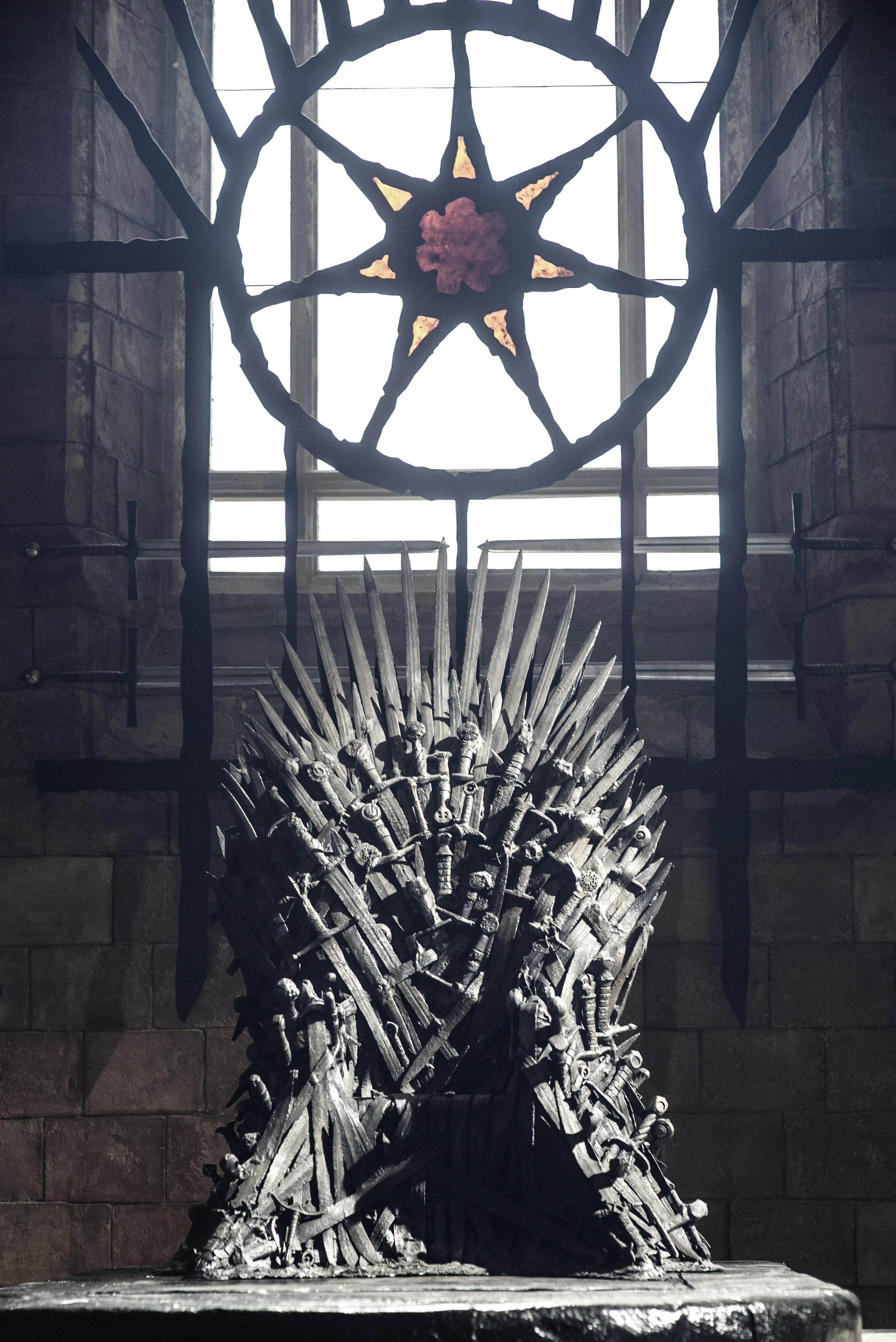
The crescendo of the pyrotechnic spell which the speakers had been steadily constructing over the course of the night came in the final empyreal performance by Moira Finucane, who fully earned her description as a ‘writer, director, performer and creator of volcanic and magic realist worlds … and intimate theatrical spectacles, internationally renowned for her arresting mix of provocation and entertainment.’ Bedecked in a shimmering black gown and headdress somewhere between the Statue of Liberty’s aureolic diadem and Westeros’ Iron Throne, she emerged onstage swaying and arm-waving in time to cosmic strains. ‘Kingdom Animalia,’ she intoned in the commanding resonant boom of an elven queen. ‘Phylum Chordata, just like us. Not like us, Class Aves,’ she continued as if reciting words of power. ‘Family Alcidae, Genus Pinguinnis, Species Impennis.’ This scientific classification of the now-extinct great auk launched an abstracted traipse through humanity’s relationship with the planet as viewed through writings both dramatic and innocuous, from Proverbs 26:11, to the cruel 1794 words of sailor Aaron Thomas on the ill-fated penguins, to Charles William Beebe on extinction in 1906, to Rachel Carson in 1962, to 2018 personal correspondence from another Indigenous environmental firebrand, Eleanor Dixon (‘a genius with 60,000 years of understanding of her land’) to Stan Grant in 2016 and Desmond Tutu in 1999.

Though her declamatory style courted the absurd and at times dipped into the ridiculous, Finucane performed with such ardor and conviction that a possibly skeptical audience stayed with her, tittering only, perhaps, as intended, when the monologue descended abruptly from the grand themes of environmental destruction to supplying the tangible details of how to contact the Northern Territory Chief Minister’s Office to express concern over the impact of fracking on the tourism industry, all while maintaining its grandiose delivery.

Paraphrasing Tutu as she slowly departed (perhaps significantly to stage left), she encouraged her viewers to keep ‘trending, trending, trending towards the good,’ and left the audience in the lingering strings and darkness to awaken with the lights as if from a dream.

If the gala is a sign of what we are to expect from the Wheeler Centre in 2018, it will be an impassioned, diverse, provocative, progressive year indeed.

Thanks for reading

LPL