Showing posts with label Religion. Show all posts

Wednesday, 28 February 2018

Firebrands and double-edged flaming (s)words: the wheeler centre gala 2018 review

Wednesday 28 February 2018


Monday’s eighth annual Wheeler Centre Gala saw eleven intellectual incendiaries light up Melbourne’s Athenaeum theatre with variations on the likely theme—for an institution dedicated to the holy trinity of books, writing and ideas—of ‘words on fire.’ The characteristically malleable topic incited diverse interpretations from an estimable ensemble of writers, performers and activists, ranging from personal parables to political polemic, performance and poetry.

And diversity truly was the word of the night. Excepting the transitory appearance of Centre director Michael Williams, who seized the stage long enough only to make his obligatory thanks, gracious self-deprecation and inevitable lefty in-jokes about African gangs and the definition of ‘partner,’ the lineup was a veritable straight white male–free zone. Indeed, holding forth as the speakers did on such progressive subjects du jour as environmentalism, disability rights, Indigenous oppression, the trans experience, class politics and even a content warning or two, the roster could well have emerged wholesale from the very nightmares of Miranda Devine.

Any outnumbered conservatives in the crowd might have snatched hungrily at Aunty Carolyn Briggs’ portents of overzealous offence-taking and language-policing as a slippery slope toward censorship, but the Boon Wurrung Elder’s discussion of privilege and disadvantage in language use revealed a position far removed from the typical PC-bashing proponents of Brandis’ ‘right to be bigots.’

Briggs’ extended Welcome to Country offered a sedate start to the evening, with reflections on the history of words as weapons used both by and against Indigenous Australians, pointing to the subversive meanings said to hide in Aboriginal names such as Coonabarabran (putatively ‘white man’s shit’) and the Moomba festival (folk-etymologised not as ‘let’s get together and have fun’ but rather ‘up your bum’). 

Briggs concluded by inviting the audience to use the language of the land—wominjika for ‘welcome’—and to fulfill the obligations traditionally attendant on that welcome: ‘not to harm the lands and waters and not to harm the children.’ It was an exhortation later taken up by Indigenous author Tony Birch in his address, an admiring paean to Wangan and Jagalingou spokesperson Murrawah Johnson and her incendiary words to author–activist Naomi Klein on Adani’s proposed Carmichael coal mine: ‘We have seen the end of the world and we refuse to accept it.’ Birch traced the violence enacted upon Johnson’s ‘personal and genealogical history’ through the language of Terra Nullius and the Acts of Parliament that have governed Indigenous lives to illustrate the heroism, the injustice, and the irony of her leadership in the fight against the mine.

My view of the stage through the perfectly curled wave of another spectators hair.

Before thirteen asymmetrical bars of light flaring and fading between performances like the still-glowing trunks of bushfire-blackened trees, each speaker took to the stage in succession, without the intrusive inelegance of any master of ceremonies offering aggrandising introductions. This lent the night the dreamlike intimacy of yarns around a transfixing campfire, each one free to roll into the next and build upon it without any break in the spell.

Commencing the official program was writer, actor and director Leah Purcell’s lively autobiographical narrative, a touching and comic recount of the words and phrases that marked her lifetime journey from poor rural daughter and young caretaker of an alcoholic single mother to the acting career she had always dreamed of. Replete with a reenactment of the dance she performed impromptu down the main street of Bergen after a compliment from a stranger, the tale at moments challenged even Purcell’s polished performance skills with tears. Malaysian-Australian poet and rapper Omar Musa likewise gave a stirring personal account of his lived experience, counterbalancing the poetic drama of the oration to come with a casual ‘’S’goin’ on?’ as he arrived onstage. He spoke of his lifelong battles with a father fervently devoted to the Word of God, and the secret words of inspiration imparted by his mother in stolen eight-minute car rides on the way to school. And in the night’s penultimate speech, blogger and activist Carly Findlay drew on her (ever-political) personal experiences to question whether social justice movements actually live up to the buzzwords of inclusivity, diversity and intersectionality when it comes to disability.

A persistent motif, of course, was the power of words. The power of a politician’s well-crafted speech to inspire a lifetime of loyalty in the case of writer and anthropologist Sally Warhaft’s Republican niece, or Warhaft’s own affection for the rhetoric of Paul Keating, which preceded a writer’s lament for the declining communicative power of today’s politicians at home and abroad. Or the power of writing to give a child control and escape from an unstable upbringing that a garlanded and needlessly bashful Rosie Waterland—she of the famed Bachelor recaps—conveyed. Veteran of the Melbourne Workers Theatre Patricia Cornelius too demonstrated the potency of words forcefully in the opening of her crowd-pleasing ode to profanity, with a rapidfire fuck-and-cunt-laden tract from her play SHIT (a linguistic challenge to which the Auslan interpreter rose admirably). In the comedic highlight of the evening, Cornelius delivered an insightful interrogation of the class politics of snobbery about swearing, railing against the bourgeois insistence that the theatre remain a polite, expletive-free middle-class space and the notion that the underclasses should never express legitimate rage through swearing. 

Other presenters built on Briggs’ earlier meditation on the nature of words as double-edged (flaming) swords – their ability, in Williams’ terms, to burn and to heal. From honey, darling and sweetheart to dude, bro, mate and man, queer nonbinary activist and writer Nevo Zisin reflected on the usefulness and limitations of words and labels in defining and limiting their identity pre- and post-transition, while actor Rachael Maza powerfully contrasted narratives of her grandfather from biased official records against family memory and empathetic deduction, lingering over the difference between the concept of history and the past itself.

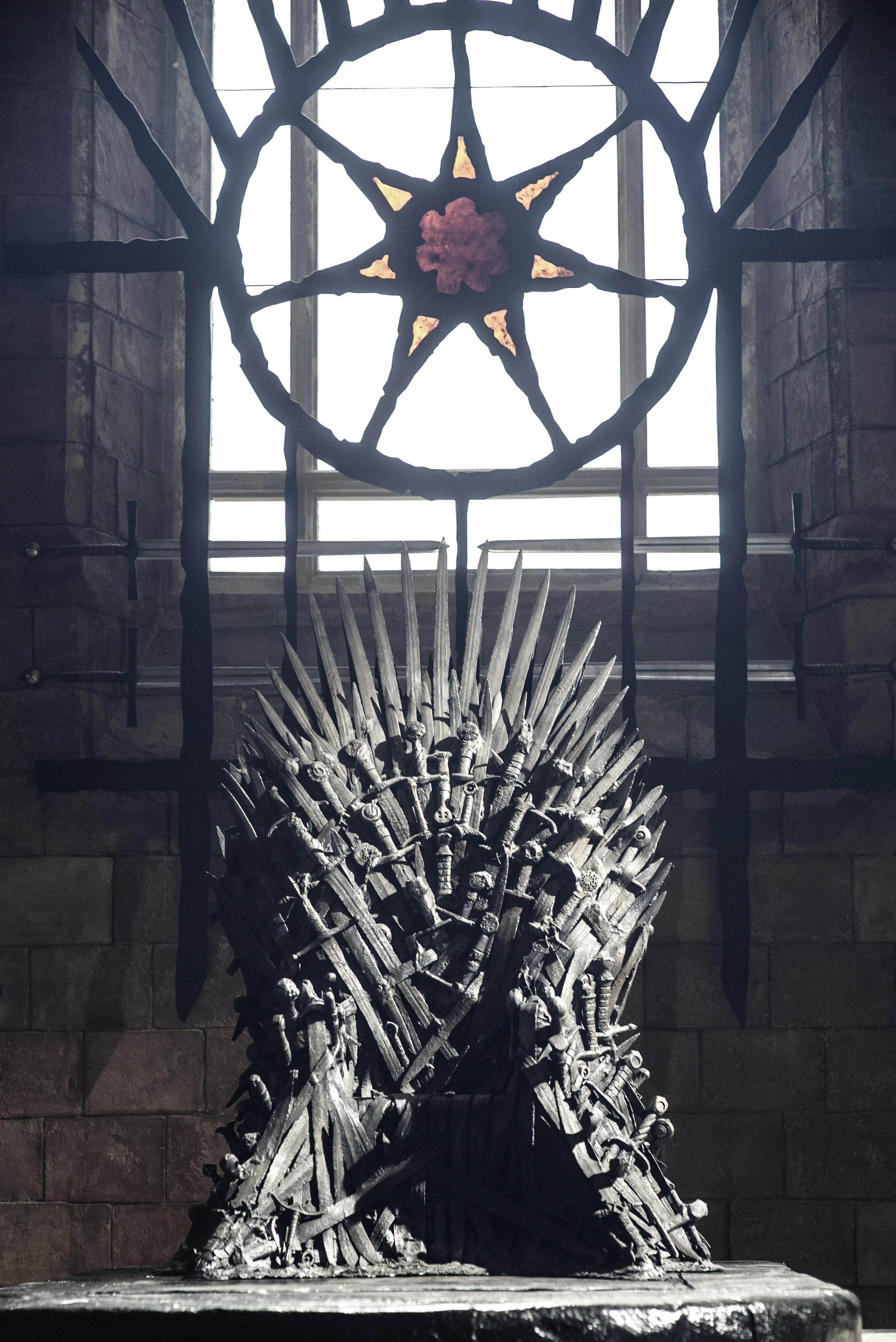
The crescendo of the pyrotechnic spell which the speakers had been steadily constructing over the course of the night came in the final empyreal performance by Moira Finucane, who fully earned her description as a ‘writer, director, performer and creator of volcanic and magic realist worlds … and intimate theatrical spectacles, internationally renowned for her arresting mix of provocation and entertainment.’ Bedecked in a shimmering black gown and headdress somewhere between the Statue of Liberty’s aureolic diadem and Westeros’ Iron Throne, she emerged onstage swaying and arm-waving in time to cosmic strains. ‘Kingdom Animalia,’ she intoned in the commanding resonant boom of an elven queen. ‘Phylum Chordata, just like us. Not like us, Class Aves,’ she continued as if reciting words of power. ‘Family Alcidae, Genus Pinguinnis, Species Impennis.’ This scientific classification of the now-extinct great auk launched an abstracted traipse through humanity’s relationship with the planet as viewed through writings both dramatic and innocuous, from Proverbs 26:11, to the cruel 1794 words of sailor Aaron Thomas on the ill-fated penguins, to Charles William Beebe on extinction in 1906, to Rachel Carson in 1962, to 2018 personal correspondence from another Indigenous environmental firebrand, Eleanor Dixon (‘a genius with 60,000 years of understanding of her land’) to Stan Grant in 2016 and Desmond Tutu in 1999.

Though her declamatory style courted the absurd and at times dipped into the ridiculous, Finucane performed with such ardor and conviction that a possibly skeptical audience stayed with her, tittering only, perhaps, as intended, when the monologue descended abruptly from the grand themes of environmental destruction to supplying the tangible details of how to contact the Northern Territory Chief Minister’s Office to express concern over the impact of fracking on the tourism industry, all while maintaining its grandiose delivery.

Paraphrasing Tutu as she slowly departed (perhaps significantly to stage left), she encouraged her viewers to keep ‘trending, trending, trending towards the good,’ and left the audience in the lingering strings and darkness to awaken with the lights as if from a dream.

If the gala is a sign of what we are to expect from the Wheeler Centre in 2018, it will be an impassioned, diverse, provocative, progressive year indeed.

Thanks for reading

LPL

Tuesday, 4 October 2011

The best kind of people come from austinmer

... is what I realise the day I spend six hours travelling via public transport from Sydney to Wollongong and back. It could've been five, but I misheard the marshal and accidentally boarded an all-stops replacement rail bus instead of an express to Waterfall on the way back. At first I don't mind I have the latest copy of Voiceworks to read and nothing urgent to do once I get home but that's before the combination of a two-day diet consisting only of bacon and egg rolls and iced coffee, the electromagnetic energy radiating out the bottom of my awkwardly tilted laptop, and the rollicking of the anfractuous, mountain-hugging coastal road slackens the drawstring of my stomach and drives my eyes up and out the window, to Austinmer.
 
Or, not Austinmer, but that whole stretch of coast and bush between Thirroul in the south and Otford in the noth. It's the kind of place where all the real estate signs proclaim the houses are 'well-appointed'. The kind of place with a lot of houses painted blue, and a lot of (post) modernist architectural statements straight out of Grand Designs. But the mansions are counter-balanced by the shambolic abodes of hippies who bought the land before it was cool, and didn't sell it once it was. The hippies pull the average political persuasion of the area decisively left (and we all know left-wing people are just generally better) so the dead trunks of telegraph poles are hugged by a constant supply of  environmental campaign posters.

It's the kind of place populated enough to have a healthy community, but not populated enough to make its denizens callous to one another. It's the kind of place you can't grow up in without being a surfer. Where you're sensibly non-religious, but still civically active. You did the right amount of extracurricular sports and activities as a kid. You went to scouts but you don't seem like the kind of person who went to scouts.

I think I'm going to spew. It reminds me of occasionally feeling queasy on the SydneyWollongong journeys of my childhood between Mum's and Dad's, when one of them would arrive to pick me and my little sisters up earlier than expected and we would rush dinner before scrambling out into the car with packed bags and bare feet. I'm not sure whether you're supposed to look straight ahead through the windscreen when you feel car sick, to try and trick your body into thinking you're not moving, or out the side windows, so your body feels in sync with how fast it's actually going. I can't remember because, apart from those few times, I never needed to know as a kid. 'Doesn't that make you feel sick?' my friends and their parents would ask me as I read or played my Gameboy in the car on the way to their South Coast caravans or grandparents' houses, where I was joining them for their family holidays. 

'Nope, I don't get car sick,' I'd reply proudly.

I seem to remember one of those friends I went away with sitting in the front seat, overriding the 'bags-ings' and 'shotguns' of his siblings with claims that he needed to sit there because he got car sick, so I decide on looking forward. I should Facebook that friend when I get home, I think.

You have Facebook, Austinmerian, but you don't use it often, although you still have between five and seven hundred friends. In part this will be because of your parents' avuncular and materteral attitudes to the children of other people, because of their welcoming of other kids into your home when you were young. Visitors to your house felt comfortable standing around your kitchen island eating from your cornucopic pantries, dripping water from your pool onto the tiles and talking with your parents about the HSC.

Your parents will be twice as old as mine, but they'll pull off their grey hair and thin-rimmed glasses. They accumulated enough money and life experience before you were born to devote themselves to you and your one sibling once you were here, so you got your learner and provisional licenses on your sixteenth and seventeenth birthdays respectively. They're tall and slim and easy and welcoming, your parents. They're doctors, or lawyers, but not business executives. More, psychologists. They'll have an interest in organic living and the arts, with entire walls of their houses devoted to books and season passes to the Sydney Theatre Company in their wallets. You will follow suit and study science, but live art – environmental or veterinary science (the moral ones) during the week and indie folk music festivals and poetry readings on the weekends.

The coach pulls in to Coledale and I consider getting up to ask the driver to unlock the toilet at the back. He looks up into the rear-vision mirror at the smattering of passengers on the bus, but no one gets up. In fact, no one has gotten off since before Thirroul. I wonder if they all made the same mistake I did; none of them look like you, my idealised Austinmer resident. But then, you have a car and a license; you wouldn't need to catch the rail bus. 

I get up to ask about the toilet, but the bus driver sees me and opens the door, watching me, waiting for me to get off. I'd thank him as I alighted and wait graciously for him to ease the bus off the gravel onto the road before crossing and making my way home in the afternoon cold. My parents would be together in the kitchen, chopping vegetables and sipping red wine and listening to jazz and laughing at the border collie watching them hungrily for a strip of meat. But it's obvious. I know when I came in, they wouldn't recognise me.

I stand there in the aisle of the bus for a moment under the driver's gaze before deciding I can make it to Waterfall without being sick, waving him an apology and making as if I was just getting up to take another seat. 


ThirroulOtford
(Image from Google Maps)

This is the product of the end-of-semester creative high I was talking about in my last post, but I'm not entirely sure what it is. It was just a series of transcribed semi-coherent thoughts initially, then I stripped half of it away and inserted linebreaks to make it a poem, but linebreaks alone do not good poetry make, so I rewrote it as prose and inserted more until I got what you see here. I suppose it's a short story, although I hesitate to call it that. Whatever. It is what it is. And while it's clearly working with a lot of truth, it isn't meant to be taken as an expression of my real thoughts; it's definitely fiction.

Tuesday, 16 August 2011

Miranda devine serves the kind of baloney only judge judy can cut through

Tuesday 16 August 2011


 (Image from http://inquisitiveelks.blogspot.com)


‘How long has she been your wife?’ Judge Judy demands of a terrified young man in a family dispute.

‘Three years,’ he answers demurely.

‘Uhuh.’ She points to the man standing at the other table. ‘And how long has he been your father?’

‘Twenty-three years.’

‘Exactly. The divorce rate in this country is 52%. There is at least a 52% chance that the woman standing next to you won’t be there in twenty years.’

I had to transcribe this exchange here because of the coincidence of its being so salient and being on TV at the exact time I was writing this post.

Marriage, like religion, does not bestow automatic morality or piety. In both cases, the institution will be made the best of by good people, and the worst of by bad. I’m talking, of course, like every man and his blog, about Miranda Devine’s latest piece of illogical swill, and specifically her outrageous claim that ‘[y]ou only had to see the burning streets of London last week to see the manifestation of a fatherless society.’

The face of nonsense.
(Image from http://www.dailytelegraph.com.au)

The whole thing is cheap, bitter, tasteless and half-baked, but that one argument embodies the hair you just have to spit back out. The incoherent ramble starts with a whinge about all the fuss over Penny Wong’s lesbian pregnancy and moves through various other nonsensical topics such as a gay conspiracy to use political correctness to demonise and destroy the nuclear family. As much as I’d love to tip the entirety of this unholy conglomerate out on the table and systematically explain what’s wrong with every single component part of it, I simply don’t have the time and neither, probably, do you. Plus, there’s plenty of other commentators already on the job. Patrick Lenton and Tom Ballard have weighed in, and I’m sure Geoff Lemon is concocting something brilliant even as I type. So I’m just going to stick with the hair.

Essentially, Devine’s ‘argument’ is that the insolubly complex bundle of social, political and economic factors that led to the London riots can be explained by one answer: God. Oh no, sorry. That’s just everything else. I meant fathers. Or a lack thereof. Britain, she says, has the highest proportion of single mothers in Europe. Therefore, we shouldn’t allow gay marriage because children need fathers or they become scumbag rioters ... Except male gay marriage because, by that logic, kids with two fathers would be TWICE as civically responsible. So just no lesbian marriage, then.

I’m losing track of that hair already ...

What I really want to say is that marriage – the normal, heterosexual kind – does not have some inherent property that would stop kids becoming scumbags. Like I said at the beginning, the institution is irrelevant. It’s the quality of people in the institution that make the difference. So, yes, there might be statistics that show that kids with married parents are better off or whatever (not that Devine references any such statistics or gives any ... y’know ... evidence for anything she says, I suspect because that would invite people to bring up the favourable statistics about the children of same-sex partners), but the reason for those statistics is that good, normal, intelligent people are more likely to form stable relationships and get married, not  that when people get married they magically become responsible parents. Does Miranda think that if the putative scumbag (ex-)boyfriends of the supposed scumbag mothers of the scumbag London rioters had been drugged-up jobless alcoholics inside marriage and therefore present in the home, their children would’ve grown up well-adjusted? Probably, because she’s a stupid idiot. Pardon my language, but you see, my parents broke up when I was five, and they were never married.

And just for the record, the married couple on Judge Judy, who have one daughter (not exactly 2.5, but I'm sure they're working on it), had their claim dismissed. The husband's father refused to give them back a dog they'd previously maltreated, and Judy came down on the father's side. 'Last bastion of bourgeois morality', indeed.

Wednesday, 27 July 2011

'... So open-minded that our brains drop out'

– Richard Dawkins, The Richard Dimbleby Lecture: 'Science, Delusion and the Appetite for Wonder' 1996

Wednesday 27 July 2011

The other night I was discussing religion and politics with someone whose opinion I really respect when, as conversations of that nature are wont to do, it got heated and devolved into a more personal argument.

‘I can’t believe how closed-minded you’re being,’ she said at one stage. I didn’t really respond to this accusation at the time, but it’s stayed with me more than anything else since the argument, I suppose because I don’t think of myself as closed-minded.

And yet I understand how, from her perspective, it would’ve seemed completely closed-minded. If closed-mindedness is being non-receptive to new ideas, and every time she asked, ‘But what about this?’, ‘What about that?’ I still wasn’t being swayed, then it would be reasonable for her to conclude that my mind was made up and there was no way anything was going to change it.

That’s the problem I’m interested in. But let me first explain a little about my spiritual history. As a child I was sent to a private Catholic school because, although not religious, my parents wanted me to be ‘a good person’ and to not be negatively influenced by the types of kids attending the local public schools in our low socioeconomic area. I wholeheartedly embraced Catholic doctrine, and I was distressed by my parents’ apathy towards the topic. I was taught it was true. Religion was a subject right alongside English and Maths; it was my favourite subject, infact, and I took it very seriously. Paradoxically, it was the fervour of my belief that lead to my rejection of it.

For me, since it all came from the same place, it either had to be entirely true or entirely false. As I grew up it became increasingly evident that elements of the faith were absolutely absurd, and as I began to question those elements, I reluctantly had to question it in entirety. Why would some things the Bible says be true and others not? This is an eleven-year-old’s logic. I can still never understand how people can pick and choose which parts of the Bible they want to believe.

From Catholicism I turned to a rigid atheism that lasted about until I was fifteen. Around then I began entertaining vaguely spiritual ideas. I was open to the possibility that there was ‘something else’, and I also formulated my own semi-karmic and Secret-like theory of the universe which included the principles that ‘everything happens for a reason’ and ‘everything works out for the best’, and was based on empirical, personal experience–based evidence long before I had any contact with ‘The Secret’ or any of those similar quasi-religions that have become so popular in the last couple of years because Oprah likes them.

(Image from http://brucewagner.files.wordpress.com/)

Despite my spiritualist dabblings, I was still opposed to institutional religion at this point, which meant I followed atheist discourse with interest. The more contact I had with these texts and ideas, the more I agreed with them, and the more I was torn between atheism and spiritualism. I swung wildly between the two at first, then vacillated mildly before finally stabilising my opinion. The problem was that I had come up with my theory myself, and it had been reinforced by the success of The Secret and Eckhart Tolle’s books. It seemed to work so well. It seemed to be so true. It made so much sense.

The deciding factor was when I realised something about the human mind. It is designed to make patterns, to find meaning, and no matter what happens, when you look back over your past or any event, you will always be able to find a causal sequence of events that led to it. In this sense, everything really does happen for a reason, but in the most mundane way. Not due to some greater universal plan, but because one thing can’t happen without another thing happening first (and don’t try to use that as an argument for Creationism, because as has been pointed out by many but listened to by few, saying ‘God did it’ only changes the question to, 'What made God?'). I'm now also more suspicious of things that 'just make sense', because so many things 'just make sense', but with interrogation, aren't necessarily true.

I still have a soft spot for that kind of philosophy, though. I think unlike the world’s major religions, it’s fairly harmless, and it does work. There’s a possibility that the law of attraction applies on a metaphysical level, and you can draw positive events to you by emitting positive thoughts, but even if that’s not the case, as I’m inclined to think, that’s still a good way to live, and it will still work, because thinking positively and optimistically will make you think the best of whatever happens to you anyway.

My opinion now is not certain. I believe that there is more that we don’t know about the way the universe works than what we do know, and that one of the things we don’t know about could be that elusive concept of ‘something else’ that everyone’s always talking about. But that concession is still a thousand light years away from the idea that that ‘something else’ is the Christian god (or any god). I’m uncertain about what that something else could be, but I’m almost certain it’s not a god from any of the world’s religions.

So why, you ask, do I call myself an atheist? Wouldn’t agnostic be more appropriate? Possibly. I’m probably paraphrasing Richard Dawkins here, but you can never reasonably be a hundred per cent sure of anything. That doesn’t mean I have to say I’m agnostic about the existence of a unicorn or a leprechaun or any of the other mythical figures atheists always use in these scenarios.

The fact is that, based on the information we have, I think the most reasonable position is that of atheism. Yes, there MIGHT be something else, and we can conjecture as to what that might be, but it’s unreasonable to actually believe any of those conjectures. On Dawkins’ 1–7 scale of surety of the non-existence of a god or gods, I’d put myself at 6.5, meaning I’m just close enough to seven to round up to it, although I’m still not actually a 7.* To say that you’re a 4 is to suggest that there’s an equal likelihood of the existence or non-existence of a god or Gods, which is probably not what you mean, or at least not if you thought about it properly. It’s useless to throw your hands up in the air and say, ‘I’m never going to know for sure, so I’m not going to speculate.’ Instead, you acknowledge that you’re never going to know for certain, then ask yourself what you think is probably true, and live your life as though it is. To do otherwise would be like a historian saying, upon encountering relativism for the first time, ‘Well, I guess that’s it. We’re never going to know what REALLY happened in the past, and it’s impossible for me to interpret the evidence without imparting my personal bias, so I may as well not bother.’

*It’s also worth noting that Dawkins himself doesn’t claim to be a 7, all you moderate Christians who cry, ‘Dawkins is just as bad as the fundamentalist Christians!’ or you lukewarm atheists who say ‘I’m an atheist, but I’m not like Richard Dawkins!’ without even having read his work and simply assuming that, because he is among the most vocal and famous of atheists, he must then also be among the most extreme.

But the point of that ‘short’ history was to explain that my mind is not ‘made up’. Conceivably, evidence or argument could change it, but to be honest, it probably won’t. Does this make me closed-minded? I’m not sure.

Below are the actual definitions of open- and closed-mindedness, lifted from Dictionary.com:

Openminded
1. Having or showing a mind receptive to new ideas or arguments.
2. Unprejudiced; unbigoted; impartial.

Closed-minded
1. Having a mind firmly unreceptive to new ideas or arguments.

I think we're dealing with the opposite of the first definition of openmindedness here, because my interlocutor wasn't accusing me of being prejudiced or bigoted, just being unreceptive to the ideas and arguments she was presenting.

I would argue that the key word in both relevant definitions is 'new'. Part of the problem, I think, is that I’ve already thought about religion so much. In a world where it's considered impolite to bring up religion, and where even many of the religious seem to practice without reflecting on or questioning it, here I am almost obsessed with it. For whatever reason, it fascinates and enrages me. It’s one of the five things I’ve noticed I’m most concerned with. I’m forever thinking, writing, reading and talking about it. I’ve consumed an enormous amount of information on the subject and I’ve already processed it and come to resolutions from it. It wouldn’t make sense if there was one thing you could say that would change the way I think on the issue. It would be like hovering over a full bath tub squeezing in individual drops of dye, waiting for it to change colour. Whatever question or argument you throw at me, I’ve probably already heard it and, if I couldn’t come up with an answer or rebuttal that I find convincing, then I would’ve already changed my mind and subsumed it into my ideology. In other words, nothing I was hearing was 'new'.

Again, I ask, is that closed-mindedness? Is open-mindedness bending your opinion of what is the truth to accept anybody else’s? Is it simply the state of indecision that comes from not having thought about something enough that you are willing to change your mind every time you hear a new argument? Is it subscribing to that pseudo-intellectual belief that all arguments are equally true? I don’t think so. Relativism rightly taught us that everyone’s opinions are true for themselves and that everyone is equally entitled to their own, that there is no one way of doing things that is ‘superior’ to another just because other ways are different, that what is considered ‘good’ for one person, society or culture can be bad in another, but it’s wrong to take those lessons and extrapolatethat ‘all arguments are equal’, and don’t try to tell me it isn't. Don't try to tell me that's what you believe, because it isn't. Yes, everyone is entitled to their opinion, but no, you wouldn’t say that one person’s belief that it’s good to set off a bomb and go around an island in Norway shooting people is as reasonable or good or true as my belief that it isn’t.

Which leads into another issue. Obviously there are people in the world who take their faith very seriously and who have devoted as much, if not more, time and energy thinking, reading, writing and talking about it as I have (as evidenced by Behring Breivik's 1500-page book), who have the complete opposite opinion to me, but are the types of people myself or the moderates of society might call closed-minded. In other words, it can’t just be that a person has devoted a lot of energy to an issue that excuses their being closed-minded about it.

Maybe these people are only ever called closed-minded in the other sense of the word, as in prejudiced and bigoted. But if we are talking about the first meaning, all I can suggest, in my consciously subjective and objectively unprovable opinion, is that these people have been indoctrinated and are working from the position of proving the point they already believe, rather than seeking the truth that evidence and reason suggest. And that’s something I’m glad no one can ever accuse me of. My spiritual journey has been self-driven. I’ve rejected indoctrination, then formulated my own belief system which, in turn, I scrutinised to the point of rejection (my two mottos to my children will be questions starting with ‘How would you feel if ...’ for empathy and ‘Think again’ for critical thinking; I want them to be able to question even beliefs that they arrived at themselves).

My beliefs are not fundamentalist, because they are not immutable, and they are not based on vague notions of instinct or feeling ‘what’s right’; they have been pushed beyond that, questioned, modified and qualified into a largely cohesive (I would be suspicious of anything entirely cohesive), rationally defensible, though not impervious, theory that I’m proud of, which is more than can be said of most beliefs.

Is that closed-mindedness? If it is, I don’t think I want to be openminded.

But that’s a lame way to end an essay, so I’ll go on: I think the meaning of closed-mindedness does extend to people who are only closed-minded to incorrect ideas. As a result of this, I can no longer regard openmindedness as an unconditionally good thing. I think it is possible to be justifiably closed-minded. After all, if someone proposes a ridiculous idea, your mind is closed to it. As you develop a more complete opinion on something, your mind can become justifiably more closed and, unfortunately, people deem that a bad thing.

Saturday, 23 July 2011

Book review: tina fey's bossypants

Saturday 23 July 2011
(Updated Wednesday 4 January 2011)

After a semester studying abroad, I recently spent forty-six hours straight languishing in Heathrow Airport, a fact to which I'm sure any of my Facebook friends will attest, due to the incessant status-update plangencies that would have been plaguing their feeds. Awaiting the time of my appointed, triumphant (or, rather, bedraggled and slightly malodorous) return to Sydney for such an expanse of time demanded considerable intellectual sustenance, but with internet access costing ten pence per minute and my AustralianUK adapter for prolonged use of phone, laptop or iPod out of commission, I was obliged to purchase more books from the limited selection of an airport-sized WHSmith.

Evidently my subconscious thought I was in need of cheering up because the two books I selected were Terry Pratchett's 679th Discworld installment, I Shall Wear Midnight, and Tina Fey's autobiography Bossypants. I think it must've been how hot she looks on the cover that made me choose to read Fey's book first:

Yowza! (A quote from Don Fey, Tina Fey's father, on the back cover under the heading 'advance praise for Bossypants' reads 'I hope that's not really the cover. That's really going to hurt sales.'

There's a certain puerile pleasure that comes with finishing a book in a single day, a psychological relic, perhaps, of a time when the measure of your coolness was how quickly you'd read the latest Harry Potter. In the case of Bossypants, however, I can't help but feel that it wasn't my reading prowess that accomplished the feat (especially since I'm not actually that fast a reader at all), but a certain ... 'thinness' in the book itself. At 277 pages, it felt a bit slapped together and brief, especially towards the end when Fey begins recounting individual scenes from 30 Rock and reproduces the entire transcript from her notorious Sarah Palin and Hillary Clinton Saturday Night Live skit, not that I didn't enjoy reading both of those. 'I could go on,' says Fey at one point, after having listed three or four lines-worth of luminaries to have emerged from an improv company she belonged to, 'but my editor told me that was a cheap way to flesh out the book' (81).

Reading it, though, you understand why Bossypants isn't a seven-tortuous-years-in-the-making magnum opus. You wonder, in fact, how she managed it at all, in spite of her insistence that the stress levels of her writing job are comically minimal (on a graph comparing them with those of miners, Chilean miners, and active military servicemen) and her hatred of being asked 'how she juggles it all'. I'm not sure about dismissing the difficulties of her working life by comparing them with the stress experienced by soldiers – it's not all about stress; it's about how much time you have in the day, which seems very little in Fey's case. The airiness of the book isn't necessarily a bad thing, anyway. It just makes it one of those 'light reads' you're always hearing about.

Besides, I don't think Fey has to try that hard to be funny. It felt effortless. Reading the book, I found myself lying on the floor of the Heathrow Airport Terminal 3 seating area pissing myself every couple of minutes, much to the annoyance of everyone trying to sleep around me, I'm sure. The funniest parts for me were those where she created an irregular mental image, such as in one of her tips for 'me time' activities when you have a baby: 'Say you're going to look for the diaper crème, then go into your child's room and just stand there ...' (243) or when she recounts receiving a Modess 'my first period' kit from her mother: 'I shoved the box in my closet, where it haunted me daily ... Everytime I reached into my closet to grab a Sunday school dress or my colonial-lady Halloween costume that I sometimes relaxed in after school—"Modesssss," it hissed at me. '"Modesssss is coming for you" (13–14). Or else it was the times she just slipped a joke in there with you barely realising until it hit you: 'Of course I know now that no one can "steal" boyfriends against their will, not even Angelina Jolie itself', or 'I'll bet Margaret Thatcher would say the same if she were alive today.* [And then, in a footnote] *Apparently Margaret Thatcher is alive and says of course she would have told the nanny about the problem and she thinks I am a complete chickenshit' (257).

It was lucky for all of this hilarity, because if you'd asked me if I wanted to read a book whose subject matter dealt predominantly with the female experience of puberty, beauty and appearance issues, feminism, motherhood, and photoshoots, you can guess what my answer would've been. YES PLEASE! But yeah, couldn't quite escape the fact that the book was marketed to women, which I didn't know when I bought it. 'It's not quite as quease-making as when you lose your tampon string,' she says of putting in contact lenses, 'but equally as queasish as a self–breast exam. If you are male, I would liken it to touching your own eyeball, and thank you for buying this book.'

But the book did irritate me every now and then. I got over the self-deprecating ugly jokes after a while. I mean, she's effing gorgeous, with a MILF rating off the charts, so what's she talking about!? I don't necessarily think it's fake humility, I just found it excessive. Maybe Australians have a more refined sensibility to self-deprecating humour, since it's like, our thing.

And all that talk of the facial scar! She kept on going on about it and I was like, huh? What is she talking about? I've literally never noticed it. In fact, I still can't find it anywhere on her face. Maybe it's makeup, or airbrushing, or distraction by her general hotness, or the fact that I've apotheosised her to the extent that I can no longer detect any form of imperfection in her person, I don't know. Actually, you know what it probably is? My habit of not paying attention to/retaining information about things I don't care about. Maybe if I watched Mean Girls again, I'd see it and be like, 'Ohhhh yeahhhh!' Any excuse to watch Mean Girls again ...

'Ugh, my facial scar is huge.'

Also, I think her editor was a bit overzealous on the quotation marks, there. It could've just been that they were all double quotation marks, but they really stood out to me, often as not really being necessary. It kind of made it feel like an awkward email from your best friend's mum, who's enthusiastic about the internet but hasn't quite mastered the conventions of e-communication yet and says things like, 'I heard from "our little girl" that you guys all had fun at the races last weekend! :D Did you make any "big wins"???!!! :oP'

And I'll admit, I was also a little disappointed with the number of mentions of God. You let me down, Tina. But my God-mention tolerance level is significantly lower than the average person's. It's not like she was preachy, or anything. I just expected such an obviously liberal, talented, intelligent woman to be ... irreligious.

Those small and few (is there an antonym for 'multifarious'? There should be ...) reservations aside, Bossypants was a hilarious "light read", as they say!!! :o) !!!?!