Showing posts with label Empathy. Show all posts

Monday, 19 March 2018

And hail they did: welcome to night vale’s ‘all hail’ review

10 February 2018*


If you’ve never heard of Welcome to Night Vale, you could surmise a lot from the crowd outside Melbourne’s Comedy Theatre last night. It seemed the entirety of the fandom’s local contingent had descended on the corner of Exhibition and Lonsdale in full devotee regalia—geeky, affable youths in official merchandise, gothic corsets and steampunk goggles, bafflingly obscure costume homages, and hair dyed in every hue. 

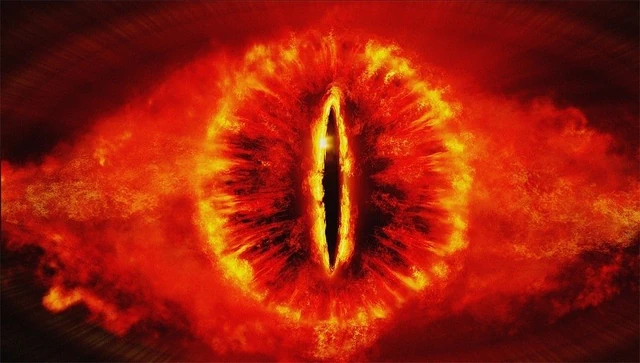
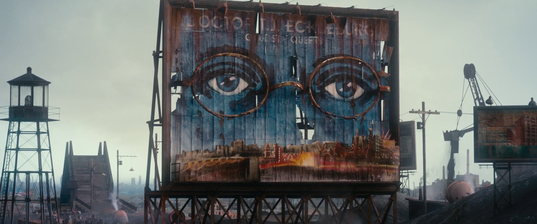
But the prevailing colour of the night, sported by almost every second attendee, was undoubtedly the signature purple of the long-running US podcast’s logo: a runic, crescent moon–pupilled eye hovering ominously above familiar water tower and powerline emblems of rural America, part-Sauron, part–Dr TJ Eckleburg.


Each episode of the bi-monthly internet series represents a broadcast by fictitious radio host Cecil Palmer, beloved commentator on the weird, nonsequitur, Lovecraftian happenings of Night Vale, an imagined desert community populated by mysterious forces and agencies competing to terrorise quiescent townsfolk. Fans of the show are drawn to its potent combination of creepy paranormal tropes, deeply ironic and self-aware humour, and Tumblr-style progressive politics promoting a message of universal acceptance for self and other alike.

In the currently touring live show ‘All Hail,’ the sudden inexplicable appearance above the radio station of ‘the Glow Cloud’—according to the Night Vale Wiki ‘an eternal deity predating reality and currently serving as the president of the Night Vale School Board’—instigates abject worshipful prostration and mindless recitations of fealty from the town’s populace, sending Cecil on a mission to determine its motives and appease the malevolent nebula.

The quest is punctuated by regular segments imported from the podcast such as an infomercial from ‘sentient patch of haze’ Deb, a collection of comically moribund horoscopes, a forecast of the delightfully bizarre events scheduled on the Community Calendar and, of course ‘the Weather’—a performance by the charming pint-sized musician Erin McKeown, who over-estimated the melodic and mnemonic aptitude of the average Melburnian theatregoer with admirable consistency and patience. The show also features appearances from new and recurring characters in the Night Vale universe—snobby local music store proprietor Michelle Nguyen, shapeshifting sixteen-year-old Josh Crayton, bibliophile teen militia captain Tamika Flynn, and time-travelling intern Jeffrey Cranor.

Erin McKeown as 'the Weather.'

Perennial motifs from the podcast find expression once again in ‘All Hail,’ among them a recurrent anxiety about the rapid consumption and disposal of culture and the pace of contemporary life. After entrapping the audience into laughing at how ‘2014’ vaping is, the charismatic show-opener Meg Bashwiner quips, ‘It’s just like a millennial podcast audience to throw shade at something that was four years ago.’ And in the show proper, Nguyen references in stereotypical upward inflection ‘super-old retro music like The Killers and Usher.’ The obnoxious hipster persona Nguyen’s character satirises is itself a little stale in 2018, though her appearance yields such highlights as the fourth wall–breaking real-time, part-improvised narration of sounds from the audience and a description of her so-called business plan as ‘a crude sketch of Noel Gallagher being consumed by a golem made of cocaine.’

Likewise, the show seeks with some urgency to initiate the audience into the experience of human connection so central to its ethics, reminding us continually of the communality of viewership. ‘The sound of 950 people together in a room sharing an experience’ is one of the sounds Nguyen identifies from the audience, a sentiment echoed more pointedly in Cecil’s later ironic jibe, ‘Who wants to go out in public and share physical space with other people?’ Like ‘The Investigators,’ the last Night Vale live show to reach antipodean shores in 2016, ‘All Hail’ exploits opportunities for audience participation to drive this message home, enforcing hand-holding and protracted group recitations, albeit with a little less success than its predecessor.

Loyal listeners will recognise in ‘All Hail’ the formula of several arc-ending episodes of the podcast, which often conclude with emotive diegetic exhortations from Cecil that have clear real-world political parallels. The show ends on an impassioned plea to convert our good intentions into positive action if evil is to be thwarted. ‘Books,’ Tamika Flynn says, are ‘potential human action,’ and ‘filled with empathy, which is much more heart-shattering than any bullet.’ And ‘good,’ we are told, ‘is an action, not a description.’

While timely, timeless and true (Bashwiner includes in her opening address the embarrassed Trump apology fast becoming a standard convention for every international American performance), this message is not so elegantly grounded in the preceding performance as it is in past podcast episodes or in ‘Investigators,’ and feels superimposed rather than earned—a coda by deus ex machina. Without spoiling the final act completely, plot events might have lent themselves much more naturally to a conclusive sermon on the importance of communication and making space for understanding one another than a tenuously (or, dare I say, non-existantly) linked monologue on activism.

But the minds behind Night Vale know their audience and, judging by the uproarious cheering, hyena-cackling, standing ovation and double encore this audience bestowed on the performers, it was not inclined to register the maladroit delivery of a message it so firmly agreed with after an hour and a half of such skillfully targeted entertainment. I’m not inclined to try to disabuse them, but I would advise caution on behalf of those considering taking along friends uninitiated in the Night Vale universe like I did, lest the audience’s Glow Cloud–like adoration fail to take root in them.


*Note: I would've put this up this sooner, but I was delayed by talks with the editor of a website. It appears here with their permission.


Thanks for reading

LPL

Monday, 12 March 2018

Where thoughtfulness lives: adelaide writers' week 2018 review

Monday 13 March 2018


It may be Australia’s longest-running literary festival, but Adelaide Writers’ Week shares little resemblance with the big-name east-coast counterparts that followed it a generation later. 

The event’s idiosyncrasies reflect much about the city that gave it birth: august, commodious Adelaide, temperate and traversable, capital of the festival state, with its surrounding circlet of parklands in which the Pioneer Women’s Memorial Garden could be an understated crown jewel. Far from the air-conditioned concert halls and crowded café venues of the Sydney and Melbourne festivals, Adelaide Writers’ Week passes in the open air and sunshine of this glorious garden. 


And it feels like a gathering in a forest clearing, an enchanted grove. You sit, encircled by a dwarfbrick wall and screens of greenery sun-washed and backlit, presided over by each panel as they hold court beneath the beneficent maternal gaze of Ola Cohn’s 1941 Waikerie limestone statue, a goddess of the glade. Overhead, a lacing of cables, fairy lights, tree branches and blue tarpaulin spans the space between six sentinel lampposts straight out of Narnia. There’s the constant imposition of planes passing above, and sun and shade sweep over you in shifts as the clouds roll on, offering the discussion cheerful or ominous punctuation. ‘That’s global capital,’ jokes the Wheeler Centre’s Michael Williams when a sudden darkness falls at Laleh Khavidi’s mention of gun stock divestment. ‘It doesn’t like what you’re doing.’ Beneath you are humble green plastic chairs like your nan has on the patio and, should they grow too hard on your backside, you’re free to plant yourself on the nearby grassy slope where locals snooze under hats and children periodically frolic a little too loudly. Kick your shoes off, lay back, close your eyes, and let the conversation wash over you. ‘It’s a pretty friendly festival,’ poet Pamela Brown summarises in response to an audience question. ‘The air’s good.’

Mem Fox reads from I’m Australian Too.

It’s simply different. Fanatical volunteers stand smiling guard over the bins, racing to intercede before any recyclable item is denied its rightful reincarnation by mistaken consignment to general waste. The dignified demountable bathrooms offer expensive soap and proper mirrors. For some reason, there’s a joey in the writers’ green room and, occasionally, in the audience.

And, indeed, everything about the event is free and easy. No pressure to attend pre-booked and paid-for sessions. You may come and go as you please between the twin stages that sit companionably close in the riverside park. Follow your fancy through a program as well-balanced and legible as Adelaide’s city grid—from the intimately personal to the sweepingly geopolitical, local to international, grand historical narratives to confessional poetry. Unbound by the confines of the indoors and its attendant fire codes, audiences expand and contract like a breathing organism according to the popularity of the speakers. Events at the more intimate west stage like The Life to Come with the radiant Michelle de Kretser send the crowd fanning out into the wings of shade beyond the garden walls and curling up the slope, while drawcards at the east stage such as insightful international heavyweight Barbara Kingsolver and the delightfully peculiar festival-favourite Robert Dessaix break the banks entirely to engulf the little island of the stage in all directions.


In such a setting, the thirty-third iteration of the festival assembled almost a hundred writers, loosely united, as outgoing director Laura Kroetsch writes in the event programme, by the concept of ‘change.’ Unlike the parkland setting, this theme is a convention endemic to all literary festivals, to any gathering of those most sensitive vessels of social anxiety and conscience that are writers. Aside from helping stimulate the book sales that sustain our wordsmiths, this, it could be said, is what writers’ festivals are for. They are time that attendees collectively set aside to pay attention to the things in our world worth writing about: the troubles plaguing democracy chronicled in a genteel Monday-morning dialogue between British philosopher AC Grayling and local journalist and commentator George Megalogenis. The fury and shame about Australia’s ‘extreme cruelty to refugees’ that inspired beloved and formidable festival dedicatee Mem Fox’s latest book I’m Australian Too. The capitalism-driven environmental destruction foreseen in the fiction of Cory Doctorow, Maja Lunde and Jennifer Mills. The institutional racism and radicalisation contemplated by Laleh Khavidi and Kamila Shamsie. The introspection and commitment to the common good Judith Brett finds missing in contemporary Australian politics. The threat of climate change to Pacific nations such as the Marshall Islands that poet Kathy Jetñil-Kijiner spoke of. And, most pervasively this year, the sense that somehow it is all going wrong. That meaning, the media, and politics have lost their way. That, in Kingsolver’s words, ‘the rules don’t apply any more.’ As literary critic Sean Hooks once wrote, ‘it’s all going south tout de suite—awry and amuck and astray, combustible, doused in petrol, the fuse already lit.’ 

Of course, attendees at such events tend to broadly agree on these topics, nodding and applauding so vigorously and universally that it is hard at times to understand why no one has done anything about them yet, to remember that this sample isn’t representative. We risk veering into self-congratulation, but we also remind ourselves we are not alone, steel our resolve, and reflect upon solutions. And, occasionally, answers arise. Australian Book Review editor Peter Rose’s eloquent question elicited one such (even more eloquent) answer from Queensland poet Sarah Holland-Batt: ‘Where does poetry sit in a world consumed by material objects, materialism, pragmatism, careerism, professionalism, managerialism, all those –isms?’ asked Rose. ‘How does poetry survive in a world so devoted to the object?’

‘Poetry,’ came Holland-Batt’s answer ‘really is the last […] vestige, the last bastion of a space where every word is consequential, where language is reduced to its most core purpose, to its most exacting, its most particular. A poem is a perfect machine where every word has its use, has its meaning […] Poems are the one place where sane and exacting language lives at the moment, in this morass of fake news and loose use of language.’

In other words, one of the ways we can save the world is: more this. More reading, more thinking, more discussion, more devotees to the compassion and rigour of literature and poetry, where standards of quality are cherished, not abandoned, where ethical engagement with the world persists, where meaning something still means something, where thoughtfulness lives, where we can learn the tools of discernment and critical thinking that allow us to dispatch the dissembling messages of governments and corporations and demand better. 

One of the ways the writers’ week instantiates this impulse is particularly fitting for the state where (white) Australian women first won the right to vote, the birthplace of Australian suffrage. Without explicitly stating it, without excluding anyone, it is on so many levels a festival by and for women. Dedicated this year to a woman writer, set in a garden memorialising the contributions of women, on and around International Women’s Day, it is a worthy alternative to a corporate breakfast agitating for more gender-representative economic inequality. This year the lost diary of Australia’s most influential woman writer Miles Franklin was even found during the proceedings. Among such auspices, it was impossible not to notice the makeup of the crowd—most abundantly middle-aged women, Australia’s largest reading demographic. A woman runs the festival, the discussions are most deftly facilitated by female chairs, and women appear onstage over half the time, often speaking on topics relevant to the cause. 

Next year’s Writers’ Week passes from Laura Kroetsch to Sydney Writers’ Festival CEO Jo Dyer. We can hope that, as an Adelaide native, Dyer will know how to preserve and enhance what makes Writers’ Week so unique and so very important as a home for careful thinking in a world of bombast and bluster.

Wednesday, 21 March 2012

Anthropocentrism and the sentience hierarchy (part three of three)

 Wednesday 21 March 2012

This post originally formed part of my other post, ''Naturalness', semantic decay, anthropocentrism, hierarchy and veg(etari)anism (part two of two)'. Upon rereading it shortly after I first posted it, I decided it was really a separate issue and could be excised to make that post more readable. I hadn't gotten around to reposting it yet, so this is it, part three in my series of posts about veg(etari)anism.

In 'Miranda devine: enemy of the heart, the mind and vegetarianism' I argued that one of the central positions of Devine's piece – that we may as well eat meat because even if we only eat plants, we are still causing pain and death – was flawed because, among other things, it assumes that there is not a hierarchy in the capacity for suffering of different forms of life.
Positioning sentience as the sole criterion for valuing life is not without its problems. Viewed from the most objective, abstract perspective practically imaginable – say, that of an omniscient gaseous cloud which gained mass somehow from the dream of a fictional character imagined by a germ on the forehead of an alien* – it's arbitrary, biased, and it doesn't take into account forms of sentience we don't understand. But it's really all we have to go on. Like many things, it's an imperfect starting point, unstable ground upon which we have no choice but to build our more reasonable, moral theories.

*Suggestions for further abstraction welcome. 

Life is intrinsically valuable, but we can discriminate between the relative values of its different forms on the basis of sentience – the capacity of a lifeform to experience pleasure and pain, to have a 'preference', as Peter Singer explains in Animal Liberation, which David Foster Wallace calls 'more or less the bible of the modern animal-rights movement':

     It would be nonsense to say that it was not in the interests of a
     stone to be kicked along the road by a schoolboy. A stone 
     does not have interests because it cannot suffer. Nothing 
     that we can do to it could possibly make any difference to its
     welfare. A mouse, on the other hand, does have an interest in
     not being kicked along the road, because it will suffer if it is.

Others have argued that all life is irreducibly and equally valuable. The system of reasoning I'm outlining, however, contends, perhaps less radically, that human beings come out on top. Our lives are the most valuable and the most important. But there's a crucial distinction between the reasoning that brought me to this conclusion and the reasoning used by others that privilege human life over animal. If you've read my blog post, 'Positions on political correctness: towards a stratigraphical model of argumentation', which you almost certainly haven't, this situation might sound familiar. We have the base Position containing all those traditional justifications humanity gave itself to do whatever it wanted to animals – man is greater than beast, God gave men mastery over animals – which has been countered by the Position asserting universal equality of life. My Position seeks to occupy a third stratum paradigmatically above the other two, but syntagmatically between them. The 'mastery over animals' Position condones any violence that humans wish to enact upon animals, and the 'irreducible and equal value of life' one allows none, but mine (and many others') justifies the taking of animal life only when there is a direct choice between animal and human life: when, for example, a human must eat an animal to survive, or when an animal attacks a human.

The effective distinction between the three arguments, then, can be found in the points at which they locate the justification for the taking of animal life on a scale of necessity. Under Position 1, it can be almost anything – nourishment, pleasure, entertainment, convenience. Position 3 locates the distinction at a point beyond all of these, making them all violations of its rule, but some more extreme violations than others.

It takes a lot for me to dismiss the death or pain of a fellow human being, considering the importance I place on empathy as a characteristic, and it's usually the kind of thing I cringe at when I hear someone else do. I've found one exception, however, to be when humans kill animals for reasons that constitute more extreme violations of Position 3 and are themselves killed or injured in the process, as, for example, happened earlier this year when a hunter accidentally shot a protected grizzly bear thinking it was a black bear, or as occasionally happens to Spanish bullfighters:

Gustavo Cuevas's World Press Photo award–winning shot of matador Julio Aparicio being gored in the throat.

When a human is injured in this way, I can't help myself thinking good on the animal that did it. And no matter the sympathy I have for victims' families, my reaction is usually at least 'fair enough' when a person is killed in this way. If humans breed animals specifically for the purpose of killing them needlessly, or if they go into the animal's habitat with the same intention, and the animal is able to overcome the significant odds stacked against it, I simply can't help applauding it. It's not unlike the response evoked by the death of a mass murderer: certainly nothing like the mindless, morbid delight of the celebrations that ensued upon the death of Osama Bin Laden, but nevertheless a calm sense that justice has been done (in this light, another justification for killing a sentient being might be added to the argument – punishment for undoubtable, confessed, wilful, unrepentant mass murder of humans or other equivalent beings on the sentience hierarchy, by a human or other equivalent being on the sentience hierarchy).

The interesting and somewhat disturbing corollary of the sentience hierarchy as I have described it is that, if Earth was colonised by a race of aliens more intelligent than us, it would be morally acceptable for them to eat us if it came down to a choice between that or starving. The only defense would be an addition that asserts that the hierarchy plateaus at a certain level of intelligence, and all species beyond that point are equally as important as one another in spite of any differences in intelligence, and it is therefore universally wrong to kill any of them. But it would be fairly convenient to locate this plateau just below humans in the hierarchy. You'd at least have to include the great apes and the higher-order sea mammals, but humanity's actions hardly accord with this inclusion considering the damage we do to the habitats of both.

Which is unsurprising considering humanity's overall hypocritical, anthropocentric attitude to predation. You only have to look at popular culture television shows and films to see that we regard anything that hunts us as evil, but anything we hunt as an acceptable source of food. In Dragon Ball, Goku hunts wolves and giant fish, but dinosaurs and even other humans who hunt other animals are characterised as villains and are consequently attacked by the morally incorrigible protagonist. The same hypocrisy can even be found in Buffy the Vampire Slayer. It's okay for Buffy to kill vampires and demons because, 'They're evil'. Why are they evil? Because they eat humans and they have no souls. But why discriminate against creatures just because they have no soul? They can't help it. They're just as intelligent as humans, and the show demonstrates they have the capacity to suffer, but killing them is acceptable because they need to prey on humans to survive. In this respect they're more moral than us; we eat animals even though we don't need to, but a vampire can subsist on nothing but blood (although pig's blood is a viable, more conscionable option for the program's re-ensouled undead). But stay your hands, Whedonites. I hasten to add that, to be fair, the show does engage with the Slayer/killer opposition.

'Yeah, I prefer the term 'slayer'. You know, 'killer' just sounds so ... Like I ... paint clowns or something. I'm the good guy, remember?'

References

Gustavo Cuevas's photograph, 21 May 2010.

Marti Noxon's television episode 'Buffy vs. Dracula', from Joss Whedon's television series Buffy the Vampire Slayer, Season 5, Episode 1.

Peter Singer's book, Animal Liberation, quoted in David Foster Wallace's essay, 'Consider the Lobster'.

David Foster Wallace's essay, 'Consider the Lobster', in Gourmet Magazine in August 2004.

Tuesday, 27 December 2011

A repudiation of spelling nazism

Tuesday 27 December 2011


There was a time when I probably would've proudly identified as a spelling nazi. I think I first heard the term some time in high school, when you're eager to define yourself and will seize upon any idiosyncratic characteristic that vaguely applies to you and claim it as your own. But when I got to uni, I started seeing other people who called themselves 'spelling nazis', and it wasn't pretty when viewed from the outside, with matured eyes. It was just so clearly about attention. 'Look at me!' they seemed to be saying. 'Aren't I just so quirky? Aren't I so individual? Aren't I so smart? Aren't I just so ob-sessed with all things literary?'

It didn't help that most of these self-proclaimed spelling nazis weren't actually so great with spelling and grammar. Most of them were studying English Literatures or Creative Writing, not English Language and Linguistics.* (Evidently) they hadn't done any outside reading on language. They didn't have any real understanding of grammatical concepts or language philosophy; they just had that innate, approximate proficiency with spelling and grammar that is pretty much the best result that can be achieved by the implicit system of teaching grammar I mentioned in the last post.

*Obviously not to denigrate the worthy disciplines of English Lit or Creative Writing, in which I myself am undertaking studies. It's just that in those two, it would be quite easy to carry on at the same level of grammatical capability as at high school, without any real understanding (until Editing, perhaps, in Creative Writing). While doing English Lit, Creative Writing and Linguistics constitutes probably the most comprehensive study of the English language available at undergraduate level, it's really Linguistics that I credit with forcing me to think about language enough to move beyond the level of the 'spelling nazi'.

Yeah, this is pretty much how it is.

And then that obligatory, awkward class in first year came around, where your tutor hands back the first assessment of your degree and makes a big speech about how many people in the class didn't reference correctly and how many spelling and grammar issues there were. And there would be the nazi, sucking up to the tutor and declaring how they can't stand when they see spelling mistakes, and they think it's such a shame that no one can spell any more. And they'd always finish with a faux-self-conscious laugh and say, 'But then I'm a total spelling nazi, so maybe that's just me.'

To me, then, spelling and grammar nazis are usually just over-compensating. As perhaps is connoted by the name, they're using their often uninformed proficiency with grammar to try to gain power over others. Very often when any contentious grammatical issue arises in class, often at their own instigation, their formerly self-extolled body of knowledge is shown to be built on false precepts. They frequently have an outdated propensity towards prescriptive, rather than descriptive, grammar. They learn what they think are the 'rules' of grammar, largely propagated by misinformed primary school teachers, and apply them unquestioningly, not knowing that many of these rules are wrong. And so they go on through life, arrogantly insisting, for example, the legitimately anglicised plural octopuses become octopi, decrying the ending of sentences with prepositions, and denouncing the starting of sentences with and. Octopus has Greek roots, not Latin and, as such, if we insist on being pedantic, should technically be realised in its plural form as octopodes. The ridiculously popular notion that sentences should not end in prepositions, as Bill Bryson points out in his thoroughly entertaining and insightful book Mother Tongue (which I highly recommend as a humbling device for any spelling nazi clinging obstinately to prescriptivism*) seems to be founded merely on the fact that the word contains the prefix pre-. And as for not starting sentences with and, what possible justification could there be for the imposition of such a rule other than the self-realising argument that 'it's bad grammar'?

*I have a copy if you know me and want to borrow it.

The long-term popularity of these false (or rather, arbitrary and unnecessary) rules has gone some way to giving them the weight of truth, but even this hiccough in linguistic history has enriched language. We now have the option to adhere to these rules if we want to sound formal in, for example, an academic context, but we can remain unconstrained by them in more casual or expressive discourses like everyday speech or fiction. To insist that sentences not end in prepositions in any other context, as Susan May does, is completely absurd, and I defy any prescriptivist to explain to me why it isn't without saying, 'It's just bad writing.' 

Susan May's post actually defeats its own argument. Not only does she state that '[n]obody says, unless you are English gentry perhaps, 'From where is that noise coming?'', but she also keeps ending sentences in prepositions, sentences that sound perfectly natural, and then having to re-word or rearrange them so as to avoid doing so. But what's wrong with ending a sentence with what I'm talking about? Nothing! May seems to think that any sentence ending in a preposition is automatically invalid and sloppy, and needs to be changed, but that this is okay because the alternative is always less clunky. I have less faith. Take, for example, Churchill's famous debunking of the preposition rule (which I actually think is misattributed to him, but nevertheless): 'This is the kind of English up with which I will not put.' In that case, and in many others, it would be much smoother to end the sentence in a preposition, i.e.: 'This is the type of English I will not put up with.' May might contend that another verb phrase besides 'put up' should have been used, but I believe it's silly to disqualify certain phrasings from writing arbitrarily. Nazi discrimination is what it is.

In the old days, grammar and linguistics weren't about observing how language works, but about making up rules for how it should work, about glorifying Latin as an ancient, 'pure' language, and about ensuring any words inherited or imported from other languages continued to be used in the way their original languages used them so that, for example, they retained their original plural forms instead of gaining English ones. They were about Proper Sentences and prer NUN sea ayshun, to borrow from Arundhati Roy. In other words, they were prescriptive. Luckily for us, we've moved away from all that and accepted that language is a fluid entity, and this fluidity is to be celebrated, not castigated. It's what has led English and, indeed, language on the whole to flourish.

'Of course it is, of course it is, of course it is, of course it is. Language is my mother, my father, my husband, my brother, my sister, my whore, my mistress, my checkout girl. Language is a complimentary moist, lemon-scented cleansing square or handy freshen-up wipette. Language is the breath of God. Language is the dew on a fresh apple. It's the soft rain of dust that falls into a shaft of morning light as you pull from an old bookshelf a half-forgotten book of erotic memoirs. Language is the creak on a stair. It's a spluttering match held to a frosted pane. It's a half-remembered childhood birthday party. It's the warm, wet, trusting touch of a leaking nappy. The hulk of a charred Panzer. The underside of a granite boulder. The first downy growth on the upper lip of a Mediterrenean girl. It's cobwebs long since overrun by an old Wellington boot.'

With their limited understanding of language, though, spelling and grammar nazis tend to default to prescriptivism the result of caring about language, but not knowing much about it. Nazis and prescriptivists alike, then, refuse to accept or are ignorant of the fluidity of language and seek to pin it down. They regard any change or evolution within language with hostility, as an 'attack', or as 'erosion' or 'perversion'. If their attempts to censor new developments and neologisms in language were always successful, we would be deprived of some of our richest and most useful expressions. Fortunately, they rarely succeed, and the people behind them tend to become history's fools when the grammatical concepts they denounce take hold and become fundamental parts of common vernacular.

Sometimes, of course, language is 'under assault'. Sometimes it's used in a way that will not aid its development, a way that is redundant or banal or that obfuscates meaning. Pontification on language should be reserved for these instances, not organic occurrences which may sound different or silly, but which ultimately enrich language and expression. Those who rail against developments and changes in language should be regarded with automatic suspicion, and their arguments need to be examined. Is the change actually occurring and, if so, is it actually a bad thing, or just a different thing?  Sometimes, however, even changes for the worse end up becoming standardised, and we just need to accept this.

Are you picking up on any resemblances here? Outdated doctrines? Unquestioning belief in unfounded rules? Unreasonable opposition to change? Yep, that's right. Prescriptivist spelling nazis are the linguistic equivalent of sociopolitical conservatives, except with much, much less ground to stand on. Is it any wonder I'm scrambling to dissociate myself from them? 

The prescriptivistconservative parallel is perhaps nowhere clearer than in the dynamic between French literary legend Marcel Proust and his contemporary Louis Ganderax, as explored by philosopher Alain de Botton. 'For Ganderax', says de Botton, 

     the priority of good writing was to follow precedent, to follow
     examples of the most distinguished authors in history, while
     bad writing began with the arrogant belief that one could avoid
     paying homage to great minds and write to one's own fancy. It
     was fitting that Ganderax had elsewhere awarded himself the 
     title of "defender of the French Language." The language needed
     to be defended against the assaults of decadents who refused to
     follow the rules of expression dictated by tradition, leading 
     Ganderax to complain publicly if he spotted a past participle in
     the wrong place or a word falsely applied in a published text. (93)

Sound familiar? Ganderax is a grammar nazi! What's scary is that you could easily replace a couple of words there and he would sound just like an American Republican politician.

Conversely, Proust had a much more sensible view of language:

     The only way to defend language is to attack it, yes, yes, Madame
     Straus! ... This man who is so sceptical has grammatical
     certainties. Alas, Madame Straus, there are no certainties, even
     grammatical ones ... [O]nly that which bears the imprint of our
     choice, our taste, our certainty, our desire and our weakness can
     be beautiful. (94)

It's troubling that France's attitude to its beautiful language seems currently to be rather more Ganderaxian (?) than Proustian, with the notorious Académie française constantly making its restrictions on the way the language can be used. Perhaps that's only what's needed to protect against the culturally imperialistic incursions of the anglosphere, but isn't the very idea of 'protecting' a language from influences pointless and counter-productive? An interplay of languages can be beneficial. Something like 30% of English words, in fact, came from French, remnants of a time when England was ruled by francophones. Imagining where English would be now, without that influence, is impossible; it has benefited immeasurably. Now the tables have turned and English is the dominant tongue seeking, if you will, to pay off its loan, but French doesn't want it. It's isolating itself from an exchange that could well promote growth. Who knows what effect this stifling will have on French? If French became as beautiful as it is via a process of change, what will ossification do to it? Won't it only make English a more attractive option, and French increasingly out-of-touch and incapable of keeping up with demand?

When we looked at de Botton's essay in WRIT316: Advanced Editing for Practising Writers, my lecturer Dr Chrissy Howe, knowing how zealous an editor I was, expected me to come down on the side of Ganderax, to take issue with Proust's wishy-washy approach to language. When she said so, I launched off on a massive tirade basically comprised of everything I've said so far. Just because you love language doesn't mean you have to be a grammar nazi.

The fight with prescriptivism takes place on a million battlefields every day. The latest instance I've come across was in the debate between YouTube atheist Cristina Rad, or 'ZOMGitsCriss' (who appeared in the episode of Q&A Til and I went to see) and another atheist named Kate Fahr going by the name of 'BionicDance'.


I think this is really at the heart of what I find so frustrating about spelling nazi prescriptivism. There's nothing more irritating (and cringe-inducing) than watching someone belittle someone else for a reason that you know is totally unjustified. Fahr's video response to Rad, declaratively titled 'You ARE TOO an Agnostic Atheist' was smug and patronising, delivered in an indescribably (but nevertheless infuriatingly) condescending tone. It opened with a melodramatic sigh and the statement, 'Folks, when someone's wrong, they're wrong, and they should be called out on it.' Too right. She then went on to use the phrase you see and kiddo to top and tail every other sentence, and kept on saying, 'I don't know what else to say to you', like an eccentric, longwinded aunt lecturing her niece or something. On top of all of that, she kept making these weird faces at the end of every point, as if to say, 'Oops, you were wrong how awkward for you.'

Can't you just hear your mum saying this to you?: 'If you want to actually discuss these issues rationally and reasonably, like an adult, well, you're going to have to accept the fact that some of the things you don't like apply to you.'

The issue of agnosticism vs atheism is a different one which I hope to treat in the future, but for now, Fahr's criticisms of Rad were totally wrong, founded as they were in prescriptivism. Rad asserted that she is not an agnostic, but an atheist. Fahr responded, 'But you see the truth is, that is what you are. You just don't realise it because your definitions are wrong.' I almost can't even imagine a more typically prescriptivist argument. Fahr makes an appeal to what she calls the 'correct, etymological definitions' of the words to prove her point, interrogating what those words' morphemes (a- gnos -tic and a- the -ist) mean in their root language. Her claim is that the former means 'without knowledge' and the latter means 'without belief'. As Rad rightly retorts, though, these etymological definitions actually have little to do with the words' actual meanings today, as is the case with most words due to the process I call semantic decay. Fahr keeps on talking about words being 'etymologically incorrect' and 'technical, etymologically correct definitions'; she wants to prescribe how words should be used according to their etymology, but Rad knows that 'the value of words is given by how people use them'.

At the end of the day, spelling, grammar and punctuation, as Dr Shady Cosgrove taught me, are all about clarity. It only takes a little extrapolation to get from clarity to expression, expression to communication, communication to connection, and connection to empathy. Prescriptivists and spelling nazis, conversely, are about stasis and homogeneity: expressing yourself in a rigid, unchanging, 'correct' manner which then stymies diversity of communication, and thereby affects connection and empathy just one more reason I feel the need to discredit it. Although it can be difficult, we need to learn not to regard change with automatic revulsion, but to interrogate each new development based on its own merits, not only in language, but in life.

That's all for now, but check the comments below for my model of a spelling nazi's response to this post.

References 
The Australian Broadcasting Corporation's television episode, 'A Philosophical Q and A' from its television program Q&A, Season 4, Episode 34.

Alain de Botton's book chapter, 'How to Express Your Emotions' (85103), in his book, How Proust Can Change Your Life, published by Vintage International in 1998.

Bill Bryson's book, Mother Tongue, published by Penguin in 1991.

Kate Fahr (BionicDance)'s video 'You ARE TOO an Agnostic Atheist' from her YouTube Channel 'Rabid Lesbian Atheist of DOOM!'.

Stephen Fry and Hugh Laurie's sketch, 'Tricky Linguistics', in their television series, A Bit of Fry and Laurie, Season 1, Episode 3.


Cristina Rad (ZOMGitsCriss)'s video 'I am not an Agnostic Atheist. Seriously' from her YouTube Channel 'k-rina'.

Cristina Rad (ZOMGitsCriss)'s video 'Belief. Knowledge. Agnosticism' from her YouTube Channel 'k-rina'.

Arundhati Roy's novel, The God of Small Things, published by Harper Perennial in 2004.

Tuesday, 22 November 2011

'Naturalness', semantic decay and veg(etari)anism (part two of three)

Tuesday 22 November 2011

Note
In part one I deconstructed the arguments against vegetarianism and vegetarian Michael Kirby made by Miranda Devine in her article 'Everybody hurts but we've all got to eat'; part two responds to this article with my own ideas about eating meat.

I'm a newcomer to the whole veg(etari)an discourse, and the more I read into it, the clearer it becomes that I have little original to add to the discussion. But I made a decision a while ago that whenever I came to a point of indecision between speaking my mind and remaining silent, I would take the path of expressing myself, out of a belief that it is always better to say something than nothing, to act rather than not. That, and it can't hurt to restate sound arguments often made but rarely heard, to add your voice to a growing chorus. And so I persevere in the face of superfluity ...

The problem of 'naturalness'
The most common argument I hear justifying flesh-eating is that it's natural, an argument that I think can be split in two. The first of these holds that we have evolved to need meat, we are designed to eat it, and therefore we must continue to do so if our bodies are to function properly, the same way a lion cannot choose to give up eating meat because its body simply would not support a diet of any other kind. I believe this argument is factually untrue. Perhaps for the first time in our history, our technological and dietary knowledge is at a level where we can quite healthily live without eating meat (and it's looking better for the future, as well; the concept of laboratory-grown meat incites a kneejerk rejection and a shudder from hippie organic-enthusiasts and hearty meat-eaters alike, but I look forward to the guilt-free meal as long as scientists can convince me there's no harmful side-effects). Of course, meat is a very efficient way of gaining certain things that our bodies need, but it is not the only way. Is efficiency really a good enough reason for taking an animal's life? As for our being designed to eat meat, the physical similarities between humans and herbivores, along with the physical differences between humans and carnivores, have been well-documented. The evidence indicates that we were herbivores who opportunistically became omnivores, not carnivores who became omnivores. And our meat consumption today far exceeds anything we would have eaten in our evolutionary past. Meat would've been a rare addition to our diet, nowhere near the staple it is for many people today (Colleen Patrick-Goudreau).

The second argument under the 'naturalness' umbrella is not practical but moral: we evolved to eat meat, therefore it's okay – an irretriveably mixed-up bit of reasoning, to adapt a phrase from Rohinton Mistry. When does 'naturalness' ever guarantee that something is moral? People can and do justify all sorts of ridiculous positions with the argument that 'it's unnatural' (ahem, opposition to gay marriage), but even if not eating meat is unnatural, this is still a thoroughly flawed argument. So is everything we do in contemporary society. Medicine? Birth control? Abstinence? Monogamy? Technology? Supermarkets? Yep, all totally unnatural. I think vegetarian comedian Wil Anderson said it best in his show at Splendour in the Grass this year, when he posed his response to the argument, 'It's unnatural not to eat meat; even animals eat other animals – look at lions'. I paraphrase:

      Do you get all your ethical opinions from lions? What else do you
      do like lions? Do you sleep twenty hours a day like lions? Do you
      have a spiky, barbed penis like a lion? Do you sell Paddle Pops for
      a living like lions? Do you live in a wardrobe with a witch like
      lions?

I'll come back to the issue of naturalness in the next section, but first, if there's any proof that I'm not some closed-minded bastard who has set opinions on every issue and will never change, as I was discussing in ''... So openminded that our brains drop out'', it's my attitude on this issue. I used to be a devoted carnivore and in actions, I still am. I love meat. I absolutely love it. I'm obsessed with food, and meat is one of my favourite kinds. So until very recently, whenever the issue of vegetarianism would come up, I'd scoff. I'd look at my vegetarian friends and family in bemusement. How could they possibly forgo the original carnal pleasure? I thought the idea was absurd. Even animals eat animals, me and my other carnivorous friends would say to one another. We're designed to eat meat. Animals are dumb. Anything to justify my love of meat and dismiss the points raised by vegetarianism. This, my friends, is the working of ideology. If you ask why something is okay and the best answer you can come up with is that it's natural or normal, that's probably a good indicator that ideology is at work. 'Ideologies try to hide the contingent nature of thoughts and activities within a culture' say Tony Schirato and Susan Yell. '[T]hey try to convince their audiences that certain values, ideas and activities are more or less natural, and that things have always been this way, or should remain this way.'

It takes a lot of thinking to undo ideological indoctrination, to challenge what people not only enjoy doing, but also what they have always been told is normal and natural, and what they see everyone else doing all the time. Perhaps this explains why, if you ask people why they do or don't eat meat, the don'ts seem generally to have more well-thought-out answers, because the only way they became don'ts in the first place is by observing and formulating reasons not to eat meat. The dos, conversely, tend to eat meat because they always have, and their answer is likely to reflect this reason. '[I]t's okay because we're the top of the food chain' is one answer I got when I asked my friends. In other words, it's okay to eat meat because we can. Or because we do. Contrast this with an answer from another friend, Matt Wheeler:

     I don't eat meat because it is a huge contributor to climate change;
     because it makes grain and other staples more expensive for the
     poor; because it takes huge amounts of water for a single serving
     of meat; because there isn't enough farming land to go around
     and meat takes 16 times as much land as vegetables to grow; 
     because factory farming is disgusting; because pigs are one of 
     the top ten most intelligent animals in the world; because 
     vegetarian food is easy and delicious; because vegetarians live 2 
     years longer on average than those on a typical western diet; 
     because I think 'stewardship' means 'look after' not 'take 
     advantage of'; and because I think it is always better to have 
     more empathy than to close one's eyes to the pain of others.

Desensitisation and semantic decay
What started us eating meat was, I assume, need. We haven't always been able to be selective about what we eat, and we couldn't deprive ourselves of such a rich source of nutrients. Nowadays I think it's less to do with desperation and more to do with desensitisation. Eating meat seems acceptable because we eat meat already, because everyone does it. This is what I call 'semantic decay': repetition eventually saps the meaning out of any practice. It's what causes the meanings of words and phrases to drift away completely from their original meanings without our notice as we get used to them. It's what makes religion such a poor conductor of morality. Once-moral instructions can eventually become mere empty rituals, self-enforced upon pain of eternal damnation, devoid of any personal emotion or conviction. Under religion, it is entirely possible for someone to feel guilty about saying 'Oh my God', but not about being complicit in a system that slaughters billions of animals a year, usually after they've led awful lives.

We can observe a kind of trend in semantic decay. The older the religion, the culture, or cultural institution and, therefore, the more repetition that has occurred, the more divorced meaning is from action. Perhaps this explains Miranda Devine's inability to comprehend Michael Kirby's point of view. I can't think of a culture in which there is more evidence of rampant semantic decay in the area of attitudes towards a kind of animal than Japan's, where Devine grew up. 'Fish died in abundance for the Japanese diet', she says in her article, and they had to. Japan's mountainous terrain being unsuitable for agriculture, it had to turn to the sea. If it hadn't, its people would have starved long ago. But it doesn't make it any easier for the non-desensitised to watch.

Everything I am about to say, I fully acknowledge, is a generalisation, but generalisations can be useful. To the Japanese, anything that lives in the ocean is just food. There's the whaling, of course, but then there's also the annual Taiji dolphin drive hunt, where dolphins are driven into a netted cove and slaughtered en masse, literally turning the sea red with blood.

From the documentary The Cove.

I've seen a Japanese vendor chase an octopus in a netted bag across a cement market floor as it tried to escape. I've seen Japanese chefs in a production line tearing out the eyes of live fugu (pufferfish), chopping off their tails and fins, shucking their elastic skin off over their heads like jumpers and tossing the mutilated fish, blind, bloody and gasping, into an industrial-sized bin of their already-expired companions. I've seen a Japanese diner pick a fish out of a fake, in-restaurant pond, then light up with glee when that same fish is brought out on a plate as sashimi, its uncooked flesh flayed out in a fan of wafer-thin slices, its body wrenched at an unnatural angle, its mouth sucking for air and its body twitching as its flesh is torn with chopsticks from its body.

'Give it to us raw, and wriggling.'

Now fish are not highly intelligent creatures, but that right there on your plate is a living organism with the capacity to feel pain, and it is suffering for no good reason. It's just sick. My personal aversion to seafood is mostly mental, a relic from my childhood that I know I could probably rid myself of if I wanted to. And for a while I did. It's socially debilitating to be picky, and it's looked upon as immature, so I planned to make myself get over it, but now I never will. What we're doing to the oceans is too terrible, and the world doesn't need one more fish-eater. Even caught and prepared in the usual way – by trawlers at sea, dead and cooked – a fish has to suffer too much to get to my plate. There's no quick way to kill fish caught en masse.

'As we become increasingly alienated from the sources of our food,' says Devine in her article, 'childish squeamishness is in the ascendancy'. In other words, those of us who don't want to eat meat are squeamish children. Thanks, your bitchiness (how do you like it?).

But aside from deploying Devine's own stunning rhetorical tactics against her, I really think she's got it the wrong way around. It's not that we're gaining childish squeamishness; it's that we're losing our heartless desensitisation. In the past we've needed to be desensitised to animal suffering in order to survive, and today people who make a living in the meat industry still need this desensitisation, but the rest of us, 'alienated from the sources of our food', are beginning to bring our attitudes towards animal welfare into line with our modern moral outlook. Predictably, being the enemy of the heart and mind that she is, the conservative Devine instinctively rejects this impulse, this change in the status quo. But I believe we should embrace it, as difficult as it is.

Returning to the issue of 'naturalness', those who justify their continued consumption of meat with that argument must consider this impulse. If it is natural for us to eat meat, then it is equally natural for us to feel squeamish about doing so, and the evidence is in our actions. Yes, our mouths water at the smell of sizzling bacon or roasting beef, but even Devine admits 'most people feel sadness at the death of animals'; we flinch when we see it actually happen. Just look at the rituals of penance and reverence codified into early cultures, which insisted on prayer after the killing of an animal, thanking it for giving its life – an attempt to absolve guilt if ever there was one. Kirby points to the packaging of meat, which allows us to think of it as the 'impersonal products of sterile, clean supermarkets' and of eating it as 'hygienic and somehow depersonalised. Or de-animalised.' Even the English language and our codes of etiquette enshrine this guilty discomfort: it's considered impolite to discuss the animal you're eating at any given time, or to talk about any graphic part of its preparation. There's something in the way we are so easily put off eating by talk of blood or guts that belies the supposed naturalness of our eating meat. In 'Consider the Lobster', David Foster Wallace points out that 'most mammals seem to require euphemisms like "beef" and "pork" that help us separate the meat from the living creature the meat once was'; we've craftily stolen words from the French to ease our guilt. Who among us can say when they watch a predator of Africa chasing down its prey, that it is not the hunted that they hope for, rather than the hunter? We know, in our logical minds, that it's unfair to favour the gazelle over the lion; the latter has the right to live as much as the former, but we know that if the lion doesn't get its way it will only go hungry; if the gazelle doesn't, it will die a terrifying death. If you can watch a zebra being brought down by a cackle of hyenas who, unlike lions, do not kill their prey before they begin eating it, without desperately wishing they would just end the zebra's suffering, there's something wrong with you.

The fact is, though, that almost everything we do, we do in spite of nature and the cruel ferocity of the natural order, not because of it. Evolution, when understood properly, is fascinating; both a beautiful and a terrible system, elegantly simplistic in its mindless, ruthless march onwards, propelled by death at every turn. And while evolution will continue to work in different ways on humanity, we have transcended it in many ways. Society operates to a large extent outside of evolution and against it; in so many ways it is cooperative, not competitive. Babies are not left on hillsides to die if they are deemed weak. The mentally ill, the physically disabled, the sick, the poor, the injured, the different, are not dispatched as they might be if nature took its course. We can, and should, seek to resist evolution, which is everything our morality is not. This doesn't mean we stand up and decry the hyena as immoral, and start going out and killing hyenas to protect zebras. It's true that there is a natural order* but it's also true that we are the only species on Earth capable of making a choice not to adhere to it. As Kirby says:

     If the human brain historically expanded because humans
     became carnivores, consuming cooked meat around the
     camp fire that encouraged social life among our forebears,
     why should we turn our backs on these existential
     developments of our species that made us who and what
     we are? The answer to that perfectly reasonable question
     is this. The ingestion of so much protein and the expansion
     of our human brain has produced a creature with a
     heightened capacity for moral reasoning.


*Incidentally, a hole in the arguments of those who try to marry the existence of a creator God with the process of evolution, who do not here have their usual recourse to 'free will'. As Paula Kirby (no relation of Michael Kirby's) asks in 'Evolution threatens Christianity', how could an omnibenevolent God ever set in motion such a monstrous process?

Concluding remarks
All that's left is to say a little about my own diet. I'm still eating meat, and a lot of it. You might see that as hypocritical, but I don't. This post has been more about convincing people to admit or recognise that eating animals is wrong rather than that they should give up doing so (although the two are obviously connected), and I don't judge anyone who continues eating meat. A lifetime of delicious meat-based meals and indoctrination doesn't vanish in a day. But I think it's important to be able to use moral reasoning independent of your actions, to recognise that you're doing something wrong even if you're still doing it, rather than just rationalising and justifying your current behaviours. In some ways, I've been thoroughly desensitised. When I look at a piece of meat, even a skin-covered chicken wing or a slab of beef with bones in it, I simply do not see an animal, I see food, and this is the biggest problem for me. But I'm making progress. The other night I was eating a bowl of Tilly's mum's caesar salad and I had a breakthrough (which should not reflect poorly on the quality of the salad; it's delicious). Getting to the bottom of the bowl after all the lettuce leaves had gone, I was left with a wet, stringy conglomerate of pale white chicken meat and bright pink bacon, and as I was shovelling it into my mouth, I was acutely aware that it was animal flesh that I was eating. The sensation was replaced immediately once it reached my mouth, of course, but nevertheless, that was a big step for me, and those moments are happening increasingly. I'm on my way to re-sensitisation.

For now, my plan has been to stop eating meat automatically. Usually when I'm out for lunch or whatever, I'll just grab a chicken sandwich or something, because that's just what I eat, not because I really want it. Now, unless I actively want a meat dish, I'll get the vegetarian option. As I've said before, I'm not sure I'll ever be able to give up meat entirely. I have almost no self-control, and I'm convinced those vegetarians who say, 'Oh that's what I used to say, but I was surprised by how easy it was' just never enjoyed meat as much as I do, or else we're different blood types or something. But strategies like making meat my special option rather than my general one, and another thing I'm trying called 'Meatless Monday', will and in the former case already have made a big difference to how much meat I eat, which has to have a gradual effect on how many animals I cause to die for my selfish enjoyment of their flesh.

Often in discussion of vegetarianism and related issues, commentators talk about how our treatment of animals might be looked upon by future generations, an interesting idea to entertain. In his reasoned, ever self-questioning way, Wallace says, in reference to the Maine Lobster Festival (MLF):

     if you, the Festival attendee, permit yourself to think that lobsters
     can suffer and would rather not, the MLF can begin to take on
     aspects of something like a Roman circus or medieval torture-
     fest. Does that comparison seem a bit much? If so, exactly why?
     Or what about this one: Is it not possible that future generations
     will regard our own present agribusiness and eating practices in
     much the same way we now view Nero's entertainments or
     Aztec sacrifices? My own immediate reaction is that such a
     comparison is hysterical, extreme—and yet the reason it seems
     extreme to me appears to be that I believe animals are less
     important than human beings; and when it comes to defending
     such a belief, even to myself, I have to acknowledge that (a) I
     have an obvious selfish interest in this belief, since I like to eat
     certain kinds of animals and want to be able to keep doing it,
     and (b) I have not succeeded in working out any sort of
     personal ethical system in which the belief is truly defensible
     instead of just selfishly convenient.

I for one can certainly imagine a more enlightened populace looking back on us as we do our own forebears. It's hard not to see the trend developing over the last hundred years, of extending rights to ever smaller segments of the population, starting with the largest demographic, women, and moving through oppressed races, nations, and ethnic groups; then, in recent years, disabled and gay people. Not to undermine the valiant efforts of today's animal rights activists and campaigners, who are seemingly ahead of their time, but might not we, as a society, turn our full attention to animals when we run out of human minorities? Might not the next mainstream social movement be for animal rights?

Part three looks at anthropocentrism and hierarchising life.

Acknowledgements
Thank you to everyone who's taken the time to read this gargantuan post (almost 4000 words) and to my friends for their enthusiastic response to part one, which gave me the motivation to power through and finally finish this. Thanks to Wil Anderson and Lisa Dempster for retweeting it and exposing it to the wider veg(etari)an community, and to everyone else who's retweeted it since. Thanks Sam Glass for directing me to the David Foster Wallace article, and to Alissa for telling me about Colleen Patrick-Goudreau's podcasts. Thanks finally to Matt Wheeler, whose account of why he is a vegetarian was too cogent to resist including; you should all go and check out his amazing, custom, whittled artworks!

References
Wil Anderson's live comedy panel, Wil Does Parky, at Splendour in the Grass, Woodford, Queensland, Australia. Sunday 31 July 2011.

Miranda Devine's opinion piece, 'Everybody hurts, but we've all got to eat', in The Sunday Telegraph, Wednesday 5 October 2011.

Peter Jackson's film, The Lord of the Rings: The Two Towers, by New Line Cinema, 5 December 2002.

Michael Kirby's opinion piece, 'Animals deserve our protection', in The Australian, Saturday 1 October 2011.

Michael Kirby's opinion piece, 'Sense and sensibility about our fellow sentient creatures', in The Sydney Morning Herald, Friday 6 August 2010.

Paula Kirby's blog post, 'Evolution threatens Christianity', on The Washington Post's On Faith forum, 3:26pm 24 August 2011.

Rohinton Mistry's short story, 'Condolence Visit', in his short-story cycle Tales from Firozsha Baag, published by Faber & Faber in 2006.

Colleen Patrick-Godreau's podcast, 'Humans are meant to eat meat. Just look at these incisors in my mouth', from her podcast series Vegetarian Food for Thought: Inspiring a Joyful, Sustainable, Compassionate Diet.

Louis Psihoy's documentary, The Cove.

Charles Rangley-Wilson's documentary, Fish! A Japanese Obsession, by KEO Films, 23 March 2009.

Tony Schirato and Susan Yell's 'Ideology', in Communication and Cultural Literacy: An Introduction, published by Allen & Unwin in 2000.


David Foster Wallace's essay, 'Consider the Lobster', in Gourmet Magazine in August 2004.

Matt Wheeler's private correspondence via Facebook, 10:27pm Tuesday 11 October 2011.