Showing posts with label Books. Show all posts

Monday, 19 March 2018

And hail they did: welcome to night vale’s ‘all hail’ review

10 February 2018*


If you’ve never heard of Welcome to Night Vale, you could surmise a lot from the crowd outside Melbourne’s Comedy Theatre last night. It seemed the entirety of the fandom’s local contingent had descended on the corner of Exhibition and Lonsdale in full devotee regalia—geeky, affable youths in official merchandise, gothic corsets and steampunk goggles, bafflingly obscure costume homages, and hair dyed in every hue. 

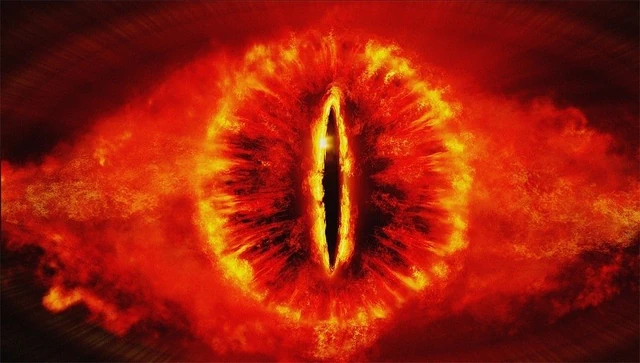
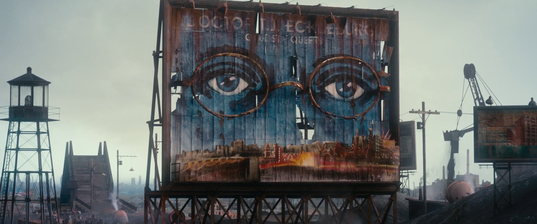
But the prevailing colour of the night, sported by almost every second attendee, was undoubtedly the signature purple of the long-running US podcast’s logo: a runic, crescent moon–pupilled eye hovering ominously above familiar water tower and powerline emblems of rural America, part-Sauron, part–Dr TJ Eckleburg.


Each episode of the bi-monthly internet series represents a broadcast by fictitious radio host Cecil Palmer, beloved commentator on the weird, nonsequitur, Lovecraftian happenings of Night Vale, an imagined desert community populated by mysterious forces and agencies competing to terrorise quiescent townsfolk. Fans of the show are drawn to its potent combination of creepy paranormal tropes, deeply ironic and self-aware humour, and Tumblr-style progressive politics promoting a message of universal acceptance for self and other alike.

In the currently touring live show ‘All Hail,’ the sudden inexplicable appearance above the radio station of ‘the Glow Cloud’—according to the Night Vale Wiki ‘an eternal deity predating reality and currently serving as the president of the Night Vale School Board’—instigates abject worshipful prostration and mindless recitations of fealty from the town’s populace, sending Cecil on a mission to determine its motives and appease the malevolent nebula.

The quest is punctuated by regular segments imported from the podcast such as an infomercial from ‘sentient patch of haze’ Deb, a collection of comically moribund horoscopes, a forecast of the delightfully bizarre events scheduled on the Community Calendar and, of course ‘the Weather’—a performance by the charming pint-sized musician Erin McKeown, who over-estimated the melodic and mnemonic aptitude of the average Melburnian theatregoer with admirable consistency and patience. The show also features appearances from new and recurring characters in the Night Vale universe—snobby local music store proprietor Michelle Nguyen, shapeshifting sixteen-year-old Josh Crayton, bibliophile teen militia captain Tamika Flynn, and time-travelling intern Jeffrey Cranor.

Erin McKeown as 'the Weather.'

Perennial motifs from the podcast find expression once again in ‘All Hail,’ among them a recurrent anxiety about the rapid consumption and disposal of culture and the pace of contemporary life. After entrapping the audience into laughing at how ‘2014’ vaping is, the charismatic show-opener Meg Bashwiner quips, ‘It’s just like a millennial podcast audience to throw shade at something that was four years ago.’ And in the show proper, Nguyen references in stereotypical upward inflection ‘super-old retro music like The Killers and Usher.’ The obnoxious hipster persona Nguyen’s character satirises is itself a little stale in 2018, though her appearance yields such highlights as the fourth wall–breaking real-time, part-improvised narration of sounds from the audience and a description of her so-called business plan as ‘a crude sketch of Noel Gallagher being consumed by a golem made of cocaine.’

Likewise, the show seeks with some urgency to initiate the audience into the experience of human connection so central to its ethics, reminding us continually of the communality of viewership. ‘The sound of 950 people together in a room sharing an experience’ is one of the sounds Nguyen identifies from the audience, a sentiment echoed more pointedly in Cecil’s later ironic jibe, ‘Who wants to go out in public and share physical space with other people?’ Like ‘The Investigators,’ the last Night Vale live show to reach antipodean shores in 2016, ‘All Hail’ exploits opportunities for audience participation to drive this message home, enforcing hand-holding and protracted group recitations, albeit with a little less success than its predecessor.

Loyal listeners will recognise in ‘All Hail’ the formula of several arc-ending episodes of the podcast, which often conclude with emotive diegetic exhortations from Cecil that have clear real-world political parallels. The show ends on an impassioned plea to convert our good intentions into positive action if evil is to be thwarted. ‘Books,’ Tamika Flynn says, are ‘potential human action,’ and ‘filled with empathy, which is much more heart-shattering than any bullet.’ And ‘good,’ we are told, ‘is an action, not a description.’

While timely, timeless and true (Bashwiner includes in her opening address the embarrassed Trump apology fast becoming a standard convention for every international American performance), this message is not so elegantly grounded in the preceding performance as it is in past podcast episodes or in ‘Investigators,’ and feels superimposed rather than earned—a coda by deus ex machina. Without spoiling the final act completely, plot events might have lent themselves much more naturally to a conclusive sermon on the importance of communication and making space for understanding one another than a tenuously (or, dare I say, non-existantly) linked monologue on activism.

But the minds behind Night Vale know their audience and, judging by the uproarious cheering, hyena-cackling, standing ovation and double encore this audience bestowed on the performers, it was not inclined to register the maladroit delivery of a message it so firmly agreed with after an hour and a half of such skillfully targeted entertainment. I’m not inclined to try to disabuse them, but I would advise caution on behalf of those considering taking along friends uninitiated in the Night Vale universe like I did, lest the audience’s Glow Cloud–like adoration fail to take root in them.


*Note: I would've put this up this sooner, but I was delayed by talks with the editor of a website. It appears here with their permission.


Thanks for reading

LPL

Monday, 12 March 2018

Where thoughtfulness lives: adelaide writers' week 2018 review

Monday 13 March 2018


It may be Australia’s longest-running literary festival, but Adelaide Writers’ Week shares little resemblance with the big-name east-coast counterparts that followed it a generation later. 

The event’s idiosyncrasies reflect much about the city that gave it birth: august, commodious Adelaide, temperate and traversable, capital of the festival state, with its surrounding circlet of parklands in which the Pioneer Women’s Memorial Garden could be an understated crown jewel. Far from the air-conditioned concert halls and crowded café venues of the Sydney and Melbourne festivals, Adelaide Writers’ Week passes in the open air and sunshine of this glorious garden. 


And it feels like a gathering in a forest clearing, an enchanted grove. You sit, encircled by a dwarfbrick wall and screens of greenery sun-washed and backlit, presided over by each panel as they hold court beneath the beneficent maternal gaze of Ola Cohn’s 1941 Waikerie limestone statue, a goddess of the glade. Overhead, a lacing of cables, fairy lights, tree branches and blue tarpaulin spans the space between six sentinel lampposts straight out of Narnia. There’s the constant imposition of planes passing above, and sun and shade sweep over you in shifts as the clouds roll on, offering the discussion cheerful or ominous punctuation. ‘That’s global capital,’ jokes the Wheeler Centre’s Michael Williams when a sudden darkness falls at Laleh Khavidi’s mention of gun stock divestment. ‘It doesn’t like what you’re doing.’ Beneath you are humble green plastic chairs like your nan has on the patio and, should they grow too hard on your backside, you’re free to plant yourself on the nearby grassy slope where locals snooze under hats and children periodically frolic a little too loudly. Kick your shoes off, lay back, close your eyes, and let the conversation wash over you. ‘It’s a pretty friendly festival,’ poet Pamela Brown summarises in response to an audience question. ‘The air’s good.’

Mem Fox reads from I’m Australian Too.

It’s simply different. Fanatical volunteers stand smiling guard over the bins, racing to intercede before any recyclable item is denied its rightful reincarnation by mistaken consignment to general waste. The dignified demountable bathrooms offer expensive soap and proper mirrors. For some reason, there’s a joey in the writers’ green room and, occasionally, in the audience.

And, indeed, everything about the event is free and easy. No pressure to attend pre-booked and paid-for sessions. You may come and go as you please between the twin stages that sit companionably close in the riverside park. Follow your fancy through a program as well-balanced and legible as Adelaide’s city grid—from the intimately personal to the sweepingly geopolitical, local to international, grand historical narratives to confessional poetry. Unbound by the confines of the indoors and its attendant fire codes, audiences expand and contract like a breathing organism according to the popularity of the speakers. Events at the more intimate west stage like The Life to Come with the radiant Michelle de Kretser send the crowd fanning out into the wings of shade beyond the garden walls and curling up the slope, while drawcards at the east stage such as insightful international heavyweight Barbara Kingsolver and the delightfully peculiar festival-favourite Robert Dessaix break the banks entirely to engulf the little island of the stage in all directions.


In such a setting, the thirty-third iteration of the festival assembled almost a hundred writers, loosely united, as outgoing director Laura Kroetsch writes in the event programme, by the concept of ‘change.’ Unlike the parkland setting, this theme is a convention endemic to all literary festivals, to any gathering of those most sensitive vessels of social anxiety and conscience that are writers. Aside from helping stimulate the book sales that sustain our wordsmiths, this, it could be said, is what writers’ festivals are for. They are time that attendees collectively set aside to pay attention to the things in our world worth writing about: the troubles plaguing democracy chronicled in a genteel Monday-morning dialogue between British philosopher AC Grayling and local journalist and commentator George Megalogenis. The fury and shame about Australia’s ‘extreme cruelty to refugees’ that inspired beloved and formidable festival dedicatee Mem Fox’s latest book I’m Australian Too. The capitalism-driven environmental destruction foreseen in the fiction of Cory Doctorow, Maja Lunde and Jennifer Mills. The institutional racism and radicalisation contemplated by Laleh Khavidi and Kamila Shamsie. The introspection and commitment to the common good Judith Brett finds missing in contemporary Australian politics. The threat of climate change to Pacific nations such as the Marshall Islands that poet Kathy Jetñil-Kijiner spoke of. And, most pervasively this year, the sense that somehow it is all going wrong. That meaning, the media, and politics have lost their way. That, in Kingsolver’s words, ‘the rules don’t apply any more.’ As literary critic Sean Hooks once wrote, ‘it’s all going south tout de suite—awry and amuck and astray, combustible, doused in petrol, the fuse already lit.’ 

Of course, attendees at such events tend to broadly agree on these topics, nodding and applauding so vigorously and universally that it is hard at times to understand why no one has done anything about them yet, to remember that this sample isn’t representative. We risk veering into self-congratulation, but we also remind ourselves we are not alone, steel our resolve, and reflect upon solutions. And, occasionally, answers arise. Australian Book Review editor Peter Rose’s eloquent question elicited one such (even more eloquent) answer from Queensland poet Sarah Holland-Batt: ‘Where does poetry sit in a world consumed by material objects, materialism, pragmatism, careerism, professionalism, managerialism, all those –isms?’ asked Rose. ‘How does poetry survive in a world so devoted to the object?’

‘Poetry,’ came Holland-Batt’s answer ‘really is the last […] vestige, the last bastion of a space where every word is consequential, where language is reduced to its most core purpose, to its most exacting, its most particular. A poem is a perfect machine where every word has its use, has its meaning […] Poems are the one place where sane and exacting language lives at the moment, in this morass of fake news and loose use of language.’

In other words, one of the ways we can save the world is: more this. More reading, more thinking, more discussion, more devotees to the compassion and rigour of literature and poetry, where standards of quality are cherished, not abandoned, where ethical engagement with the world persists, where meaning something still means something, where thoughtfulness lives, where we can learn the tools of discernment and critical thinking that allow us to dispatch the dissembling messages of governments and corporations and demand better. 

One of the ways the writers’ week instantiates this impulse is particularly fitting for the state where (white) Australian women first won the right to vote, the birthplace of Australian suffrage. Without explicitly stating it, without excluding anyone, it is on so many levels a festival by and for women. Dedicated this year to a woman writer, set in a garden memorialising the contributions of women, on and around International Women’s Day, it is a worthy alternative to a corporate breakfast agitating for more gender-representative economic inequality. This year the lost diary of Australia’s most influential woman writer Miles Franklin was even found during the proceedings. Among such auspices, it was impossible not to notice the makeup of the crowd—most abundantly middle-aged women, Australia’s largest reading demographic. A woman runs the festival, the discussions are most deftly facilitated by female chairs, and women appear onstage over half the time, often speaking on topics relevant to the cause. 

Next year’s Writers’ Week passes from Laura Kroetsch to Sydney Writers’ Festival CEO Jo Dyer. We can hope that, as an Adelaide native, Dyer will know how to preserve and enhance what makes Writers’ Week so unique and so very important as a home for careful thinking in a world of bombast and bluster.

Tuesday, 23 June 2015

Kate liston-mills’ the waterfowl are drunk!


Monday 22 June 2015


Pambula-based writer Kate Liston-Mills is a friend of mine and a fellow graduate from the University of Wollongong’s creative writing program, where she was a few years older but a few year groups below me. Disarming, ebullient, and universally beloved, Kate is humble to a fault, with eyes so blue they must’ve soaked up all those South Coast seas and skies. As an editor for the annual UOW Creative Writing literary magazine Tide, I remember having the chance to publish some of Kate’s outstanding poetry back in 2010, but page limitations ultimately forced the committee to bump the lowly first-year from the volume, something that never quite felt right to me. Thankfully, if unsurprisingly, Kate’s words have since appeared in publications much loftier and more widely circulated than Tide (and even later editions). But it still felt like something coming full circle when the advance copy of The Waterfowl Are Drunk! appeared in my inbox. A wrong has been righted, and in such spectacular fashion.

The gorgeous KLM.

Published electronically by Spineless Wonders as a Slinkies Under 30s collection, The Waterfowl Are Drunk! is Kate’s first major work. In seven interconnected short stories, she draws from deep wells of truth and fancy to bring to life this heartfelt tribute to town, home and family. Working in the best traditions of the tall tales and urban myths repeated and embellished in country pubs the nation over, The Waterfowl Are Drunk! is a richly rendered and skillful meditation on birth, death and disability in coastal, regional New South Wales.

Perhaps somewhat embarrassingly for a gen-y bibliophile like myself, this was actually my first experience with an ebook, so it was only after some significant fandangling and carnsarnitting with the zoom function on Apple’s iBooks that I was finally able to sink into the collection’s opening vignette, ‘Bound’, which immerses the reader in the teeming wilds of the Pambula wetlands, ‘on the fringes of what some would call a dated town’. 

But this is no Eden, if you’ll excuse the pun. ‘Think red dirt, murky water and tired trees’, the first line enjoins us. The birds swelter in the heat, the ‘stench of rot and fetid water is inescapable’, and in the bushes lurks a dangerous interloper, a red fox. For a moment here I thought I was reading an example of that rarely realised mode of environmental fiction that children’s literature scholar John Stephens calls ‘deep ecology’ – fiction that attributes an intrinsic value to the lives of animals and the environment, often decentering or showing as contingent human perspectives, or excluding them altogether. But the instance of a pen anthropomorphically assigning her cygnets names, as well as the somewhat malapropos simile of a waterfowl slurping a worm ‘as if it were a slushy’, anchors the reader in a human perspective and a roughly contemporary moment, and it soon becomes obvious that what transpires in this wilderness is deliberately symbolic of the human lives we are to encounter in coming stories. 

As with the collection on the whole, ‘Bound’ is not without its awkward lines and, at times, it struggles to maintain focus in its all-encompassing narration, moving abruptly from one group of animal subjects to another mid-paragraph. But in just two-and-a-half pages (depending, of course, on the size of your browser window), Kate achieves quite an affecting narrative in the story of the fox and his victims, cast in suitably raw, fictile language that showcases her poetic credentials and, at its best, recalls the evocative simplicity to be found in the rural poems of Seamus Heaney:

     The cygnets’ eyes, not yet open, are glued with fluid. And through the flurry of
     feathers and calls, the cygnets plop out of the eggs and sog up the earth.

In the symbology of this natural tableau, it is worth interrogating the figure of the fox: is he, as an introduced species, merely representative of a troublemaking outsider, upsetting the rightful order and earning the fear and scorn of the locals? Is he death, an agent of doom against whom the members of the community are able to rally, though never fully prevail? Perhaps, by extension, he is the reader, come to gorge himself on the lives of the town’s inhabitants in the coming pages for his own satisfaction. Or could he be the writer herself – all writers: slinking double-agents moving stealthily amongst unwitting native prey, scavenging for stories and details? The answer, of course, is up for interpretation.


What is established early and unequivocally in this opening story is that Kate’s is a vision of the world where the invisible forces that so often move and shape us, guide and animate us, are made visible, where the abstract and intangible interplay with reality in concrete ways. On occasion here and throughout the collection, this device can veer towards the overly ‘telling’ or convoluted (such as, for example, when we are told that a wind blowing through the town’s streets carries ‘the aftershock of war and soiled youth’), but at others it results in breathtaking passages of Wintonian beauty and eloquence, as when, simply, ‘Ed feels the day approach’ or, later, when the news of Ed’s demise as it travels throughout the town, mobilising everyone into sympathetic action, is characterised as

     tinkering like a mechanic, slowly tapping on each head. It’s tapping into the nuts and 
     cogs of the heart of the machine, tapping each greasy component, until the parts all 
     work together.

Aptly, the concept first treated in this fashion, the ‘sweet nostalgia’ that ‘blends with the croaks and sits on the tilted horizon’ in ‘Bound’, is also the one that most suffuses the work as a whole, which is always romantic and wistful, but never saccharine or overly sentimental. Indeed, what could be levelled as a criticism against another writer becomes in Kate’s hands one of the work’s greatest strengths. Kate shows herself to be an adept conjurer of those moments, sometimes mundane and others extraordinary, that characterise every family history, those universally relatable and yet thoroughly idiosyncratic memories and rituals that form the fabric of a family.

The organising force of the collection is family matriarch Hazel, modelled on Kate’s own grandmother. Prominently featured also is Hazel’s daughter Lottie, a beautiful soul who has Down syndrome, inspired by Kate’s real-life aunt Nettie (to whose memory the book is dedicated). ‘Hey Porter, Hey Porter’ takes the reader to the moment in time over Christmas of 1956 when Hazel is forced to confront her daughter’s disability for the first time. The opening passage, which I count among the strongest in the book, showcases Kate’s skill in tapping into our collective nostalgia in a scene that is both quintessentially of its time and specific filial setting, and yet immediately recognisable:

     The radio is crackling and everything smells of tobacco. The news reporter’s
     carrying on, something about blood in the water at the Melbourne Olympics.
     Nobody’s listening. Hazel has it on so they don’t miss the Queen’s 3pm Christmas
     message. Everybody’s knackered from midnight mass and no one can be stuffed
     cleaning up. The aftermath of Ed’s pig trotter feast is now gelatinous on the sink.
     Flies chinwag in the corners of the trays and stick there. It’s a rotten mess for
     another day.

Later, we find this same skill in ‘I Don’t Even Like Scotch Fingers’, an everyday tragedy where we watch in knowing discomfort as narrator Georgie, distracted by the trivia of teenage existence, takes Hazel, her grandmother, entirely for granted. During one of those familiar interstices in senescent–adolescent conversation, Georgie’s mind wanders to the time they had to rush Aunt Lottie to the hospital because she was choking on a nut, but then they drove over a speed hump and the obstruction dislodged itself, sailing through the air right into her uncle’s hand: just the kind of unlikely, though all-too-real family legend all of us can lay claim to in one form or another.

Just as some stories consecrate the emotional landscape of the family, others do the same for the town of Pambula, most notably in the title story, ‘The Waterfowl are Drunk!’, in which the town reacts to the loss of Hazel’s husband Ed. ‘In Pambula,’ we are told when the death coincides with the arrival of an eccentric houseguest, ‘you have to be hospitable. You just have to.’ Littered throughout the story, attached to the ends of sentences here and there, we find the refrain, ‘as you do’: signposts in the thought processes of the grieving widow that perfectly evoke the double-edged comforting familiarity and stifling oppressiveness of small-town living. Hazel’s actions are governed by a subconscious list of preapproved Things You Do in Pambula, forcing her into the tiresome obligation of indulging the strange old bird who turns up on her doorstep (people are always birds in The Waterfowl Are Drunk!, and birds people). 

But in times of crisis, there is also comfort to be taken from such rituals and ritualised behaviours, as we see with the ceremonies surrounding tea that so pervade the book – the word itself is used some twenty-one times in seven stories (I’m getting the hang of this ebook thing). In ‘The Waterfowl Are Drunk!’ it is this beverage, so treasured by Lottie, that occupies her while the rest of the family tries to shield her from the death of her father. But she is more attuned than her family might think. The sensitive and subtle exploration of the perceptions of different forms of disability that runs throughout the collection is another element for which Kate deserves laudation, executed as it is with the confidence and integrity of a much more experienced writer.

Just as Kate endows Hazel’s family with a canon of folktales and memories, the town too is replete with its own mythology of larger-than-life tales and escapades and, given the distribution of the stories over the course of a century, we are witness to many of them – the misadventures of Ed and Tom on the night Hazel goes into labour, as they rollick around town trying to get their mate’s body to the morgue in the back of a ute and, of course, the tale that gives the collection its title: the time the town drunk disappeared temporarily, only to turn up in a freshly dug grave covered in waterfowl inebriated by the bottle of sherry in his hand. In the telling of these fables we find the blending of comedy and tragedy, that certain mix of beauty, poignancy and irreverence, that marks the best Australian fiction. Which brings me back to the most remarkable element of the collection: the incredible lyricism of Kate’s voice. 

If all literature can be plotted on a spectrum from the spare and sparse on one end to the expressive and ornate on the other, The Waterfowl Are Drunk! would have to be classified ‘hyper-lyrical’, on the far side of the latter. Fans of the Spartan, the reserved, the unadorned sentence, Hemingway devotees and Naipaul adherents alike, be warned. Each of us has our own preferences in this area, and the pendulum of taste seems to have swung back and forth since the inception of the novel, between one school of writers determined to prune back the overgrown grandiloquence and floridity of their forebears, and their own successors, who seek to rejuvenate with inventive, sensual, descriptive writing prose that has come to be seen as sterile and dull. There is a place for writing at every point on the spectrum, but I, for one, tend to prefer the latter kind: writing that gives me something. Writing that’s luscious, that astounds and inspires and tantalises me with new ways of seeing the world. Writing that pushes descriptive language to the limit, that shows me something of the author. Writing like Kate’s.

In The Waterfowl Are Drunk! Kate is a veritable Nigella Lawson of letters, unable to resist tiptoeing down to the fridge after midnight to indulge in one more simile, one more metaphor. And what delicacies she has crafted in this smorgasbord, what moments of descriptive brilliance, masterful details and turns of phrase slipped expertly into the narrative: Lottie picking up the phone ‘gently like a hot cup of tea’, Michael Swaney’s parents with their ‘vegetable-scraps-in-the-plughole-of-a-marriage’, a body ‘fancified’ by bruises and scratches, natal blood ‘soaking into the sugar’, all complemented by and contrasted against an enviable command of authentic, spirited dialogue: ‘‘That’s gotta be the best birth in ‘istory Haze –’ says Hazel’s neighbour, ‘rainwater on the skin, sugar-taste everywhere. Gotta be the most perfect girl I ever seen!’’ 

Of course, with a young writer working on this end of ‘the spectrum’, where so much is risked because so much is ventured, there are bound to be some misfirings. Sentences brim so full with description and simile in the book that they sometimes spill over into mixed metaphor, or rush at you so quickly you can’t appreciate them.

But some imperfection is to be expected here on the literary frontier: young writers publishing their first works in a digital-only format. Minor errors, unintentional linebreaks, occasional patches of less refined prose – these become part of the reading experience. There is a sense, during the reading, of the haste in which some parts might have been written (perhaps in one long ‘binge-writing’ session), of the smallscale, independent organisation behind the book, working on a hope and a prayer, kept going by the passion of dedicated, but underpaid and overworked employees, interns, volunteer hours and a shoestring budget, struggling nobly on in spite of the current, arts-hostile political climate. Slinkies and programs like it have been devastated by the Abbott government’s funding cuts, and now more than ever its stated mission of providing ‘a platform for young and emerging Australian writers’ is invaluable. If a few impurities are the price of having access to this kind of writing, I am more than willing to pay it. I can’t put it better than Slinkies editor Bridget Lutherborrow in an interview for the Wollongong Writers' Festival:

     When people are developing and perhaps feeling that gap between their abilities and 
     where they want their writing to be – it can be tempting to stop. Getting beyond that 
     emerging stage requires a great deal of resilience. It’s important we support writers 
     through this process if we want to have exceptional writers in our future. Also, the 
     kinds of writing and subject matter young people want to write is often invalidated, 
     because it might be a bit raw or incomplete, but I think young/new writers can have
     an incredible energy and unique perspective on what it’s like to exist at this moment
     in history.

With some variation, the collection generally grows in skill as it goes on, culminating in the two most restrained and technically accomplished stories, ‘Without Floaties’, which gives us our first outsider’s perspective of the town, and ‘Shiny Lino and a Whistling Kettle’, where an older, repentant Georgie reflects on the lives of her aunt and grandmother. Especially if the whole collection is read, as I would advise, in one or two sittings, it is difficult to imagine not being moved by this frank and effortlessly fluid final story, which resounds with the authenticity of a lived experience and functions as an exceptionally tender obituary for its two major figures. What’s hard to believe is that Kate will only become more talented with time, and undoubtedly has the skills to surpass even her best work here.

The Waterfowl are Drunk! is a brilliant and powerful fiction debut, well worth the outrageously cheap $4.99 for which it is being sold. I mean, that’s FIVE DOLLARS. Five dollars would be worth it just to help support the arts and emerging writers in this country (because Lord knows the government won’t), let alone what you’ll be getting in this artful, beautiful book. Buy it, sink into your favourite spot on the lounge, and prepare for a pleasurable few hours one afternoon. And when you do, why not pour yourself a big mug of tea, too? For Lottie.


Thanks for reading

LPL


References

Sarah Fallon's 2015 interview 'NYWM Interviews: Bridget Lutherborrow' on the Wollongong Writers' Festival website.

Kate Liston-Mills' 2015 ebook The Waterfowl Are Drunk!, published by Spineless Wonders.

Images from katelistonmills.com.

John Stephens' 2006 journal article 'From Eden to Suburbia: Perspectives on the Natural World in Children's Literature' on pages 40 to 45, issue 2, volume 16 of literary journal Papers: Explorations Into Children's Literature.

Spineless Wonders' 2015 interview 'Meet the Slinkies: Kate Liston-Mills' on the Spineless Wonders website.

Tuesday, 20 May 2014

Rosie, queen of the streets

Tuesday 20 May 2014

In my post 'The worst kind of emergency' I wrote about the importance of giving. One of the ways I've been doing that for the last couple of years has been working with photographer Ethan Mann on a charity project for Sydney's homeless, 'The X Book'. It's a compilation of portraits featuring Sydney personalities accompanied by biographies and it's been a Herculean task, strung together on favours and distant connections during spare moments in the busy lives of some of our participants. Now we have an opportunity to gain some funding and exposure through Canon's 'Shine' initiative.

Click the image to vote for us (if it doesn't take you directly to the picture just select 'Leaderboard' from the 'Sort by' dropdown menu on the top-left and look for Rosie at the top)!

Meet Aunty Rose, 'queen of the streets', a familiar and friendly face to many in the heart of our city. So many people have connected with Rosie, but few like Ethan. On a stormy night in 2012 he took his mission to help the homeless to the next level when he set out to spend two weeks sleeping rough on the streets of Sydney to try and gain an understanding of this way of life. But we who live in the comfort and warmth of our homes have lost touch with the survival instincts it takes to navigate such a wild and difficult lifestyle. He would've been lost if it weren't for Rosie, the angel who took him under her wing when he brought his obsession into her world.

Rosie is a beautiful and wise old soul who made the streets her home after the deaths of her family two decades ago. She's got equal parts book smarts and street smarts, and a hearty dose of kindness that makes her willing to impart her knowledge, her time, and even her money, to anyone in need. She taught Ethan where to eat, showed him the safe places to sleep, gave him a handful of change when he had nothing, and schooled him in the vital practice of 'cold-biting' (what the rest of us might call 'begging') so he could make it on his own. Without her hr wouldn't have even the beginnings of understanding that he has now, so when he heard about the Canon Shine initiative, it was an easy choice which photo he wanted to submit.

The competition is all about reminding us of the power of photographs to effect change in a world where selfies, food shots and Snapchats might seem to water it down, so of course The X Book had to get involved. We submitted a mugshot-style portrait of Rosie that depicts how the stories of the homeless are sentenced without trial to silence, how their complexities are flattened into tales of guilt so we can justify ignoring an outstretched hand.

The winner will have the benefit of all the considerable exposure Canon can offer when they make a documentary about the journey that led to the picture being taken. This is a story that needs to be told. If you believe in us and you believe in our cause, please get behind us now so we have the best chance of winning the competition, getting our story out, and making a difference to the lives of our city's most vulnerable.

Vote for our image by clicking on the photo above, and share this page far and wide. Alternatively you can send me your name and email and I wil register you. Once you verify the account by clicking on the link in the email they send you, you can vote from there, or just let me know and I will vote on your behalf! There's links on my Facebook and Twitter pages (see below) for you to like and share and retweet to your heart's content. 


Thanks for reading

LPL

Wednesday, 16 April 2014

Book review: terry goodkind's the omen machine

Wednesday 16 April 2014


The following review contains mild spoilers from the early parts of the book.

Having neatly tied up his myriad loose ends in the final instalment of the Chainfire trilogy, Confessor, Terry Goodkind embarks on a whole new mess in The Omen Machine, the first in another series of Richard and Kahlan novels. Seeking, it seems, to torture his characters almost as much as his readers by keeping the spaces between novels (and cataclysms) infinitesimal, a new existential threat emerges during the celebrations following the defeat of the previous one, launching us on what is sure to be yet another protracted, poorly (i.e. not at all?) edited, banal adventure full of impossibly, ridiculously evil villains for Kahlan to be kidnapped or poisoned or otherwise imperilled by and for Richard to lecture us about. 

As an editor, reading Goodkind’s writing makes me want to prostrate myself before his publishers and beg them to allow me even a few hours alone with his manuscripts and a red pen, pro bono, before he is allowed to pollute the language with them. There’s none of the occasional moments of descriptive beauty sprinkled throughout Goodkind’s earlier works to be found here, no hint of his rarely exhibited though nonetheless surprising appreciation for detail. The prose is unwieldy and halting, repeated words clanking harshly up against one another and giving the book an overall careless, rushed feel à la the latter works of Raymond E Feist. It’s as though some of these B-grade epic fantasy authors work out that most readers don’t care how well-written their books are and they can just crank out sequel after sequel and make the same amount of money.

So, of course, it’s impossible to catalogue all the problems with a Terry Goodkind book in a single review, so I’m going to restrain myself to just one: his notorious monumental ego. Or rather, one way it manifests in his works. Possessed of a great number of opinions, ranging from morally reprehensible to innocuous, on any number of topics, Goodkind’s motivation in writing seems to be to embed as many of them in his books as often as possible, largely through the simplistic device of using his exaggeratedly perfect (in the world of the books, anyway) protagonist Richard directly to spout them for him. Plotting for Goodkind seems more an exercise in engineering various situations in which Richard can argue with and lecture other characters and the reader on one of these opinions than any conventional dedication to the integrity of the story or the gratification of the reader. Indeed, each novel is largely propelled not by action, but by argument. Revealing of their didactic impulse, the narratives largely turn on episodes in which different characters discuss events and ideas and try to convince one another of different positions in laborious exchanges that persist much longer than believability would allow.

The result is that the reader finds themself mired in perpetual, incessant exchanges between characters on subjects both mundane and esoteric, extended disputes over how best to organise and catalogue a library alongside lengthy treatises introducing abstract magical concepts that are never grounded in any previously established logic. These latter logomachies always reveal new concepts all at once, so the reader is never granted the chance to anticipate or share in the reasoning. It’s just Richard presenting some new element of the nature of magic that hasn’t come up before in any of the previous twelve overlong tomes, that completely explains what’s going on in this book, while everyone else disagrees that it’s possible until he is inevitably proven correct.

Goodkind facilitates this recurrent magical Deus ex machina at first by way of the charade of Richard’s ludicrous decision not to ‘depend on his gift’, even though he supposedly epitomises rationality and it is completely irrational for him to refuse to learn about an inescapable part of himself that could be so helpful to him, and later by making Richard a ‘war wizard’ whose magic is mysterious and able only to be activated by need and emotion, very conveniently giving it scope to work in any way the author chooses in future, failing to lock him in to any constraints. Such constraints are the very things that ordinarily make suspension of disbelief about magic possible in other series, the things that allow the reader to find any plots involving magic satisfying – that we know the way it works, that it has limits.

And I wasn’t kidding about the library debate, either. Just under an hour into the audiobook, an illustrative example of one of these monotonous, one-sided duologues occurs when we find ourselves in the royal library of D’Hara, the capital city of the eponymous empire ruled by Richard. After pacing for some time, Richard’s absurdly named grandfather, First Wizard Zeddicus ‘Zedd’ Z’ul Zorander, halts and proclaims that he’s ‘not convinced that it can work, Richard—or at least, work effectively.’ What follows is no less than six minutes of discussion over whether or not the classification of all the books in the library is a worthwhile pursuit.

What's more, this doesn’t even seem to be a point of any importance in the novel. I guess they came across a book that turned out to be important, but there’s nothing to say they had to do so while undertaking a reorganisation of the library. We can probably safely assume that it will come back in some way in future (I’m halfway through the sequel The Third Kingdom at the time of writing), but is there anything that could justify such a prolonged, mind-numbing argument over library classification?

It can only be Goodkind’s zeal to prove the veracity of one of his opinions that leads him to prolong these exchanges so unnaturally beyond the realms of credibility. He needs the discussion to go on much longer than it should so he has room to get out all of his profound thoughts. Would Zedd really try so hard to dissuade his grandson from such a harmless endeavour as trying to catalogue all the books in his library? And even if he would, is it really necessary for the reader to be subjected to it? So often does Goodkind deploy this device, it’s beginning to feel like Zedd never believes Richard about anything, no matter how many times he is proven right. All the characters, in fact, begin to appear obsessive and stubborn, overly concerned with debating minor details, unwilling to see the (diegetic) truth of their opponents’ assertions, their likeability in the eyes of the reader sacrificed at the altar of Goodkind’s ego. The debates depend on an endless stream of meaningless ‘But Richard …’ interjections from the protagonist’s interlocutors to interrupt the pages of explanation and prevent the diatribe from collapsing under its own weight. The characters are forever asking one another ‘What are you talking about?’ and ‘What do you mean?’ and regarding one another as though they are crazy because of all the insane propositions and profound misunderstandings flying back and forth.

Another illuminating instance of this propensity comes in another early scene in the novel. Shortly after a woman confesses to infanticide in order to spare her children the more gruesome death portended by a vision, and then attempts to murder Kahlan to spare her a similar fate, reformed Sister of the Dark Nicci shows up on the scene seeming to already know of the happenings despite her absence when they occurred. It becomes immediately apparent to the reader that there must be more than one instance of this going on throughout the city, but the characters on the other hand are not so fast on the uptake, positively baffled by the things they are telling one another, and we are forced to wade through 750 words of tortuous dramatic irony as the feeble-minded cast tries to determine what’s going on. It’s like the Abbott and Costello ‘Who’s on First’ skit (or the Animaniacs ‘Who’s on Stage?’ skit for you '90s kids) but without the witty paronomasia! See for yourself:

“I didn’t see you at the reception,” Richard said. “Where did you hear about her killing her children?”

Nicci frowned up at him. “Hear about it? I was there.”

“There? What do you mean you were there?”

Nicci folded her arms and stared at him as if he were the one who was crazy. “I was there. I was down in the market helping to get people organized and hurrying them along to move into the passages in the plateau and out of what is shaping up to be a monstrous storm. They need to move into shelter. Those tents aren’t going to protect them.”

“That’s true enough.”

Nicci sighed as she shook her head. “So, I was down there in the market when the first one hit.”

The creases in Richard’s brow deepened. “What do you mean, when the first one hit? First what?”

“Richard, aren’t you listening? I was there when the first child hit the ground.”

Richard’s jaw dropped. “What?”

“It was a girl, not ten years old. She came down on a log wagon, on one of the upright stake poles. That pole was bigger than my leg. She came down face-first, shrieking all the way. It went right through her chest. People were screaming and running around in confusion and panic.”

Richard blinked, trying to makes sense of what he was hearing. “What girl are you talking about?”

Nicci looked at all the faces watching her. “The girl that the woman threw off the palace wall, over the edge of the plateau, after she had her vision.”

Richard turned to Benjamin. “I thought you said you found the children.”

“I did. We found both of them.”

“Both?” Nicci’s brow drew tight. “There were four of them. All four of her children hit within seconds of one another. The first, the girl, was the oldest. When the woman threw them off the top of the plateau they all landed right there near me. Like I said, I was there. It was a horrifying scene.”

Kahlan seized a fistful of Nicci’s dress at her shoulder. “She killed four more?”

Nicci didn’t try to remove Kahlan’s hand. “Four more? What are you talking about? She killed her four children.”

Kahlan pulled Nicci closer. “She had two children.”

“Kahlan, she had four.”

Kahlan’s hand slipped from Nicci’s dress. “Are you sure?”

Nicci shrugged. “Yes. She told me so herself when I questioned her. She even told me their names. If you don’t believe me you can ask her yourself. I have her locked up in a cell down in the dungeon.”

Zedd leaned in closer. “Locked up . . . ?”

“Wait a minute,” Richard said. “You’re telling me that this woman killed her four children by throwing them off the side of the plateau? And you locked her up?”

“Of course. Haven’t you been listening to anything I’ve said?” Nicci frowned around at everyone. “I thought you said that you knew all about it. Her husband found out what had happened and was going to kill her. He was screaming for her blood. I was afraid that the guards who grabbed the woman were going to let him have her. I sympathize with his feelings, but I couldn’t allow it for now. I had her locked up, instead, because I thought you or Kahlan would want to question her.”

Richard was incredulous. “Why did she do it? What did she say?”

Nicci appraised them all as if they had collectively gone mad. “She said that she had a vision and couldn’t stand the thought of her children having to face the terror to come, so she killed them swiftly instead. You said that you knew about it.”

“We knew about the other one,” Richard said.

“Other one?” Nicci looked from face to face, finally settling on Richard. “What other one?”

“The one who cut her two children’s throats and then came to the reception and tried to kill Kahlan.”

Nicci’s concerned gaze darted to Kahlan. “Are you all right?”

“I’m fine. I took her with my power and had her confess. She told us what she had done and what she intended to do.”

Nicci pressed her fingers to her forehead. “Wait, you’re saying that there was a second woman who also had a vision and killed her children?”

Kahlan and Richard both nodded.

“That would help explain why people are so unnerved and want to know what prophecy has to say about it,” Richard said.

“What’s going on?” Nicci asked.

JESUS CHRIST. YES. THERE WERE TWO INSTANCES. I THOUGHT YOU WERE SUPPOSED TO BE THE GOD-DAMNED SEEKER OF TRUTH, ABLE TO MAKE GARGANTUAN LEAPS IN LOGIC IN A SINGLE BOUND. WHY DOES IT TAKE SEVEN HUNDRED WORDS FOR US TO ESTABLISH THIS? WHY GOD-DAMN YOU WHY? STOP THE MADNESS. WHY AM I READING THIS GARBAGE?

Thanks for reading

LPL