Showing posts with label Book covers. Show all posts

Wednesday, 16 April 2014

Book review: terry goodkind's the omen machine

Wednesday 16 April 2014


The following review contains mild spoilers from the early parts of the book.

Having neatly tied up his myriad loose ends in the final instalment of the Chainfire trilogy, Confessor, Terry Goodkind embarks on a whole new mess in The Omen Machine, the first in another series of Richard and Kahlan novels. Seeking, it seems, to torture his characters almost as much as his readers by keeping the spaces between novels (and cataclysms) infinitesimal, a new existential threat emerges during the celebrations following the defeat of the previous one, launching us on what is sure to be yet another protracted, poorly (i.e. not at all?) edited, banal adventure full of impossibly, ridiculously evil villains for Kahlan to be kidnapped or poisoned or otherwise imperilled by and for Richard to lecture us about. 

As an editor, reading Goodkind’s writing makes me want to prostrate myself before his publishers and beg them to allow me even a few hours alone with his manuscripts and a red pen, pro bono, before he is allowed to pollute the language with them. There’s none of the occasional moments of descriptive beauty sprinkled throughout Goodkind’s earlier works to be found here, no hint of his rarely exhibited though nonetheless surprising appreciation for detail. The prose is unwieldy and halting, repeated words clanking harshly up against one another and giving the book an overall careless, rushed feel à la the latter works of Raymond E Feist. It’s as though some of these B-grade epic fantasy authors work out that most readers don’t care how well-written their books are and they can just crank out sequel after sequel and make the same amount of money.

So, of course, it’s impossible to catalogue all the problems with a Terry Goodkind book in a single review, so I’m going to restrain myself to just one: his notorious monumental ego. Or rather, one way it manifests in his works. Possessed of a great number of opinions, ranging from morally reprehensible to innocuous, on any number of topics, Goodkind’s motivation in writing seems to be to embed as many of them in his books as often as possible, largely through the simplistic device of using his exaggeratedly perfect (in the world of the books, anyway) protagonist Richard directly to spout them for him. Plotting for Goodkind seems more an exercise in engineering various situations in which Richard can argue with and lecture other characters and the reader on one of these opinions than any conventional dedication to the integrity of the story or the gratification of the reader. Indeed, each novel is largely propelled not by action, but by argument. Revealing of their didactic impulse, the narratives largely turn on episodes in which different characters discuss events and ideas and try to convince one another of different positions in laborious exchanges that persist much longer than believability would allow.

The result is that the reader finds themself mired in perpetual, incessant exchanges between characters on subjects both mundane and esoteric, extended disputes over how best to organise and catalogue a library alongside lengthy treatises introducing abstract magical concepts that are never grounded in any previously established logic. These latter logomachies always reveal new concepts all at once, so the reader is never granted the chance to anticipate or share in the reasoning. It’s just Richard presenting some new element of the nature of magic that hasn’t come up before in any of the previous twelve overlong tomes, that completely explains what’s going on in this book, while everyone else disagrees that it’s possible until he is inevitably proven correct.

Goodkind facilitates this recurrent magical Deus ex machina at first by way of the charade of Richard’s ludicrous decision not to ‘depend on his gift’, even though he supposedly epitomises rationality and it is completely irrational for him to refuse to learn about an inescapable part of himself that could be so helpful to him, and later by making Richard a ‘war wizard’ whose magic is mysterious and able only to be activated by need and emotion, very conveniently giving it scope to work in any way the author chooses in future, failing to lock him in to any constraints. Such constraints are the very things that ordinarily make suspension of disbelief about magic possible in other series, the things that allow the reader to find any plots involving magic satisfying – that we know the way it works, that it has limits.

And I wasn’t kidding about the library debate, either. Just under an hour into the audiobook, an illustrative example of one of these monotonous, one-sided duologues occurs when we find ourselves in the royal library of D’Hara, the capital city of the eponymous empire ruled by Richard. After pacing for some time, Richard’s absurdly named grandfather, First Wizard Zeddicus ‘Zedd’ Z’ul Zorander, halts and proclaims that he’s ‘not convinced that it can work, Richard—or at least, work effectively.’ What follows is no less than six minutes of discussion over whether or not the classification of all the books in the library is a worthwhile pursuit.

What's more, this doesn’t even seem to be a point of any importance in the novel. I guess they came across a book that turned out to be important, but there’s nothing to say they had to do so while undertaking a reorganisation of the library. We can probably safely assume that it will come back in some way in future (I’m halfway through the sequel The Third Kingdom at the time of writing), but is there anything that could justify such a prolonged, mind-numbing argument over library classification?

It can only be Goodkind’s zeal to prove the veracity of one of his opinions that leads him to prolong these exchanges so unnaturally beyond the realms of credibility. He needs the discussion to go on much longer than it should so he has room to get out all of his profound thoughts. Would Zedd really try so hard to dissuade his grandson from such a harmless endeavour as trying to catalogue all the books in his library? And even if he would, is it really necessary for the reader to be subjected to it? So often does Goodkind deploy this device, it’s beginning to feel like Zedd never believes Richard about anything, no matter how many times he is proven right. All the characters, in fact, begin to appear obsessive and stubborn, overly concerned with debating minor details, unwilling to see the (diegetic) truth of their opponents’ assertions, their likeability in the eyes of the reader sacrificed at the altar of Goodkind’s ego. The debates depend on an endless stream of meaningless ‘But Richard …’ interjections from the protagonist’s interlocutors to interrupt the pages of explanation and prevent the diatribe from collapsing under its own weight. The characters are forever asking one another ‘What are you talking about?’ and ‘What do you mean?’ and regarding one another as though they are crazy because of all the insane propositions and profound misunderstandings flying back and forth.

Another illuminating instance of this propensity comes in another early scene in the novel. Shortly after a woman confesses to infanticide in order to spare her children the more gruesome death portended by a vision, and then attempts to murder Kahlan to spare her a similar fate, reformed Sister of the Dark Nicci shows up on the scene seeming to already know of the happenings despite her absence when they occurred. It becomes immediately apparent to the reader that there must be more than one instance of this going on throughout the city, but the characters on the other hand are not so fast on the uptake, positively baffled by the things they are telling one another, and we are forced to wade through 750 words of tortuous dramatic irony as the feeble-minded cast tries to determine what’s going on. It’s like the Abbott and Costello ‘Who’s on First’ skit (or the Animaniacs ‘Who’s on Stage?’ skit for you '90s kids) but without the witty paronomasia! See for yourself:

“I didn’t see you at the reception,” Richard said. “Where did you hear about her killing her children?”

Nicci frowned up at him. “Hear about it? I was there.”

“There? What do you mean you were there?”

Nicci folded her arms and stared at him as if he were the one who was crazy. “I was there. I was down in the market helping to get people organized and hurrying them along to move into the passages in the plateau and out of what is shaping up to be a monstrous storm. They need to move into shelter. Those tents aren’t going to protect them.”

“That’s true enough.”

Nicci sighed as she shook her head. “So, I was down there in the market when the first one hit.”

The creases in Richard’s brow deepened. “What do you mean, when the first one hit? First what?”

“Richard, aren’t you listening? I was there when the first child hit the ground.”

Richard’s jaw dropped. “What?”

“It was a girl, not ten years old. She came down on a log wagon, on one of the upright stake poles. That pole was bigger than my leg. She came down face-first, shrieking all the way. It went right through her chest. People were screaming and running around in confusion and panic.”

Richard blinked, trying to makes sense of what he was hearing. “What girl are you talking about?”

Nicci looked at all the faces watching her. “The girl that the woman threw off the palace wall, over the edge of the plateau, after she had her vision.”

Richard turned to Benjamin. “I thought you said you found the children.”

“I did. We found both of them.”

“Both?” Nicci’s brow drew tight. “There were four of them. All four of her children hit within seconds of one another. The first, the girl, was the oldest. When the woman threw them off the top of the plateau they all landed right there near me. Like I said, I was there. It was a horrifying scene.”

Kahlan seized a fistful of Nicci’s dress at her shoulder. “She killed four more?”

Nicci didn’t try to remove Kahlan’s hand. “Four more? What are you talking about? She killed her four children.”

Kahlan pulled Nicci closer. “She had two children.”

“Kahlan, she had four.”

Kahlan’s hand slipped from Nicci’s dress. “Are you sure?”

Nicci shrugged. “Yes. She told me so herself when I questioned her. She even told me their names. If you don’t believe me you can ask her yourself. I have her locked up in a cell down in the dungeon.”

Zedd leaned in closer. “Locked up . . . ?”

“Wait a minute,” Richard said. “You’re telling me that this woman killed her four children by throwing them off the side of the plateau? And you locked her up?”

“Of course. Haven’t you been listening to anything I’ve said?” Nicci frowned around at everyone. “I thought you said that you knew all about it. Her husband found out what had happened and was going to kill her. He was screaming for her blood. I was afraid that the guards who grabbed the woman were going to let him have her. I sympathize with his feelings, but I couldn’t allow it for now. I had her locked up, instead, because I thought you or Kahlan would want to question her.”

Richard was incredulous. “Why did she do it? What did she say?”

Nicci appraised them all as if they had collectively gone mad. “She said that she had a vision and couldn’t stand the thought of her children having to face the terror to come, so she killed them swiftly instead. You said that you knew about it.”

“We knew about the other one,” Richard said.

“Other one?” Nicci looked from face to face, finally settling on Richard. “What other one?”

“The one who cut her two children’s throats and then came to the reception and tried to kill Kahlan.”

Nicci’s concerned gaze darted to Kahlan. “Are you all right?”

“I’m fine. I took her with my power and had her confess. She told us what she had done and what she intended to do.”

Nicci pressed her fingers to her forehead. “Wait, you’re saying that there was a second woman who also had a vision and killed her children?”

Kahlan and Richard both nodded.

“That would help explain why people are so unnerved and want to know what prophecy has to say about it,” Richard said.

“What’s going on?” Nicci asked.

JESUS CHRIST. YES. THERE WERE TWO INSTANCES. I THOUGHT YOU WERE SUPPOSED TO BE THE GOD-DAMNED SEEKER OF TRUTH, ABLE TO MAKE GARGANTUAN LEAPS IN LOGIC IN A SINGLE BOUND. WHY DOES IT TAKE SEVEN HUNDRED WORDS FOR US TO ESTABLISH THIS? WHY GOD-DAMN YOU WHY? STOP THE MADNESS. WHY AM I READING THIS GARBAGE?

Thanks for reading

LPL

Friday, 11 April 2014

Book review: terry goodkind's chainfire

Friday 11 April 2014

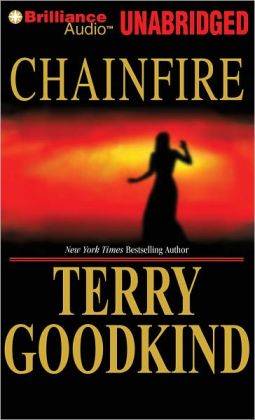
Following on from my discussion of audiobooks in my last post, 'Reading habits in the modern age', and considering the interest this review generated on Facebook when it cross-posted from Goodreads, I thought it was worth throwing up here as well. Stay tuned for more scathing reviews as I continue needlessly to torture myself with Goodkind's works until I'm all caught up ...


Deplorable Ayn Rand fanatic Terry Goodkind's sole plot device of separating hyperbolically perfect lovers Richard and Kahlan recurs yet again in Chainfire, if in a slightly more interesting incarnation this time, with the erasure of Kahlan from everybody's memories but Richard's. This results in some characteristically tedious, repetitive, unrealistic, interminable, eyeroll-inducing exchanges between Richard and other characters as he tries to convince them of his inevitable correctness against their insistence that he is deluded. Oh and also something about an invincible beast that (of course) horifically mutilates people to get to Richard. 

Goodkind has only my obsessive compulsion to finish what I start to thank for my continued consumption of his free market capitalist propaganda, and the fact that the books have been turned into audiobooks. I don't think I'd get through them if I had to will my eyes to continue relaying the derivative, uninspired words on the page to my brain instead of just tuning out and doing something else as the poor voice actor drones on and on, trying to intone the author's awkward phrases with any sense of realism. There are also, of course, the obligatory clumsy, transparent, desperate, deluded attempts from the author to trick the reader into endorsing morally untenable positions that glorify selfishness and pose helping others as the greatest kind of evil, as well as other philosophies that support a purely self-interested free market capitalist, minimal-government, nonexistent welfare dystopia. 

The book ends on a cliffhanger to propel you into the next book in the triology, and I have to admit despite my innumerable objections that I'm usually interested in what happens at the end of each book as events (finally) reach their climax. Anyway, I'm one book closer to catching up to Goodkind and hopefully not reading another book from him for many years to come (or ever again).

Thanks for reading

LPL

Tuesday, 16 April 2013

Beginning with the title

Tuesday 16 April 2013
Edited Friday 23 August 2013

'The title always comes first, to me and to the reader. I’ve written many stories and articles just by doggedly following the title' – Guillermo Cabrera Infante.

Infante strains to devise one of his characteristic, diabolically paronomastic titles.

If there were such things as patron writers like there are saints, Guillermo Cabrera Infante would be the patron of titles. In a single interview in edition 75 of the fantastic 'Art of Fiction' series in The Paris Review, for example, the word comes up some 21 times. In fact, he seems to have been a little obsessed with them, making him a fitting epigraph for this post.

I can't say I'm as devoted as old Saint Guillermo to the art of the title, but I do of course appreciate its importance, and I do admire a good one. At some point I'll post the premise of 'The Innocuous Death of Irving Crabbe' here for those who don't know but, before I do, I'm interested in people's opinions of the title. 

To be honest, it's not the kind I would usually go for; my favourites tend to be interesting sentence fragments. In my own work they're usually resurrected little darlings lifted from within the body of the text during the drafting process from a place where I've taken it one step too far, overstated something, as with 'These dying hours'. That, or a fragment from a relevant quote like 'All these, all our meagre losses' from Lina Sagaral Reyes' poem 'The Story I Would Have Told You Had I Met You Yesterday', or 'Some have entertained angels' from Hebrews 13:2, 'Be not forgetful to entertain strangers: for thereby some have entertained angels unawares'. (And then, of course, there are the times you happen to be writing an article defaming a public figure named Bede, which also happens to be the name of a seventh/eighth-century monk whose title, 'the Venerable Bede' is just begging to be inverted.)

Infante might be the most enthusiastic titler but, when it comes to the fragment title, Hemingway is the undisputed champion. All his titles are amazing, but especially stellar exemplars include The Sun Also Rises, A Farewell to Arms, For Whom the Bell Tolls, A Moveable Feast, 'Hills Like White Elephants' and 'A Clean, Well-Lighted Place'. I love the way these titles suggest belonging to something larger, or contain within them a verb or the suggestion of a verb, or just use any other form than the standard, 'The XYZ'.


When Hemingway's titles do follow the more conventional format, they're always redeemed by the interesting words contained therein, often poetic, curious combinations, slightly discordant in their adjacency, fabular in their construction: The Old Man and the Sea; 'The Gambler, the Nun, and the Radio'; 'The Faithful Bull' – what do these words have to do with one another? How do they come together? Good titles, I think, provoke such questions, and chime euphonically in the ear and the mind. Other examples include Arundhati Roy's The God of Small Things, Merlinda Bobis's The Solemn Lantern Maker, Markus Zusak's The Book Thief, Jean-Dominique Bauby's The Diving Bell and the Butterfly, and David Mitchell's Cloud Atlas. There's something magical in all of them.


Dull offenders of this kind include Orhan Pamuk's The Museum of Innocence, David Wroblewski's The Story of Edgar Sawtelle, and Carlos Ruiz Zafón's The Shadow of the Wind (though perhaps this last sounded less clichéd in the original Spanish).


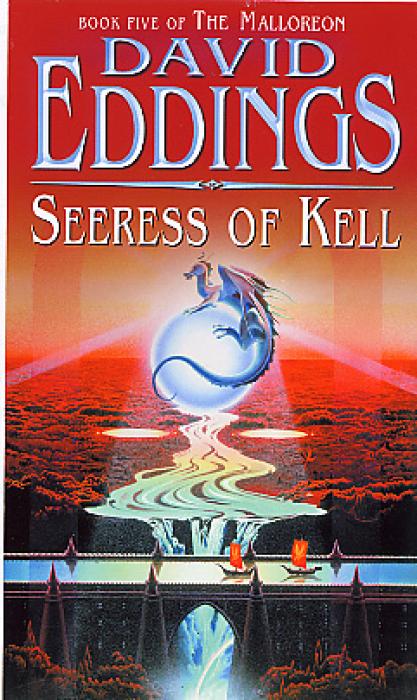
And I don't think the curiosity-piquing 'magic' of these titles when they work can be replaced with references to made-up peoples and place names that nobody knows or cares about until they read your books. David Eddings' Malloreon springs to mind, featuring such obscure, repetitive, banal titles as Demon Lord of Karanda, Sorceress of Darshiva, Seeress of Kell or, rather, Magical Person of Bad Made-up City Name 1, 2 and 3.


Goodreads has a list of the 100 best book titles as voted by users, and I think they largely get it right (with the notable exception of Khaled Hosseini's A Thousand Splendid Suns, which I cannot abide). The list is topped by Philip K Dick's Do Androids Dream of Electric Sheep?, Seth Grahame-Smith's Pride and Prejudice and Zombies and Ray Bradbury's Something Wicked This Way Comes, also including such favourites as Jonathan Safran Foer's Extremely Loud and Incredibly Close at number 49 and Italo Calvino's If on a Winter's Night A Traveler at 84. I was surprised the omission of Lionel Shriver's We Need to Talk About Kevin and David Foster Wallace's Infinite Jest, though. And there are also very few or no one-word titles, which suits me. I'm generally not a fan, excepting perhaps JM Coetzee's Disgrace and AS Byatt's Possession. I'm really interested in this at the moment, so I'd love to hear some of your favourite book titles and the rationales behind them.

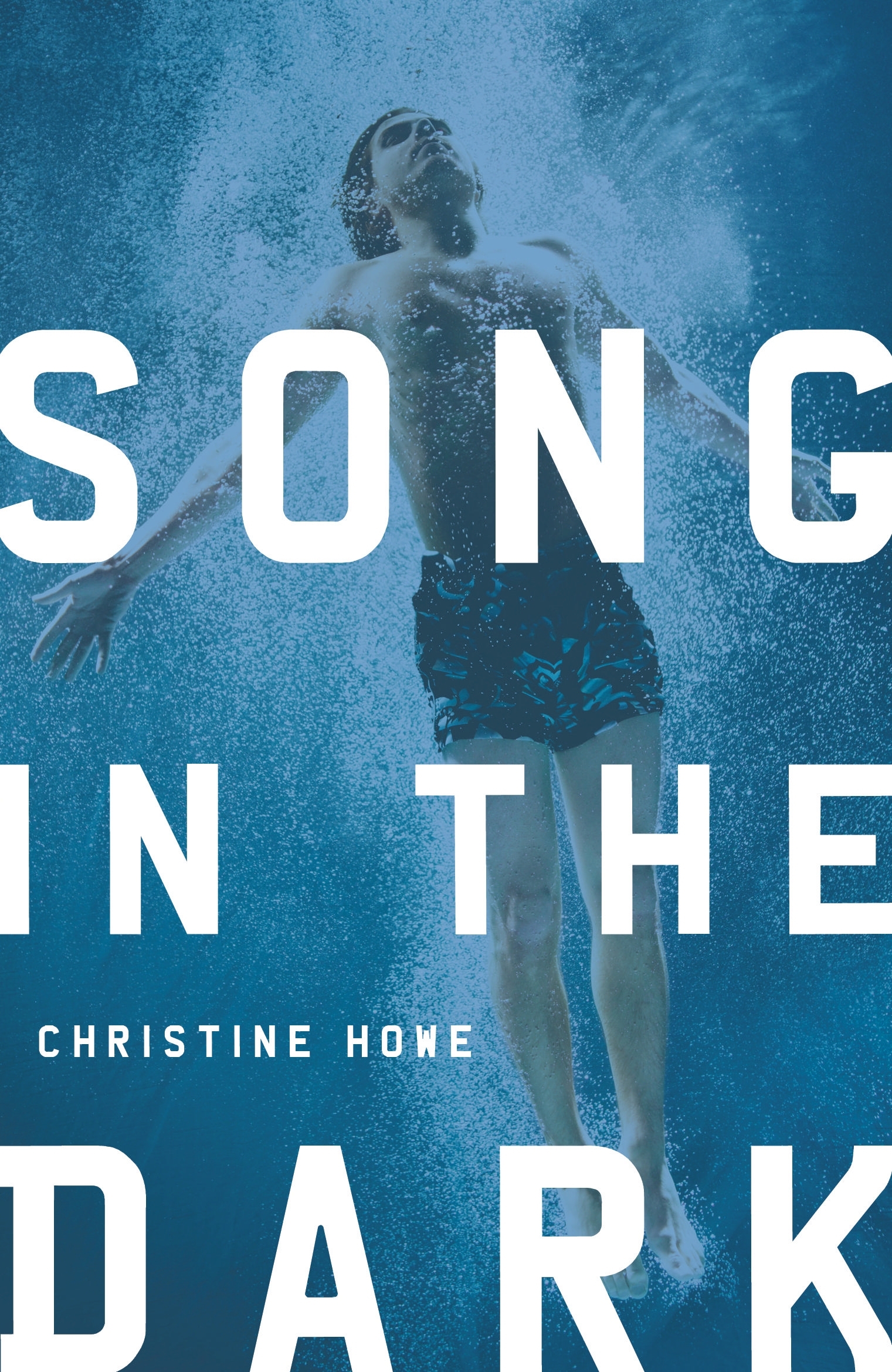
I recently had the chance to ask two authors about their titles when I attended a panel for the recently published novels The Railwayman's Wife by Ashley Hay and Song in the Dark by my old Creative Writing lecturer at the University of Wollongong, Dr Christine Howe. The Railwayman's Wife is very romantic, and Song in the Dark is equally evocative, so I asked about the significance behind them. I wondered especially why, in a book in which the author professed to have created a strong female character, she chose to situate that character's identity in her husband in the title, half suspecting the answer to be 'publishers'. And it was. Apparently it was originally to be titled after a line from a Triffids song, but the publishers objected and suggested The Railwayman's Wife. Luckily Hay didn't feel this was a betrayal of the heroine's character and accepted the suggestion. The origin of Chrissy's title was more organic. She said she actually woke up in the middle of the night and knew it was the one.


After much Facebook-friend consultation and confabulation with her publishers, another of my old lecturers, Dr Shady Cosgrove, has finally announced the title of her latest work: 'What the Ground Can't Hold', which I think sounds like an instant classic, very Hemingwayesque, and vastly superior to the other more pedestrian contenders, 'The Missing' or 'The Disappeared'.

But 'What the Ground Can't Hold' started out under a different name, if I remember correctly: 'The Necessary Tango'. In fact, Shady told us that title was the original kernel from which the rest of the novel grew. And yet I think it's skipped up a step from a great example of the enticing, provocative 'The XYZ' title, to an even better 'fragment' title.

Perhaps the same is in store for me. Like Shady's and Infante's, my novella began with the title, or the notion of a title. I was watching a trailer one day in 2007, unaware of the film's title and trying to guess what it would be, when I came up with 'The [Adjective] Death of Harold Crick'. Its actual name was Stranger than Fiction, but the title I had invented stayed with me. Or rather, the format 'The [Adjective] [Noun] of [Proper Noun]'. This was around the time I was trying to decide on an idea for my English Extension 2 major work, so I spent a little time theorising it before ultimately abandoning it in favour of a (very poor) fictionalisation of the 1989 Tiananmen Square riots. I did so by trying to fill the gaps in the title, then imagining what such a story would be about. First I replaced 'Harold Crick' with a similarly quirky name, 'Norman Crabbe' ('Irving' didn't come until first year when I reimagined and wrote the story for my first Creative Writing assessment), but I always retained the word 'Death'. Then I played around with the adjective, which I found the most stimulating part of the exercise. I knew I wanted an 'in-' or 'un-' word, and tried 'inconsiderate', 'inoffensive', 'unintrusive', 'unconventional', 'unexpected', 'unfortunate' and 'indisputable' before coming to 'innocuous', dreaming up the different stories each adjective connoted.

So the title 'The Innocuous Death of Irving Crabbe' has been with me since at least the first half of 2008, with predecessors a year older. It has lived in a couple of radically different incarnations since then, first as a short story for Merlinda in first year, then as a novel outline and first chapter for Shady and Jill Jones in second year, but the name has stuck. Guillermo would be proud. Perhaps now that I am finally working on the novella in earnest, though, it will outgrow it. Maybe there's a better name, and I shouldn't 'doggedly follow the title', I don't know. Would you pick up a book called 'The Innocuous Death of Irving Crabbe'? What do you think of it? Good? Bad? Memorable? Forgettable? Devastatingly bromidic? Inexplicably erotic? What does it put you in mind of? What kind of story does it conjure? I'd really appreciate any feedback.

As an aside, when attempting to think of a title for this post, the utterly obvious 'what's in a name?' reference came to mind. Not that I ended up with something much better. But here's a selection of posts and articles that went down that road, heedless of those millions who had gone before them:
Thanks for reading.

LPL

References*
Guillermo Cabrera Infante in Alfred Mac Adam's interview 'Guillermo Cabrera Infante, The Art of Fiction No. 75' in the Spring 1983 issue of The Paris Review, number 87, reproduced on The Paris Review website.

Verse 2, chapter 13 of the Epistle to the Hebrews of the New Testament of the King James 'Authorised Version', Pure Cambridge Edition of the Holy Bible, as reproduced by The Official King James Bible Online website.

*Click on images to be directed to original location.

Saturday, 6 April 2013

The innocuous death of irving crabbe

Saturday 6 April 2013

Greetings, dear reader.

This is a short post to formally announce that I, L Phillip Lucas, have officially commenced writing my first piece of long fiction, a novella titled 'The Innocuous Death of Irving Crabbe'.

The makeshift cover I have mocked up for myself, using some image stolen off the internet somewhere years ago.

With a grand total of 2,878 very raw words so far, it's not much, but it is a start. (At the risk of exposing my feeble mathematical skill to the scorn and ridicule it deserves, I believe this equates to 5.756% of the wordcount of the finished project, which actually sounds much more impressive). The plan is to get that number to six thousand by Monday.

It's not without a sense of guilt that I admit that, since studying abroad at the University of East Anglia for the first half of 2011, I have neglected fiction. First I was distracted by finishing my studies in literature and linguistics. Then work got in the way. But finally I applied for and have been accepted into a Master of Creative Arts by Research at the University of Wollongong under the supervision of the magnificent Dr Merlinda Bobis, and I can't convey how much I'm enjoying (after only one semester away from uni) escaping the hideous, lucrative corporate world of business English and offices and technical editing, and returning to the wonderful world of research, reading and writing. 

And I actually believe the hiatus has done me good. I have a much clearer vision now of how to write than I did when I finished the Creative Writing portion of my degree. Those few extra years to think, work, mature, read, and write in other forms have left me a slightly different person, I believe, and a slightly better writer (though still, I constantly fear, not better enough).

I plan to blog often about the process along the way, but I don't want it to get in the way of actually writing, and I don't want to be blogging utter rubbish, so not too frequently. But please, stay tuned. Get involved. Tell me what you think. I'd love to hear from you.

Thanks for reading.

LPL