
Tuesday 16 April 2013
Edited Friday 23 August 2013
'The title always comes first, to me and to the reader. I’ve written many stories and articles just by doggedly following the title' – Guillermo Cabrera Infante.
Edited Friday 23 August 2013
'The title always comes first, to me and to the reader. I’ve written many stories and articles just by doggedly following the title' – Guillermo Cabrera Infante.

Infante strains to devise one of his characteristic, diabolically paronomastic titles.
If there were such things as patron writers like there are saints, Guillermo Cabrera Infante would be the patron of titles. In a single interview in edition 75 of the fantastic 'Art of Fiction' series in The Paris Review, for example, the word comes up some 21 times. In fact, he seems to have been a little obsessed with them, making him a fitting epigraph for this post.
I can't say I'm as devoted as old Saint Guillermo to the art of the title, but I do of course appreciate its importance, and I do admire a good one. At some point I'll post the premise of 'The Innocuous Death of Irving Crabbe' here for those who don't know but, before I do, I'm interested in people's opinions of the title.
To be honest, it's not the kind I would usually go for; my favourites tend to be interesting sentence fragments. In my own work they're usually resurrected little darlings lifted from within the body of the text during the drafting process from a place where I've taken it one step too far, overstated something, as with 'These dying hours'. That, or a fragment from a relevant quote like 'All these, all our meagre losses' from Lina Sagaral Reyes' poem 'The Story I Would Have Told You Had I Met You Yesterday', or 'Some have entertained angels' from Hebrews 13:2, 'Be not forgetful to entertain strangers: for thereby some have entertained angels unawares'. (And then, of course, there are the times you happen to be writing an article defaming a public figure named Bede, which also happens to be the name of a seventh/eighth-century monk whose title, 'the Venerable Bede' is just begging to be inverted.)
Infante might be the most enthusiastic titler but, when it comes to the fragment title, Hemingway is the undisputed champion. All his titles are amazing, but especially stellar exemplars include The Sun Also Rises, A Farewell to Arms, For Whom the Bell Tolls, A Moveable Feast, 'Hills Like White Elephants' and 'A Clean, Well-Lighted Place'. I love the way these titles suggest belonging to something larger, or contain within them a verb or the suggestion of a verb, or just use any other form than the standard, 'The XYZ'.


When Hemingway's titles do follow the more conventional format, they're always redeemed by the interesting words contained therein, often poetic, curious combinations, slightly discordant in their adjacency, fabular in their construction: The Old Man and the Sea; 'The Gambler, the Nun, and the Radio'; 'The Faithful Bull' – what do these words have to do with one another? How do they come together? Good titles, I think, provoke such questions, and chime euphonically in the ear and the mind. Other examples include Arundhati Roy's The God of Small Things, Merlinda Bobis's The Solemn Lantern Maker, Markus Zusak's The Book Thief, Jean-Dominique Bauby's The Diving Bell and the Butterfly, and David Mitchell's Cloud Atlas. There's something magical in all of them.


Goodreads has a list of the 100 best book titles as voted by users, and I think they largely get it right (with the notable exception of Khaled Hosseini's A Thousand Splendid Suns, which I cannot abide). The list is topped by Philip K Dick's Do Androids Dream of Electric Sheep?, Seth Grahame-Smith's Pride and Prejudice and Zombies and Ray Bradbury's Something Wicked This Way Comes, also including such favourites as Jonathan Safran Foer's Extremely Loud and Incredibly Close at number 49 and Italo Calvino's If on a Winter's Night A Traveler at 84. I was surprised the omission of Lionel Shriver's We Need to Talk About Kevin and David Foster Wallace's Infinite Jest, though. And there are also very few or no one-word titles, which suits me. I'm generally not a fan, excepting perhaps JM Coetzee's Disgrace and AS Byatt's Possession. I'm really interested in this at the moment, so I'd love to hear some of your favourite book titles and the rationales behind them.
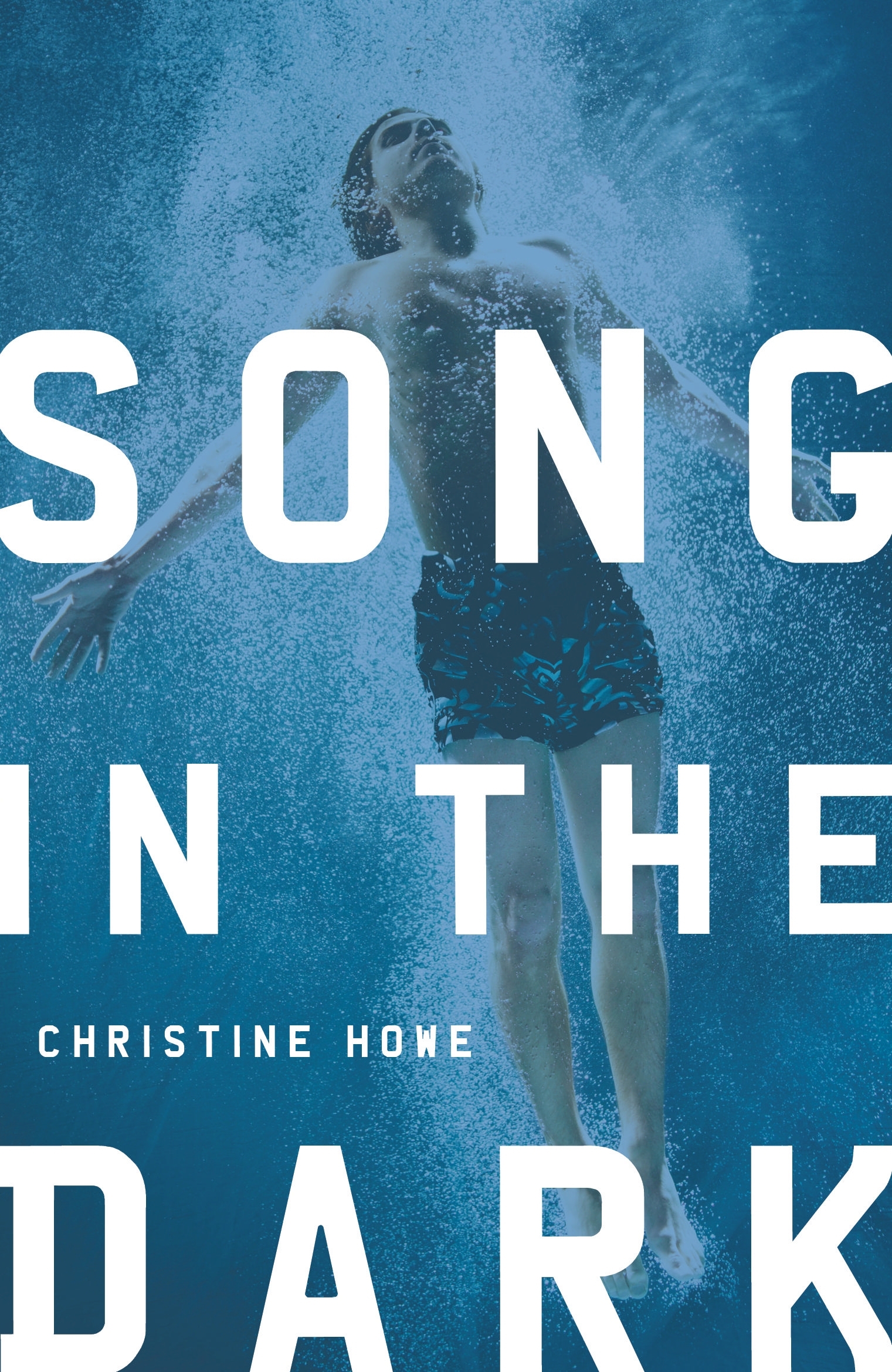
I recently had the chance to ask two authors about their titles when I attended a panel for the recently published novels The Railwayman's Wife by Ashley Hay and Song in the Dark by my old Creative Writing lecturer at the University of Wollongong, Dr Christine Howe. The Railwayman's Wife is very romantic, and Song in the Dark is equally evocative, so I asked about the significance behind them. I wondered especially why, in a book in which the author professed to have created a strong female character, she chose to situate that character's identity in her husband in the title, half suspecting the answer to be 'publishers'. And it was. Apparently it was originally to be titled after a line from a Triffids song, but the publishers objected and suggested The Railwayman's Wife. Luckily Hay didn't feel this was a betrayal of the heroine's character and accepted the suggestion. The origin of Chrissy's title was more organic. She said she actually woke up in the middle of the night and knew it was the one.


After much Facebook-friend consultation and confabulation with her publishers, another of my old lecturers, Dr Shady Cosgrove, has finally announced the title of her latest work: 'What the Ground Can't Hold', which I think sounds like an instant classic, very Hemingwayesque, and vastly superior to the other more pedestrian contenders, 'The Missing' or 'The Disappeared'.
But 'What the Ground Can't Hold' started out under a different name, if I remember correctly: 'The Necessary Tango'. In fact, Shady told us that title was the original kernel from which the rest of the novel grew. And yet I think it's skipped up a step from a great example of the enticing, provocative 'The XYZ' title, to an even better 'fragment' title.
Perhaps the same is in store for me. Like Shady's and Infante's, my novella began with the title, or the notion of a title. I was watching a trailer one day in 2007, unaware of the film's title and trying to guess what it would be, when I came up with 'The [Adjective] Death of Harold Crick'. Its actual name was Stranger than Fiction, but the title I had invented stayed with me. Or rather, the format 'The [Adjective] [Noun] of [Proper Noun]'. This was around the time I was trying to decide on an idea for my English Extension 2 major work, so I spent a little time theorising it before ultimately abandoning it in favour of a (very poor) fictionalisation of the 1989 Tiananmen Square riots. I did so by trying to fill the gaps in the title, then imagining what such a story would be about. First I replaced 'Harold Crick' with a similarly quirky name, 'Norman Crabbe' ('Irving' didn't come until first year when I reimagined and wrote the story for my first Creative Writing assessment), but I always retained the word 'Death'. Then I played around with the adjective, which I found the most stimulating part of the exercise. I knew I wanted an 'in-' or 'un-' word, and tried 'inconsiderate', 'inoffensive', 'unintrusive', 'unconventional', 'unexpected', 'unfortunate' and 'indisputable' before coming to 'innocuous', dreaming up the different stories each adjective connoted.
So the title 'The Innocuous Death of Irving Crabbe' has been with me since at least the first half of 2008, with predecessors a year older. It has lived in a couple of radically different incarnations since then, first as a short story for Merlinda in first year, then as a novel outline and first chapter for Shady and Jill Jones in second year, but the name has stuck. Guillermo would be proud. Perhaps now that I am finally working on the novella in earnest, though, it will outgrow it. Maybe there's a better name, and I shouldn't 'doggedly follow the title', I don't know. Would you pick up a book called 'The Innocuous Death of Irving Crabbe'? What do you think of it? Good? Bad? Memorable? Forgettable? Devastatingly bromidic? Inexplicably erotic? What does it put you in mind of? What kind of story does it conjure? I'd really appreciate any feedback.
As an aside, when attempting to think of a title for this post, the utterly obvious 'what's in a name?' reference came to mind. Not that I ended up with something much better. But here's a selection of posts and articles that went down that road, heedless of those millions who had gone before them:
Infante might be the most enthusiastic titler but, when it comes to the fragment title, Hemingway is the undisputed champion. All his titles are amazing, but especially stellar exemplars include The Sun Also Rises, A Farewell to Arms, For Whom the Bell Tolls, A Moveable Feast, 'Hills Like White Elephants' and 'A Clean, Well-Lighted Place'. I love the way these titles suggest belonging to something larger, or contain within them a verb or the suggestion of a verb, or just use any other form than the standard, 'The XYZ'.


When Hemingway's titles do follow the more conventional format, they're always redeemed by the interesting words contained therein, often poetic, curious combinations, slightly discordant in their adjacency, fabular in their construction: The Old Man and the Sea; 'The Gambler, the Nun, and the Radio'; 'The Faithful Bull' – what do these words have to do with one another? How do they come together? Good titles, I think, provoke such questions, and chime euphonically in the ear and the mind. Other examples include Arundhati Roy's The God of Small Things, Merlinda Bobis's The Solemn Lantern Maker, Markus Zusak's The Book Thief, Jean-Dominique Bauby's The Diving Bell and the Butterfly, and David Mitchell's Cloud Atlas. There's something magical in all of them.


Dull offenders of this kind include Orhan Pamuk's The Museum of Innocence, David Wroblewski's The Story of Edgar Sawtelle, and Carlos Ruiz Zafón's The Shadow of the Wind (though perhaps this last sounded less clichéd in the original Spanish).


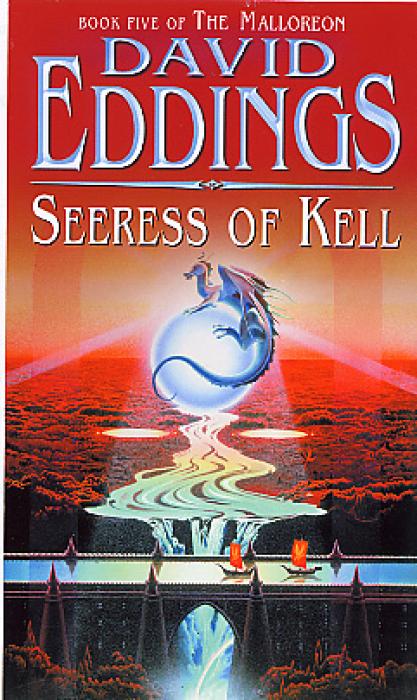
And I don't think the curiosity-piquing 'magic' of these titles when they work can be replaced with references to made-up peoples and place names that nobody knows or cares about until they read your books. David Eddings' Malloreon springs to mind, featuring such obscure, repetitive, banal titles as Demon Lord of Karanda, Sorceress of Darshiva, Seeress of Kell or, rather, Magical Person of Bad Made-up City Name 1, 2 and 3.


Goodreads has a list of the 100 best book titles as voted by users, and I think they largely get it right (with the notable exception of Khaled Hosseini's A Thousand Splendid Suns, which I cannot abide). The list is topped by Philip K Dick's Do Androids Dream of Electric Sheep?, Seth Grahame-Smith's Pride and Prejudice and Zombies and Ray Bradbury's Something Wicked This Way Comes, also including such favourites as Jonathan Safran Foer's Extremely Loud and Incredibly Close at number 49 and Italo Calvino's If on a Winter's Night A Traveler at 84. I was surprised the omission of Lionel Shriver's We Need to Talk About Kevin and David Foster Wallace's Infinite Jest, though. And there are also very few or no one-word titles, which suits me. I'm generally not a fan, excepting perhaps JM Coetzee's Disgrace and AS Byatt's Possession. I'm really interested in this at the moment, so I'd love to hear some of your favourite book titles and the rationales behind them.
I recently had the chance to ask two authors about their titles when I attended a panel for the recently published novels The Railwayman's Wife by Ashley Hay and Song in the Dark by my old Creative Writing lecturer at the University of Wollongong, Dr Christine Howe. The Railwayman's Wife is very romantic, and Song in the Dark is equally evocative, so I asked about the significance behind them. I wondered especially why, in a book in which the author professed to have created a strong female character, she chose to situate that character's identity in her husband in the title, half suspecting the answer to be 'publishers'. And it was. Apparently it was originally to be titled after a line from a Triffids song, but the publishers objected and suggested The Railwayman's Wife. Luckily Hay didn't feel this was a betrayal of the heroine's character and accepted the suggestion. The origin of Chrissy's title was more organic. She said she actually woke up in the middle of the night and knew it was the one.

After much Facebook-friend consultation and confabulation with her publishers, another of my old lecturers, Dr Shady Cosgrove, has finally announced the title of her latest work: 'What the Ground Can't Hold', which I think sounds like an instant classic, very Hemingwayesque, and vastly superior to the other more pedestrian contenders, 'The Missing' or 'The Disappeared'.
But 'What the Ground Can't Hold' started out under a different name, if I remember correctly: 'The Necessary Tango'. In fact, Shady told us that title was the original kernel from which the rest of the novel grew. And yet I think it's skipped up a step from a great example of the enticing, provocative 'The XYZ' title, to an even better 'fragment' title.
Perhaps the same is in store for me. Like Shady's and Infante's, my novella began with the title, or the notion of a title. I was watching a trailer one day in 2007, unaware of the film's title and trying to guess what it would be, when I came up with 'The [Adjective] Death of Harold Crick'. Its actual name was Stranger than Fiction, but the title I had invented stayed with me. Or rather, the format 'The [Adjective] [Noun] of [Proper Noun]'. This was around the time I was trying to decide on an idea for my English Extension 2 major work, so I spent a little time theorising it before ultimately abandoning it in favour of a (very poor) fictionalisation of the 1989 Tiananmen Square riots. I did so by trying to fill the gaps in the title, then imagining what such a story would be about. First I replaced 'Harold Crick' with a similarly quirky name, 'Norman Crabbe' ('Irving' didn't come until first year when I reimagined and wrote the story for my first Creative Writing assessment), but I always retained the word 'Death'. Then I played around with the adjective, which I found the most stimulating part of the exercise. I knew I wanted an 'in-' or 'un-' word, and tried 'inconsiderate', 'inoffensive', 'unintrusive', 'unconventional', 'unexpected', 'unfortunate' and 'indisputable' before coming to 'innocuous', dreaming up the different stories each adjective connoted.
So the title 'The Innocuous Death of Irving Crabbe' has been with me since at least the first half of 2008, with predecessors a year older. It has lived in a couple of radically different incarnations since then, first as a short story for Merlinda in first year, then as a novel outline and first chapter for Shady and Jill Jones in second year, but the name has stuck. Guillermo would be proud. Perhaps now that I am finally working on the novella in earnest, though, it will outgrow it. Maybe there's a better name, and I shouldn't 'doggedly follow the title', I don't know. Would you pick up a book called 'The Innocuous Death of Irving Crabbe'? What do you think of it? Good? Bad? Memorable? Forgettable? Devastatingly bromidic? Inexplicably erotic? What does it put you in mind of? What kind of story does it conjure? I'd really appreciate any feedback.
As an aside, when attempting to think of a title for this post, the utterly obvious 'what's in a name?' reference came to mind. Not that I ended up with something much better. But here's a selection of posts and articles that went down that road, heedless of those millions who had gone before them:
- 'Book Titles: What's in a Name?'
- 'Constructing a Title for a Book: What's in a Name?'
- 'What's in a Name?'
- '"What's in a Name": Did I Screw Up the Title of My Book?'
- and my favourite, another 'What's in a Name?', which is ironically concerned with not wanting to use 'a combination of words that has been used before for a book title'.
Thanks for reading.
LPL
References*
Guillermo Cabrera Infante in Alfred Mac Adam's interview 'Guillermo Cabrera Infante, The Art of Fiction No. 75' in the Spring 1983 issue of The Paris Review, number 87, reproduced on The Paris Review website.
Verse 2, chapter 13 of the Epistle to the Hebrews of the New Testament of the King James 'Authorised Version', Pure Cambridge Edition of the Holy Bible, as reproduced by The Official King James Bible Online website.
*Click on images to be directed to original location.


