Showing posts with label Activism. Show all posts

Monday, 19 March 2018

And hail they did: welcome to night vale’s ‘all hail’ review

10 February 2018*


If you’ve never heard of Welcome to Night Vale, you could surmise a lot from the crowd outside Melbourne’s Comedy Theatre last night. It seemed the entirety of the fandom’s local contingent had descended on the corner of Exhibition and Lonsdale in full devotee regalia—geeky, affable youths in official merchandise, gothic corsets and steampunk goggles, bafflingly obscure costume homages, and hair dyed in every hue. 

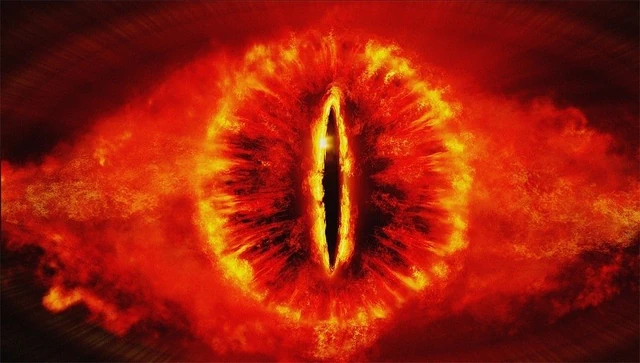
But the prevailing colour of the night, sported by almost every second attendee, was undoubtedly the signature purple of the long-running US podcast’s logo: a runic, crescent moon–pupilled eye hovering ominously above familiar water tower and powerline emblems of rural America, part-Sauron, part–Dr TJ Eckleburg.


Each episode of the bi-monthly internet series represents a broadcast by fictitious radio host Cecil Palmer, beloved commentator on the weird, nonsequitur, Lovecraftian happenings of Night Vale, an imagined desert community populated by mysterious forces and agencies competing to terrorise quiescent townsfolk. Fans of the show are drawn to its potent combination of creepy paranormal tropes, deeply ironic and self-aware humour, and Tumblr-style progressive politics promoting a message of universal acceptance for self and other alike.

In the currently touring live show ‘All Hail,’ the sudden inexplicable appearance above the radio station of ‘the Glow Cloud’—according to the Night Vale Wiki ‘an eternal deity predating reality and currently serving as the president of the Night Vale School Board’—instigates abject worshipful prostration and mindless recitations of fealty from the town’s populace, sending Cecil on a mission to determine its motives and appease the malevolent nebula.

The quest is punctuated by regular segments imported from the podcast such as an infomercial from ‘sentient patch of haze’ Deb, a collection of comically moribund horoscopes, a forecast of the delightfully bizarre events scheduled on the Community Calendar and, of course ‘the Weather’—a performance by the charming pint-sized musician Erin McKeown, who over-estimated the melodic and mnemonic aptitude of the average Melburnian theatregoer with admirable consistency and patience. The show also features appearances from new and recurring characters in the Night Vale universe—snobby local music store proprietor Michelle Nguyen, shapeshifting sixteen-year-old Josh Crayton, bibliophile teen militia captain Tamika Flynn, and time-travelling intern Jeffrey Cranor.

Erin McKeown as 'the Weather.'

Perennial motifs from the podcast find expression once again in ‘All Hail,’ among them a recurrent anxiety about the rapid consumption and disposal of culture and the pace of contemporary life. After entrapping the audience into laughing at how ‘2014’ vaping is, the charismatic show-opener Meg Bashwiner quips, ‘It’s just like a millennial podcast audience to throw shade at something that was four years ago.’ And in the show proper, Nguyen references in stereotypical upward inflection ‘super-old retro music like The Killers and Usher.’ The obnoxious hipster persona Nguyen’s character satirises is itself a little stale in 2018, though her appearance yields such highlights as the fourth wall–breaking real-time, part-improvised narration of sounds from the audience and a description of her so-called business plan as ‘a crude sketch of Noel Gallagher being consumed by a golem made of cocaine.’

Likewise, the show seeks with some urgency to initiate the audience into the experience of human connection so central to its ethics, reminding us continually of the communality of viewership. ‘The sound of 950 people together in a room sharing an experience’ is one of the sounds Nguyen identifies from the audience, a sentiment echoed more pointedly in Cecil’s later ironic jibe, ‘Who wants to go out in public and share physical space with other people?’ Like ‘The Investigators,’ the last Night Vale live show to reach antipodean shores in 2016, ‘All Hail’ exploits opportunities for audience participation to drive this message home, enforcing hand-holding and protracted group recitations, albeit with a little less success than its predecessor.

Loyal listeners will recognise in ‘All Hail’ the formula of several arc-ending episodes of the podcast, which often conclude with emotive diegetic exhortations from Cecil that have clear real-world political parallels. The show ends on an impassioned plea to convert our good intentions into positive action if evil is to be thwarted. ‘Books,’ Tamika Flynn says, are ‘potential human action,’ and ‘filled with empathy, which is much more heart-shattering than any bullet.’ And ‘good,’ we are told, ‘is an action, not a description.’

While timely, timeless and true (Bashwiner includes in her opening address the embarrassed Trump apology fast becoming a standard convention for every international American performance), this message is not so elegantly grounded in the preceding performance as it is in past podcast episodes or in ‘Investigators,’ and feels superimposed rather than earned—a coda by deus ex machina. Without spoiling the final act completely, plot events might have lent themselves much more naturally to a conclusive sermon on the importance of communication and making space for understanding one another than a tenuously (or, dare I say, non-existantly) linked monologue on activism.

But the minds behind Night Vale know their audience and, judging by the uproarious cheering, hyena-cackling, standing ovation and double encore this audience bestowed on the performers, it was not inclined to register the maladroit delivery of a message it so firmly agreed with after an hour and a half of such skillfully targeted entertainment. I’m not inclined to try to disabuse them, but I would advise caution on behalf of those considering taking along friends uninitiated in the Night Vale universe like I did, lest the audience’s Glow Cloud–like adoration fail to take root in them.


*Note: I would've put this up this sooner, but I was delayed by talks with the editor of a website. It appears here with their permission.


Thanks for reading

LPL

Friday, 19 June 2015

Vegan options at summer hill hotel


Friday 19 June 2015 


I had a pretty funny experience at the Summer Hill Hotel last night, but it didn’t have anything to do with their ‘comedy’ trivia. My girlfriend and I went along with her brother and two of his colleagues, and finished up at a respectable third place. Afterward, when it had emptied out a bit, we got talking to one of the bar staff who was coming around to clean the tables. While he was hanging around, Tilly noticed a sign saying they do veggie burgers on Mondays, and asked him why only on Mondays. We’ve been to the pub a couple of times and they only have two vegetarian options, neither of which can be veganised, so the only vegan option is a bowl of chips (almost certainly fried in the same oil as the chicken schnitzel). Keep in mind that this is in Sydney’s inner west, possibly the most vegan-friendly place in Australia outside of Melbourne, where just down the road I could ask for no fish sauce or oyster sauce in my stirfry at the Thai place or no cheese on my pizza at the Italian and get the response, ‘Oh, you mean vegan?’ 

‘Good question,’ he answered. ‘I don’t know. I assume all the ingredients are there right now, but we only sell it on a Monday.’ 

There was a bit of a back and forth where he bitched about his evangelistic vegan ex-girlfriend and her hypocrisy in drinking non-vegan wine and wearing leather shoes, and then Til volunteered that I was vegan and he started interrogating me about wine and shoes and honey, absurdly insisting that bees have no use for it (!?!?). Then he said, ‘It’s funny, ’cause we actually got this loooong email a while back from some vegan who wanted more options on the menu. And for the first few paragraphs I was on board; I was like, yeah, mate, I agree, but then he got to the part where he started trying to preach and stuff and I was just like ‘Nup.’’ 

Then he talked a bit about how he ‘gets’ people who do it for the health reasons, and that he’d do it for the health reasons but he loves chicken, but he doesn’t get people who say it’s for ethical reasons. 

When he walked away, I turned to the rest of the group and said, ‘Yeah, so the guy who sent that email was me,’ and everybody lost their shit. No one could believe that had happened. I hadn’t said anything because I wanted to hear what he had to say honestly. It was like being able to eavesdrop but he was talking straight to my face – quite a rare opportunity, really. 

Not that it particularly helped. After the encounter I dug up the email and read it back to myself to try and see where he was coming from. Obviously his reaction is not the desired one for my cause. I know that people often respond negatively to any discussion of veganism, so that was nothing new, but in this case I thought I’d tried to be particularly non-threatening and polite because I was trying to effect a concrete change. But see for yourself! I’ll copy and paste the contents below, with a little commentary. 

Firstly, I guess the email was pretty long – four paragraphs in total, but I’m just a longwinded, thorough person and that probably won’t ever change. I didn’t want to just send a three-line email asking for vegan options, I wanted to make a case and give some suggestions, too. 

My first paragraph was basically just sucking up to them and setting up the situation: 

     To the management of the Summer Hill Hotel/AHL Group 


     My girlfriend and I have just moved into the area, and we'd heard great things about 
     your establishment, so we decided to try out the hotel for our first lunch after a big 
     morning moving in. We loved the atmosphere and service at the hotel, but were a bit 
     disappointed that there were no vegan meal options available at your bistro, and the 
     two vegetarian options were unable to be 'veganised' because they were pre-prepared 
     and contained fish sauce and dairy products respectively. 

Nothing to see here, right? Pretty tame? 

Next I got to the point of the email: 

     We're eager to make your establishment our new 'local' for drinks, trivia, and lunches
     and dinners with friends, but obviously we'll have a hard time if there's nothing we 
     can eat there! So I'm just emailing to ask if there's anything you can do to 
     accommodate vegans in your meal options – whether it's enabling one of the 
     vegetarian options to be altered for vegans, or even adding a new menu item. 

Again, pretty reasonable, I think. 

My third paragraph was about establishing common ground in case they were thinking ‘Jesus, no meat, dairy or eggs – what the hell does he want, then?’ (a common reaction). I explained what veganism actually is, which, in retrospect could’ve sounded a bit patronising, but you’d be surprised how many people don’t actually know, so I had to explain it to be sure. Here I also gave some suggestions for actual meals, because it’s generally good practice not to just point out a problem, but  also to arrive with a solution, and I think a lot of classically trained chefs and cooks have just never contemplated cooking something without meat, dairy or eggs, so I wanted to show that there were viable options:

     I come from a family of chefs, so I know veganism can sound prohibitively 
     restrictive at first. We essentially don't eat (or use) any products that involve 
     harming animals, so no meat, dairy, eggs, honey, etc. But there are actually so many 
     inclusive, delicious vegan meals that anyone can enjoy, even staunch meat 
     enthusiasts (if they give it a try)! At other pubs in the past I've had wonderful veggie 
     burgers; simple mushroom, tomato and herb pastas; open pies of roast veggies in 
     (dairy/egg-free) filo or shortcrust pastry; falafel and hummus pitas with salad; nachos 
     with beans; and vegan pizzas. Often other pubs go to the extra length of making their 
     vegan meal gluten-free as well, so they always have at least one option that anyone 
     can enjoy, whether they're vegan, vegetarian, pescetarian, lactose-intolerant, 
     gluten-free or whatever else! 


'Anyway, I was just reading your final edit, and um, there seems to be an inordinate number of exclamation points ... 'It was a damp and chilly afternoon, so I decided to put on my sweatshirt!' ... 'I pulled the lever on the machine but the Clark Bar didn't come out!''

But still, maybe just annoyingly nice, right? Not exactly raging preachy vegan yet? 

But these were all still the paragraphs that he’d been ‘on board’ with. It was the last one he said he had an issue with. And I can definitely see why. The last paragraph was where I raised the issue of ethics. It wasn’t in my original draft of the email, but then I found this pamphlet on their website that was basically fifteen pages of them bragging in poorly written copy about their commitment to ethical food sourcing and sustainable environmental practices and I thought, ‘Well, then I’ll bring up how maybe offering a SINGLE vegan option on your menu might fit in with your dedicated passion for ethical food and environmental sustainability’: 

     I was interested to read the ALH 'Our Sustainable Kitchen' brochure available on 
     your website and glad that all your meat seems to be procured as ethically as 
     possible. 

Okay, not really, but a bit of flattery couldn’t hurt … 

     As a company 'committed to ethical food sourcing and supporting environmental 
     resource management now and in the future', I hope you guys will look into 
     accommodating what I and many other people are increasingly finding to be the 
     most healthful, ethical and environmentally sustainable lifestyle choice available. As 
     you may know, growing crops to feed livestock around the world is the biggest cause 
     of habitat loss and deforestation, and raising animals for consumption contributes 
     more to greenhouse gas emissions than all our transport needs combined. 

     Thanks for your time and hope to hear back from you soon. 


     Cheers 

     Mr L Phillip Lucas, BA, BCA 
     Freelance writer and editor 
     

So, what? Is it that ONE sentence he took issue with, then? Merely making a claim about habitat loss, deforestation and greenhouse gas emissions? Claims the UN itself has validated by urging the world to move towards a vegan diet? To me it seems that people are just so sensitive on this subject that you literally can't say anything without being written off as ramming your ideology down people's throats. I think this ties back to a realisation I had the other day that I posted on my L Phillip Lucas Facebook page

     Shouldn't the real indicator of self-righteousness be the belief that all of our actions 
     are beyond reproach, that no one has the right to criticise our behaviour? As a 
     society, our fixation on 'judgement' is reaching phobic levels. In a world where most 
     of us never really think critically about our lives, it becomes easier to dismiss any 
     form of criticism as rude, judgemental, self-righteous, sanctimonious, holier-than
     -thou or preachy than to make sure our ideas and actions can stand up to criticism. 

They never did write back to my email. Apparently they just passed it around to all the staff, had a laugh at my expense, and now they bitch about it (to other vegan patrons???). I'm not really sure what I should've done differently, except not mention the ethical side of things. Obviously, in a way, I did get ‘preachy’ at the end there, but only to hold them to their own professed commitments. I wouldn’t have brought it up if they hadn’t done so first, bragging about their obviously bullshit passion for sustainability. 

Maybe you can write a more successful one than me. If you’d like to send them an email asking about adding a vegan option to the menu, that’d be amazing. If they hear it from enough different people, they might actually consider it. Their email is: SummerHill.Hotel@alhgroup.com.au 


Thanks for reading 

LPL

Tuesday, 3 July 2012

The worst kind of emergency

Tuesday 3 July 2012

Like most people who want to think of themselves as morally conscientious, I've been acutely aware of my obligation to contribute to charity for some time now. I wrote in March last year in the post 'Further Irish adventures' on my travel blog, Ordinary things, smashed and reconstituted

I can’t really explain it, I suspect because it doesn’t make sense, but I feel a kind of guilt being in someone else’s country and being better off than them. Here I am, a visitor, a traveller in London and there’s a homeless man whose country this is, and I’m better off than him.

In retrospect, I now feel I can account for that 'inexplicable', 'irrational' guilt with another passage from the brilliant documentary that everyone should see, Stephanie Black's Life and Debt, and the book upon which it is based, Jamaica Kincaid's A Small Place

But some natives--most natives in the world--cannot go anywhere. They are too poor. They are too poor to go anywhere. They are too poor to escape the reality of their lives; and they are too poor to live properly in the place where they live, which is the very place you, the tourist, want to go--so when the natives see you, the tourist, they envy you, they envy your ability to leave your own banality and boredom, they envy your ability to turn their own banality and boredom into a source of pleasure for yourself.

The writer has, I think, natives of the third world in mind here, but I think it applies to the homeless of the first world, too. I think I was picking up on this dichotomy between the privileged tourist and the impoverished native, and it made me uncomfortable. I continued in that post to explain how I assuaged both this tourist's guilt and my obligation to give:

I just made a promise to myself that, while travelling, I would give something to everyone who asked it of me – even if it’s just always the smallest coin in my pocket (although I think giving single pennies away is more insulting than anything else). I know it’s irrational, but I don’t think giving can really be a bad thing, so I’m happy to keep doing it. It’s either homeless people, charity workers, or buskers, so the money’s never going somewhere it shouldn’t.

I felt that satisfied my obligation while I was away, but I always intended to, upon my return, do some research and choose a charity or two that I could champion and support regularly. The task, however, proved too large and too difficult. Where do you start? How do you choose between one cause and another? I soon realised that the very dedication I had to the idea of charity (and of finding the right one) was only serving to delay my actual participation in it. So my ultimate solution ended up resembling my European policy more than anything else. Since then, I've been meting out smaller amounts of money more frequently to whichever charitable cause comes my way. $10, say, every time a friend does a charity run. 
 
So far this has led me to make donations to causes as diverse as the Sexy Tales Comedy theatre collective, Cancer Research UK, the Leukaemia Foundation, the lesser known Nepalese Blinknow Foundation and even, controversially, Invisible Children's Kony 2012 campaign. I have also recently begun to donate monthly to the activist group GetUp!, although I would classify that as a third-tier act of charity. It's third-tier because, as strongly as I feel about the issue, its importance is higher-order, more abstract, contentious. I might be wrong about the need for the Australian political discourse to be dragged left, just as it might not be as important to donate to the Atheist Foundation of Australia, or any particular political party, despite my personal feelings on the issue. These are disputable ideological causes whose need to be kept at the third tier is underlined when you consider that many people in the world would not donate to GetUp! or Avaaz, but to right-wing think tanks and the like. I would also place donations to arts organisations, libraries, museums, schools, local children's sports clubs, and other institutions of general good in this category. These are worthy causes, but they would serve only to improve lives, not to save them. The fact that there are two tiers of importance below them should not reflect poorly on their worth, but rather on how very dire the need of other causes is.

We can all agree, for instance, about finding a cure for cancer, or multiple sclerosis, or AIDS, or leukaemia, whatever objections I may have to the shameless corporate exploitation of the breast cancer pink ribbon (most disgustingly in the name of 'breast cancer awareness', as though we could be any more aware of breast cancer), and misgivings I might have about the resulting disproportionate funding of breast cancer research to that of other cancers. These potentially life-saving causes I would name second-tier, once again because of the seriousness of other causes, not because of their own lack of worth.

Because, while the pursuit of cures for disease is undoubtedly a noble cause, no one can say it is morally wrong that diseases exist, that this is an injustice for which we are implicitly to blame and which we can act to stop. That is the nature of the first-tier causes, those which attempt to solve and alleviate poverty.

Now, semantic decay has unfortunately seen to it that we hear talk about poverty mostly as meaningless platitudes. We're all inured to it. 'Starving children in Africa' has become a reproach for parents to get their children to finish their meals and avoid waste, the touchstone invoked rhetorically in every argument, a phrase to be bandied about by comedians in witty contrasts with petty Western concerns.


But try to stop and think about it for a second, as I have recently. Try to undo the work of semantic decay, to resensitise yourself. It's like how we grow up with giraffes and elephants in our books and toyboxes, their long necks and noses pointed out to us as their distinguishing features from the very beginning, so we are robbed of the chance to ever really marvel at them, until one day you're half-watching a documentary when you realise how remarkable they really are.

Think about it. Try to look at it from an objective perspective, that of intelligent alien observers, or our descendents in the future. What would they think when they heard that three quarters of the world's population lived in poverty and the other quarter did nothing. How can we go on with our lives knowing that the rest of the world is suffering in this way? How can we buy an expensive new TV when we know that if we only donated that money to a charity instead, we would literally be saving hundreds of lives? How can we spend billions exploring space when we haven't even solved the problems here on Earth? How is this allowed to go on? If you accept that the boundaries between nations are arbitrary and we are all just human beings on this world, it's hard to believe. It's hard not to think that there should be some kind of limit on the wealth that a nation can possess while its neighbours are dying of easily curable diseases. That each rich country should have to take on a number of poor ones whose welfare it is their responsibility to ensure before they can continue to expand themselves. The poverty of the vast majority of the world is nothing short of an emergency, and it is the worst kind: the kind that we have gotten used to. The kind that can last centuries.

Think about the last time you heard about or saw someone rich, or some possession you wish you were rich enough to own. Now realise that nearly everyone in the rest of the world feels that way about you. The rest of the world would give anything to be in your financial position, however humble you may feel that to be. And not just now, but for all human history. It's mindblowing. This tweet comes to mind:


In light of all this, I've decided to add a new page to this blog, which will track my charitable efforts over this financial year. I'm not doing it to boast. I'm doing it because I want to be able to see the difference I've made, and judge whether I feel it's enough. I'm doing it mindful of what Peter Singer has been urging us to do: change the culture of giving. To make it something that you would expect any normal, decent person to do, something that you could envision bringing up in casual conversation: 'Oh, so who do you donate to?'

I'm urging you to do the same. Pick a charity, a first-tier one, and work out how much you can spare and start giving. Then, if you want, you can give to the second and third tiers too. Or do what I do and give out ten dollars here and there wherever the opportunity arises. As Singer says on the webpage linked to above:

almost a billion people live very comfortable lives, with money to spare for many things that are not at all necessary. (You are not sure if you are in that category? When did you last spend money on something to drink, when drinkable water was available for nothing? If the answer is “within the past week” then you are spending money on luxuries while children die from malnutrition or diseases that we know how to prevent or cure.)

Once you have any amount of expendable income there is no excuse for you not to give. If your savings are in the hundreds, just give ten dollars every now and then at the least. We live in the age of the internet. You can do it with your credit card without ever seeing your money leave your hand. You won't even notice the difference, I promise.

And don't just give, but record it, like I am. Publicly, if possible, but privately otherwise. So you know how much you're giving and can feel good or bad about it accordingly. And talk about it. Take the pledge on Singer's website. Tell people you're looking for a charity to donate to and ask them who they recommend. Act surprised if they say they don't give. Shame them subtly if you must. And every time you give to charity, click the 'share on Facebook' or 'share on Twitter' buttons afterwards. Let everyone see, and let's change the culture of giving.


References

Stephanie Black's 2001 documentary Life and Debt, produced by Tuff Gong Pictures.
 

Lisa Pryor (@pryorlisa)'s 2012 tweet.

WhatNewsShouldBe's 2011 YouTube video, 'african food joke comic strip', of Dwayne Perkins's 'Not a Part of the Problem' comedy routine.