Showing posts with label Internet. Show all posts

Monday, 19 March 2018

And hail they did: welcome to night vale’s ‘all hail’ review

10 February 2018*


If you’ve never heard of Welcome to Night Vale, you could surmise a lot from the crowd outside Melbourne’s Comedy Theatre last night. It seemed the entirety of the fandom’s local contingent had descended on the corner of Exhibition and Lonsdale in full devotee regalia—geeky, affable youths in official merchandise, gothic corsets and steampunk goggles, bafflingly obscure costume homages, and hair dyed in every hue. 

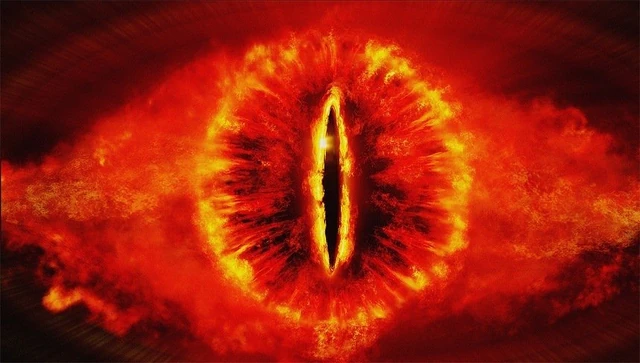
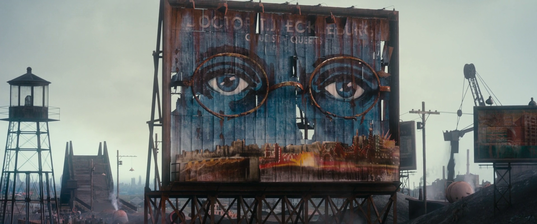
But the prevailing colour of the night, sported by almost every second attendee, was undoubtedly the signature purple of the long-running US podcast’s logo: a runic, crescent moon–pupilled eye hovering ominously above familiar water tower and powerline emblems of rural America, part-Sauron, part–Dr TJ Eckleburg.


Each episode of the bi-monthly internet series represents a broadcast by fictitious radio host Cecil Palmer, beloved commentator on the weird, nonsequitur, Lovecraftian happenings of Night Vale, an imagined desert community populated by mysterious forces and agencies competing to terrorise quiescent townsfolk. Fans of the show are drawn to its potent combination of creepy paranormal tropes, deeply ironic and self-aware humour, and Tumblr-style progressive politics promoting a message of universal acceptance for self and other alike.

In the currently touring live show ‘All Hail,’ the sudden inexplicable appearance above the radio station of ‘the Glow Cloud’—according to the Night Vale Wiki ‘an eternal deity predating reality and currently serving as the president of the Night Vale School Board’—instigates abject worshipful prostration and mindless recitations of fealty from the town’s populace, sending Cecil on a mission to determine its motives and appease the malevolent nebula.

The quest is punctuated by regular segments imported from the podcast such as an infomercial from ‘sentient patch of haze’ Deb, a collection of comically moribund horoscopes, a forecast of the delightfully bizarre events scheduled on the Community Calendar and, of course ‘the Weather’—a performance by the charming pint-sized musician Erin McKeown, who over-estimated the melodic and mnemonic aptitude of the average Melburnian theatregoer with admirable consistency and patience. The show also features appearances from new and recurring characters in the Night Vale universe—snobby local music store proprietor Michelle Nguyen, shapeshifting sixteen-year-old Josh Crayton, bibliophile teen militia captain Tamika Flynn, and time-travelling intern Jeffrey Cranor.

Erin McKeown as 'the Weather.'

Perennial motifs from the podcast find expression once again in ‘All Hail,’ among them a recurrent anxiety about the rapid consumption and disposal of culture and the pace of contemporary life. After entrapping the audience into laughing at how ‘2014’ vaping is, the charismatic show-opener Meg Bashwiner quips, ‘It’s just like a millennial podcast audience to throw shade at something that was four years ago.’ And in the show proper, Nguyen references in stereotypical upward inflection ‘super-old retro music like The Killers and Usher.’ The obnoxious hipster persona Nguyen’s character satirises is itself a little stale in 2018, though her appearance yields such highlights as the fourth wall–breaking real-time, part-improvised narration of sounds from the audience and a description of her so-called business plan as ‘a crude sketch of Noel Gallagher being consumed by a golem made of cocaine.’

Likewise, the show seeks with some urgency to initiate the audience into the experience of human connection so central to its ethics, reminding us continually of the communality of viewership. ‘The sound of 950 people together in a room sharing an experience’ is one of the sounds Nguyen identifies from the audience, a sentiment echoed more pointedly in Cecil’s later ironic jibe, ‘Who wants to go out in public and share physical space with other people?’ Like ‘The Investigators,’ the last Night Vale live show to reach antipodean shores in 2016, ‘All Hail’ exploits opportunities for audience participation to drive this message home, enforcing hand-holding and protracted group recitations, albeit with a little less success than its predecessor.

Loyal listeners will recognise in ‘All Hail’ the formula of several arc-ending episodes of the podcast, which often conclude with emotive diegetic exhortations from Cecil that have clear real-world political parallels. The show ends on an impassioned plea to convert our good intentions into positive action if evil is to be thwarted. ‘Books,’ Tamika Flynn says, are ‘potential human action,’ and ‘filled with empathy, which is much more heart-shattering than any bullet.’ And ‘good,’ we are told, ‘is an action, not a description.’

While timely, timeless and true (Bashwiner includes in her opening address the embarrassed Trump apology fast becoming a standard convention for every international American performance), this message is not so elegantly grounded in the preceding performance as it is in past podcast episodes or in ‘Investigators,’ and feels superimposed rather than earned—a coda by deus ex machina. Without spoiling the final act completely, plot events might have lent themselves much more naturally to a conclusive sermon on the importance of communication and making space for understanding one another than a tenuously (or, dare I say, non-existantly) linked monologue on activism.

But the minds behind Night Vale know their audience and, judging by the uproarious cheering, hyena-cackling, standing ovation and double encore this audience bestowed on the performers, it was not inclined to register the maladroit delivery of a message it so firmly agreed with after an hour and a half of such skillfully targeted entertainment. I’m not inclined to try to disabuse them, but I would advise caution on behalf of those considering taking along friends uninitiated in the Night Vale universe like I did, lest the audience’s Glow Cloud–like adoration fail to take root in them.


*Note: I would've put this up this sooner, but I was delayed by talks with the editor of a website. It appears here with their permission.


Thanks for reading

LPL

Saturday, 7 November 2015

What's the creator of damo and darren up to now?

Saturday 7 November 2015
This article was originally published at bullshit-blog.com on Wednesday 11 June 2014

This article as it originally appeared.

Something wonderful happened on the internet last week. Michael Cusack, animator-extraordinaire behind recent YouTube sensations Damo and Darren, is once again showing his flair for painfully realistic Chris Lilley–level lampoonery in his latest project, ‘Lucas The Magnificent’. Taking more of a multimedia approach, Cusack has crafted a satirical online persona replete with Facebook, Twitter and YouTube accounts that serve as avenues for the videogame-centred ‘rantings, ramblings and witterings’ of Mr Magnificent, an archetypical fedora-sporting, neckbearded ‘Nice Guy =)’.

In the same way Train Station mocked with pinpoint accuracy the universally recognisable unemployed, addicted, irascible ‘bogans’ or ‘deroes’ who bicker with one another at bus stops and train stations Australia-wide, Lucas The Magnificent parodies the self-aggrandising, New Atheist–venerating snobs who populate the web’s science fiction forums and comment sections.

The breathtakingly immersive portrayal extends right down to the most infinitesimal of details – not only the affected, nasal voice, vaguely British accent, hyperbolic vocabulary and exhaustingly self-reflexive tone, but an almost Aspergic exaggerated sigh that punctuates every mention of his (fictional) Pokémon game ‘reviewwws’, removed from ‘YiewwwChewb’ for copyright infringement. His latest Facebook post, in which he poses with an old-school Gameboy and the Red and Blue versions of the original Pokémon games, declaring defiantly, ‘Yes, I still play these classics….problem?….’ [sic] was even edited solely to replace an all-too-sensible comma with yet more superfluous ellipses.

This verisimilitude has left Redditors and YouTube commenters alike scratching their heads over whether or not Lucas is for real. Having only reluctantly joined the ‘catacomb for filth and scum of this world’ that is Facebook, he also represents several other elitist internet stereotypes, such as the snooty Grammar Nazi, the fanatical retro-gamer and the obnoxious ’90s kid.

Is the spoof mean-spirited to an arguably already-persecuted internet subculture? Perhaps. But the timing of the appearance, along with a less-than-politically-correct tweet by Cusack late last month hints that the character may be a response to the kind of pseudo-intellectual misogyny spouted by ‘Nice Guys’ all over the internet that informed Santa Barbara shooter Elliot Rodger’s hateful worldview. Women have yet to figure in Lucas’ online ravings, but the inclusion of the ‘Nice Guy’ tag in his Facebook page description seems pointed at the least.

Either way, Cusack is taking internet satire to a whole new level. David Foster Wallace might have been right about irony destroying our culture, but damn, in the words of Bart Simpson, sometimes ‘the ironing is delicious’.


Words by L Phillip Lucas, who could be accused of indulging in his own share of self-aggrandising ‘rantings, ramblings and witterings’ on Facebook and Twitter. He once told a girl in his creative writing class that reading her story was like having to listen to someone talk about playing a videogame.

Wednesday, 11 June 2014

'What's the creator of damo and darren up to now?'

NOTE: Since Bullshit Blog is now defunct, I've taken the liberty of reposting the original article in full here.

The cool kids at Bullshit Blog were kind enough to publish my first web article! It's a short introduction to 'Lucas the Magnificent', a parody persona crafted by the genius behind Damo and Darren. Go check it out!


And just some background, in case you're interested: I usually do this thing where, instead of building my writing CV up by putting my time and effort into articles that can be published on actual websites, I just occasionally waste an entire day writing three thousand–word diatribes to languish here unread because this is an obscure blog and no one would ever want to read a random,  unstructured, meandering three thousand–word diatribe that contains all the opinions I could possibly ever express on one topic. (And yes, that was all one sentence).

The last couple times I've started writing a blog post I've thought to myself, 'Wait a second. Is there anywhere else I could publish this? Should I be pitching somewhere instead?' But then I always talk myself out of it by thinking I don't want to restrain myself to the extent necessary for a published article, or no one would be interested in the topic I'm talking about enough to publish it, or whatever. 

But this time, when I saw Lucas The Magnificent pop up in my feed and spent the next hour reading every tweet and post he'd ever made, I realised it would be the perfect subject for one of those little link repository articles you see on pop culture websites, so I scrambled down a couple hundred words, and here we are! Next objective: publish a serious article somewhere ...


Thanks for reading

LPL

Wednesday, 14 August 2013

What's wrong with 'sex appeal'

Wednesday 14 August 2013


Opposition Leader Tony Abbott instigated a Twitterstorm yesterday when he listed 'sex appeal' as one of the assets shared by Fiona Scott and Jackie Kelly, the current and former Liberal candidates for the seat of Lindsay. Predictably, commenters and commentators of the Right, such as my own personal bête noir Miranda Devine, have since responded to the criticisms with lamentations about 'political correctness gone mad'* and 'confected outrage' and, of course, the usual deluge of abhorrent eructations from Andrew Bolt fans:

Comments from Bolt's readers, as tweeted by the good people at @BoltComments.

*I've previously discussed (and mounted a small defense of) political correctness here.

The point of this post isn't to condemn Tony Abbott, as condemnable as I think he is. Aside from his history of misogyny and his lack of expressed compunction I actually don't believe what he said is that personally reprehensible, just inappropriate and symptomatic of a larger issue. What I want to try and do is explain to those people inclined to agree with Devine, Bolt and company, why the Left finds the comment so objectionable. 

But first I want to address what's not wrong with the remark. Firstly, no one's claiming there was any malice in it. I think there's a common misconception that the lack of intention to offend excuses someone from having done so, as indicated by Opposition assistant treasury spokesman Mathias Corman's explanation that '[i]t was just a light-hearted comment, which I'm sure was not meant with any offence' (news.com.au). But this is an oversimplification. What this kind of thing reveals is not the speaker's unkindness or immorality, but rather their ignorance, often of how words, acts and omissions can reinforce cultural attitudes that privilege some and disadvantage others. 

Think of that disgusting 'Trayvoning' trend that's taken off recently, to much obloquy. Realistically, I'm sure most of the boys posing in those pictures are otherwise reasonably good people, who'd probably respond to criticism by saying it was all just a joke and they didn't mean any offence. Their wrongdoing is not a deliberate intent to mock a murder victim, but rather an unthinking insensitivity to a tragic and politicised issue and a grieving family, a selfish, immature transformation of a tragedy into a source of entertainment, posted thoughtlessly online.

To return to my personal holy text, David Mitchell's Cloud Atlas (or rather, the Twyker–Wachowski film adaptation), it puts me in mind of the casual, unintentional sexism spouted by smarmy would-be architect of a nuclear disaster Lloyd Hooks, as portrayed by Hugh Grant, to Halle Berry's Luisa Rey:

This kind of talk belongs in the '70s.

Secondly, I don't have an issue with the fact that Tony Abbott or anyone else has appraised Fiona Scott as possessing 'sex appeal', that anybody finds her attractive. Human beings are always going to find other human beings attractive, but there's a difference between thinking someone is attractive and saying it, and that distinction takes us to the heart of the issue.

As I said above, I find Abbott's comment inappropriate. Not deplorable, not opprobrious, not disgraceful, just inappropriate. Whatever Abbott thinks of Scott's and Kelly's physical appearances, it should not have been brought into the discussion of their merits as candidates. What business does anybody's attractiveness have in a list of their qualifications to represent an electorate? 

Abbott's comment doesn't show us that he's a cruel person who consciously believes women are inferior to men. What it does give us is a direct window into his worldview, a worldview he may not necessarily have that much control over (how much do any of us really decide our worldview?), but one that he nevertheless holds and must be judged by if he wants to be the leader of the country. It shows, unsurprisingly for a conservative of his generation, that at a fundamental and unconscious level, Abbott cannot see women in the same way he sees men. This attitude I am able to overlook in people of a certain age who grew up in a different era, the way we forgive our 'racist grandparents', but not in the leader of our country.

If you still disagree, just think about what it means that, when called upon to list some of the similarities of his female colleagues, which he must necessarily accept as an opportunity to list their assets, the first things that come to mind are their youth, 'feistiness' and sexual appeal. He's struggling in that video. As we all know from his comments about scripted and unscripted commitments, his conspicuous absence from interviews and television programs like Q&A (despite an open invitation) over the past few months, the 'suppository of wisdom' contretemps, and that 'bizarre 28 seconds of silence', Abbott isn't the best with impromptu speaking. You can tell he's grasping for positive adjectives in that video, buying time with a string of ums and ahs, and in the top three he comes out with is 'sex appeal', something that would never occur to him had he been speaking of men. Abbott himself knows this, as you can tell if you listen to him stressing the words 'smart' and 'hardworking' (proper qualities) when he's asked about it later, after he's had some time to think.

'Sex appeal' is the descriptor getting all the attention, but I'd argue the others weren't that flattering, either. 'Young', I'm sure, is supposed to connote enthusiasm and energy, but it's a dubious distinction if that's the primary positive similarity you share with your predecessor.

Then there's 'feisty', the suspect implications of which Elizabeth Reid Boyd has already discussed (I agree the word is condescending, with the suggestion that women have to be feisty in the big, rough boy's game of politics, but I completely reject the notion that its long-forgotten etymology has any impact on its meaning today).

Then comes 'sex appeal'. It's as though what Abbott wanted to say when the interviewer asked about the comparability of the two candidates was, 'Well, the similarity is obvious: they're both women ...' Would you ever say 'They're both men' in that situation? No, because maleness is the standard state of being, while muliebrity is a distinguishing condition to be remarked upon.

Even Abbott's final and most relevant compliment, that the two women are 'connected to the local area' reflects very little agency grammatically. They aren't active, agentive leaders in the community, prepared to make the tough calls and fight on behalf of the electorate. They're just passively 'connected' to the local area ...

I've seen Bolt commenters and others saying they've heard male politicians being referred to as sexy without any such backlash, but we rightfully hold our leaders to higher standards. Was it by a private citizen or media personality, or was it by someone holding high public office? Can you imagine Julia Gillard endorsing a local candidate in comparison to a predecessor by saying, 'They're both young, scrappy, and strappingly handsome'? I can't see it. What about Rebecca Shaw's example:

'It is unequivocally true that if Abbott had been asked a similar question about a male candidate, he would never say: “Well, um, well, Andrew Laming is young, feisty, has great hair and a very nice jawline”. If you are saying something about a female candidate that you would never say about a male candidate, you are treading on dangerous ground in the scary swamp of sexism.' (Shaw 2013)

We live in a society that consistently judges women by different standards to men (speaking of Julia Gillard), especially in terms of their appearance, a fact the Right fights against remedying at the worst of times and seems blind to at the best. The very fact that large segments of our society are held in the grip of an ideology that teaches them it is normal and natural to behave this way prevents their being able to see it. What the Left objects to about this incident is that it violates the principle that women in this day and age should be able to be enter the political sphere subject only to the same amount of attention to their physical appearance, whether positive or negative, as men are (i.e near none). The rules shouldn't suddenly change when it's a woman politician, so that it becomes a matter of public importance how she dresses, what she looks like, whether she's married or anything else. It's not so much what Abbott said, it's what his comment shows about him: that he is incapable of seeing the world in this way.

Thanks for reading

LPL
L Phillip Lucas (Facebook page)
@LPhillipLucas (Twitter profile)

References

Screenshot of Bolt Comments' (@BoltComments) twitter feed.

Amalgalmation of Simon Chillingworth's image and Warner Bros. Pictures' image.

News.com.au's 5:38pm AEST 14 August 2013 article 'Abbott cites exuberance in latest gaffe'.

Rebecca Shaw's 9:49am AEST 14 August 2013 The Guardian article 'Sexygate: how Tony Abbott should have complimented Fiona Scott'.

Tom Twyker, Andy Wachowski and Lana Wachowski's 2012 film Cloud Atlas.

Monday, 3 September 2012

The unvenerable bede

Thursday 11 May 2017

On Monday 23 July 2012, my article 'The Unvenerable Bede' about the perils of social media for politicians and local Wollongong Councillor Bede Crasnich in particular was published in Tertangala: The Environment Issue. Bede issued a response in the subsequent September Gender and Sexuality Issue, and for five years a slightly altered version of the article has been available here. After discussion with Bede in light of the recent announcement of his retirement from politics, I have agreed to remove the article from my blog. If you have any questions, or would like to request a copy of the article, my details are listed on my contact page.

Cover photography by Wilfred Russel-Smith, design by Lisa Diebold.

Monday, 28 November 2011

Moleskinoisseurs, markerholics and penophiles

First written Tuesday 29 December 2009
Tweaked and added to Tuesday  29 November 2011

When I go to Miranda Fair on my own, I go into survival mode. My stride lengthens and my pace quickens. If I get in on the quarter-to train, then by god I'm getting out on the quarter-past. But go with a girl, and I can bet at some point I'm going to get forced, by whatever means she finds necessary, into a stationery store. The thing with stationery though, as opposed to clothes or jewellery, is that I might just enjoy myself.

The near-universal appeal of stationery is a curious phenomenon. It's something to which, I suspect, we can all relate in some way – an infatuation that transcends age, race and gender. But why? Why is it that a virgin notepad, or an electric pencil sharpener, or an eraser in the shape of a bunny rabbit that smells like chocolate (I daresay the office-supply addicted amongst you are exhaling lustily just reading that list) is so appealing?

Well, I've taken it upon myself to find the answer. How, you ask? Through rigorous sociological research and countless surveys? Um, no. That would be a lot of work. I thought, instead, I'd harness the extraordinary power of the internet to solve this great mystery – and from the comfort of my own spinny chair, no less.

I wanted to start at the beginning, and it's a well-known fact that the internet begins with Google.* Once I got past the disturbing fact that 'stationary obsession' returns about thirty thousand more results than 'stationery obsession' (I chose not to waste time on the results of the former search – how obsessed with anything can someone really be if they can't even spell it correctly?), I began my descent into the odd and strangely alluring world of the writing-implement enthusiast. 

*As opposed to the way it ends, according to Irish musical comedian David O'Doherty, the only person I know of who alleges to have 'finished' the internet. Apparently, a smiling Bill Gates appears and you get to enter your initials, although this claim is unsubstantiated.


What I discovered was, I have to say, not actually that surprising, considering the types of people that froth over letterheads and liquid paper – a veritable buttload of blogs and websites that act as 'support groups' for the stationerily addicted. I trawled through what must have been a good ... three or four of them looking for answers. 

My first port-of-call, Stationery Fetish, was decidedly unhelpful, if amusing. 'My love of office supplies', writes blogger Cinderberry in her 'Stationery Fetishist's Manifesto', 'is irrational, but it is pure. Don't ask me to explain it, just hand over the multi-coloured index cards.'

The writers of Heymiki's blog and ich Kalliope, however, do suggest causes as the roots of stationery obsession. '[I]sn't this compulsion just another guise of my incessant procrastination?' asks Miki in 'My Stationery Obsession':

     Can there be any justification for this oft[-]repeated ritual: 
     deciding what colour Uniball Signo DX 0.38 would be 
     most fitting to capture the thought currently scuttling 
     through my head?' 

Kalliope seems to prefer stationery for its distraction value, saying in 'I heart New Notebooks' that it takes her 'mind off the actual thought of going "back to school".'

In her post 'Stationery Heaven' on Style Treaty, blogger Marion proposes nostalgia as the force behind statio-mania, writing longingly of the days of 'smelly paper' and 'fancy pens', adding that she 

     used to love those pencils where there were all different
     colours within the same pencil and you would remove
     the colour from the bottom and stick it into the top, 
     and if you wanted one of the colours that was at the
     top you'd have to keep pulling them out from the 
     bottom and stuffing them into the top

Okay, Marion, calm down ...

I wasn't too far into my stationery wanderings (Geddit? Hardee har har) when I came across an interview with Kristina Karlsson, wanky stationery name: Kikki K. I was beginning to think all statio-maniacs had to come up with funky alternative names for themselves. I mean really, if Kikki K translates to Kristina Karlsson, then what the hell are Marion, Miki, Kalliope and Cinderberry? But surely the Kikki K would have some answers! Well, yes. Yes she did. 'There is something about a freshly sharpened pencil or a new clean pencil case and notebook that signals a fresh start to the year', she says. And this was a recurring theme in the blogs of my specimens. Cinderberry, if that is her real name, says 

     spiral notebooks whisper to me about the promise of a
     new term at school, new things to learn, new things to 
     write. With a spiral pad, with a pen clipped inside the 
     coil, I'm ready to take on the world

which, correct me if I'm wrong, is just a little creepy. But so-called Kalliope says she loves 'the promise of staying organised' that comes with new stationery, which I have to say, I totally get.

At this point, I was starting to feel a bit weird stalking all these chicks' blogs, so I decided to turn to my own friends in the real world (through the medium of Facebook), ahem. I like the way my friend Sonja put it: 'new stationery makes me feel like things will be different that year. Productivity will increase, and I'll be so epic at everything I do. Just 'cause of all my flash new stationery ... It's all lies, though.'

The only other response I got (out of 391 Facebook friends; is that sad?) was actually from a friend, Melanie, who works at kikki.K and, unsurprisingly, hates it. I say unsurprisingly because any reasonable person opposed to conspicuous consumerism of an insane level would hate it – I once got dragged in there by a friend and the only way I could get her to leave was by exclaiming, loudly enough that the cashier could hear, that no A6 notepad was worth $49.95, no matter how Swedish. I shit you not. A6 notepad. $49.95. Anyway, I thought Mel's insights were poignant: 'lots of people now use stationery as a fashion accessory', she said, 'and they like to spend their money on something with the excuse that it is functional.' Agreed.

As for myself, I think I come into contact with more statio-mania than the average person, being an aspiring writer. We are more prone to that sort of thing, and it has been noted by myself and others that an excessive concern with the trappings of being a writer is often the sign of a poor one. It was while I was interning for Hachette Children's Books, I think, that an industry insider told me about a writer whose manuscript wasn't even considered because of the ridiculous letterhead he'd fashioned for his cover letter. 'Anyone who spends that much time on their letterhead isn't spending enough time writing,' they told me. 

So you can imagine my panic in my first Creative Writing class during my exchange semester at the University of East Anglia, eager to meet people and make a good first impression, when I unpacked my bag and realised that sitting in front of me was a Moleskine and a Parker pen. I'd bought the Moleskine ten minutes earlier from the bookshop on campus when I realised on my way to class that I didn't have anything to write in, and the pen, engraved with my writing pseudonym, had been given to me as a twenty-first birthday present by my friends back in Australia just before I left. Luckily I was able to pre-empt any judgement I might've garnered (I think) by declaring when we did the obligatory first-class-of-semester 'go around the room and say one thing about yourself' thing that I was not, despite my try-hard accoutrements, a wanker.


But maybe after that slightly cynical rant, I should end on a nicer, more philosophical note. I do like stationery, after all. I mean, it's not like I'm going to change my name to Lukokobelle and start a new blog about binders whispering to me, but I do like it. I don't think writers, or anyone else for that matter, should be ashamed of their love of leather-bound books and quills and papyrus, they just should be careful not to turn up to their writing classes and announce that they only write using typewriters on brown paper bags (something one of our lecturers told us actually happened once).

A writer's paradise: best friend Gilly and girlfriend Tilly in an Oxford stationery shop.

And don't fool yourself, you like it too. What's not to like? The distraction, the potential for procrastination, the fresh feeling of a new start, the comfort of knowing you're writing on a pad that cost half your week's pay ... In the words of our old friend Miki (Michaela? Maxine? ... Jane?), 

     It has been said that "language is a tool of thought".
     Thus stationery, in enabling us to record and 
     communicate our words, is a conduit of thought! 
     The journey of ideas from the brain to the page is
     no easy task. Thoughts flit and fly. They are 
     ephemeral. Only the best conduit will do. My 
     obsession is not mere indulgence. It is a necessity!

 This article as it originally appeared in Canvas, the 'zine Matilda Grogan, Kaitlyn Carlia (who now has a business crafting greeting cards with Dani Yannoulis) and I put together as an assessment for WRIT216: Introduction to Editing for Practising Writers.

Saturday, 23 July 2011

Book review: tina fey's bossypants

Saturday 23 July 2011
(Updated Wednesday 4 January 2011)

After a semester studying abroad, I recently spent forty-six hours straight languishing in Heathrow Airport, a fact to which I'm sure any of my Facebook friends will attest, due to the incessant status-update plangencies that would have been plaguing their feeds. Awaiting the time of my appointed, triumphant (or, rather, bedraggled and slightly malodorous) return to Sydney for such an expanse of time demanded considerable intellectual sustenance, but with internet access costing ten pence per minute and my Australian–UK adapter for prolonged use of phone, laptop or iPod out of commission, I was obliged to purchase more books from the limited selection of an airport-sized WHSmith.

Evidently my subconscious thought I was in need of cheering up because the two books I selected were Terry Pratchett's 679th Discworld installment, I Shall Wear Midnight, and Tina Fey's autobiography Bossypants. I think it must've been how hot she looks on the cover that made me choose to read Fey's book first:

Yowza! (A quote from Don Fey, Tina Fey's father, on the back cover under the heading 'advance praise for Bossypants' reads 'I hope that's not really the cover. That's really going to hurt sales.'

There's a certain puerile pleasure that comes with finishing a book in a single day, a psychological relic, perhaps, of a time when the measure of your coolness was how quickly you'd read the latest Harry Potter. In the case of Bossypants, however, I can't help but feel that it wasn't my reading prowess that accomplished the feat (especially since I'm not actually that fast a reader at all), but a certain ... 'thinness' in the book itself. At 277 pages, it felt a bit slapped together and brief, especially towards the end when Fey begins recounting individual scenes from 30 Rock and reproduces the entire transcript from her notorious Sarah Palin and Hillary Clinton Saturday Night Live skit, not that I didn't enjoy reading both of those. 'I could go on,' says Fey at one point, after having listed three or four lines-worth of luminaries to have emerged from an improv company she belonged to, 'but my editor told me that was a cheap way to flesh out the book' (81).

Reading it, though, you understand why Bossypants isn't a seven-tortuous-years-in-the-making magnum opus. You wonder, in fact, how she managed it at all, in spite of her insistence that the stress levels of her writing job are comically minimal (on a graph comparing them with those of miners, Chilean miners, and active military servicemen) and her hatred of being asked 'how she juggles it all'. I'm not sure about dismissing the difficulties of her working life by comparing them with the stress experienced by soldiers – it's not all about stress; it's about how much time you have in the day, which seems very little in Fey's case. The airiness of the book isn't necessarily a bad thing, anyway. It just makes it one of those 'light reads' you're always hearing about.

Besides, I don't think Fey has to try that hard to be funny. It felt effortless. Reading the book, I found myself lying on the floor of the Heathrow Airport Terminal 3 seating area pissing myself every couple of minutes, much to the annoyance of everyone trying to sleep around me, I'm sure. The funniest parts for me were those where she created an irregular mental image, such as in one of her tips for 'me time' activities when you have a baby: 'Say you're going to look for the diaper crème, then go into your child's room and just stand there ...' (243) or when she recounts receiving a Modess 'my first period' kit from her mother: 'I shoved the box in my closet, where it haunted me daily ... Everytime I reached into my closet to grab a Sunday school dress or my colonial-lady Halloween costume that I sometimes relaxed in after school—"Modesssss," it hissed at me. '"Modesssss is coming for you" (13–14). Or else it was the times she just slipped a joke in there with you barely realising until it hit you: 'Of course I know now that no one can "steal" boyfriends against their will, not even Angelina Jolie itself', or 'I'll bet Margaret Thatcher would say the same if she were alive today.* [And then, in a footnote] *Apparently Margaret Thatcher is alive and says of course she would have told the nanny about the problem and she thinks I am a complete chickenshit' (257).

It was lucky for all of this hilarity, because if you'd asked me if I wanted to read a book whose subject matter dealt predominantly with the female experience of puberty, beauty and appearance issues, feminism, motherhood, and photoshoots, you can guess what my answer would've been. YES PLEASE! But yeah, couldn't quite escape the fact that the book was marketed to women, which I didn't know when I bought it. 'It's not quite as quease-making as when you lose your tampon string,' she says of putting in contact lenses, 'but equally as queasish as a self–breast exam. If you are male, I would liken it to touching your own eyeball, and thank you for buying this book.'

But the book did irritate me every now and then. I got over the self-deprecating ugly jokes after a while. I mean, she's effing gorgeous, with a MILF rating off the charts, so what's she talking about!? I don't necessarily think it's fake humility, I just found it excessive. Maybe Australians have a more refined sensibility to self-deprecating humour, since it's like, our thing.

And all that talk of the facial scar! She kept on going on about it and I was like, huh? What is she talking about? I've literally never noticed it. In fact, I still can't find it anywhere on her face. Maybe it's makeup, or airbrushing, or distraction by her general hotness, or the fact that I've apotheosised her to the extent that I can no longer detect any form of imperfection in her person, I don't know. Actually, you know what it probably is? My habit of not paying attention to/retaining information about things I don't care about. Maybe if I watched Mean Girls again, I'd see it and be like, 'Ohhhh yeahhhh!' Any excuse to watch Mean Girls again ...

'Ugh, my facial scar is huge.'

Also, I think her editor was a bit overzealous on the quotation marks, there. It could've just been that they were all double quotation marks, but they really stood out to me, often as not really being necessary. It kind of made it feel like an awkward email from your best friend's mum, who's enthusiastic about the internet but hasn't quite mastered the conventions of e-communication yet and says things like, 'I heard from "our little girl" that you guys all had fun at the races last weekend! :D Did you make any "big wins"???!!! :oP'

And I'll admit, I was also a little disappointed with the number of mentions of God. You let me down, Tina. But my God-mention tolerance level is significantly lower than the average person's. It's not like she was preachy, or anything. I just expected such an obviously liberal, talented, intelligent woman to be ... irreligious.

Those small and few (is there an antonym for 'multifarious'? There should be ...) reservations aside, Bossypants was a hilarious "light read", as they say!!! :o) !!!?!