Showing posts with label Poetry. Show all posts

Monday, 12 March 2018

Where thoughtfulness lives: adelaide writers' week 2018 review

Monday 13 March 2018


It may be Australia’s longest-running literary festival, but Adelaide Writers’ Week shares little resemblance with the big-name east-coast counterparts that followed it a generation later. 

The event’s idiosyncrasies reflect much about the city that gave it birth: august, commodious Adelaide, temperate and traversable, capital of the festival state, with its surrounding circlet of parklands in which the Pioneer Women’s Memorial Garden could be an understated crown jewel. Far from the air-conditioned concert halls and crowded café venues of the Sydney and Melbourne festivals, Adelaide Writers’ Week passes in the open air and sunshine of this glorious garden. 


And it feels like a gathering in a forest clearing, an enchanted grove. You sit, encircled by a dwarfbrick wall and screens of greenery sun-washed and backlit, presided over by each panel as they hold court beneath the beneficent maternal gaze of Ola Cohn’s 1941 Waikerie limestone statue, a goddess of the glade. Overhead, a lacing of cables, fairy lights, tree branches and blue tarpaulin spans the space between six sentinel lampposts straight out of Narnia. There’s the constant imposition of planes passing above, and sun and shade sweep over you in shifts as the clouds roll on, offering the discussion cheerful or ominous punctuation. ‘That’s global capital,’ jokes the Wheeler Centre’s Michael Williams when a sudden darkness falls at Laleh Khavidi’s mention of gun stock divestment. ‘It doesn’t like what you’re doing.’ Beneath you are humble green plastic chairs like your nan has on the patio and, should they grow too hard on your backside, you’re free to plant yourself on the nearby grassy slope where locals snooze under hats and children periodically frolic a little too loudly. Kick your shoes off, lay back, close your eyes, and let the conversation wash over you. ‘It’s a pretty friendly festival,’ poet Pamela Brown summarises in response to an audience question. ‘The air’s good.’

Mem Fox reads from I’m Australian Too.

It’s simply different. Fanatical volunteers stand smiling guard over the bins, racing to intercede before any recyclable item is denied its rightful reincarnation by mistaken consignment to general waste. The dignified demountable bathrooms offer expensive soap and proper mirrors. For some reason, there’s a joey in the writers’ green room and, occasionally, in the audience.

And, indeed, everything about the event is free and easy. No pressure to attend pre-booked and paid-for sessions. You may come and go as you please between the twin stages that sit companionably close in the riverside park. Follow your fancy through a program as well-balanced and legible as Adelaide’s city grid—from the intimately personal to the sweepingly geopolitical, local to international, grand historical narratives to confessional poetry. Unbound by the confines of the indoors and its attendant fire codes, audiences expand and contract like a breathing organism according to the popularity of the speakers. Events at the more intimate west stage like The Life to Come with the radiant Michelle de Kretser send the crowd fanning out into the wings of shade beyond the garden walls and curling up the slope, while drawcards at the east stage such as insightful international heavyweight Barbara Kingsolver and the delightfully peculiar festival-favourite Robert Dessaix break the banks entirely to engulf the little island of the stage in all directions.


In such a setting, the thirty-third iteration of the festival assembled almost a hundred writers, loosely united, as outgoing director Laura Kroetsch writes in the event programme, by the concept of ‘change.’ Unlike the parkland setting, this theme is a convention endemic to all literary festivals, to any gathering of those most sensitive vessels of social anxiety and conscience that are writers. Aside from helping stimulate the book sales that sustain our wordsmiths, this, it could be said, is what writers’ festivals are for. They are time that attendees collectively set aside to pay attention to the things in our world worth writing about: the troubles plaguing democracy chronicled in a genteel Monday-morning dialogue between British philosopher AC Grayling and local journalist and commentator George Megalogenis. The fury and shame about Australia’s ‘extreme cruelty to refugees’ that inspired beloved and formidable festival dedicatee Mem Fox’s latest book I’m Australian Too. The capitalism-driven environmental destruction foreseen in the fiction of Cory Doctorow, Maja Lunde and Jennifer Mills. The institutional racism and radicalisation contemplated by Laleh Khavidi and Kamila Shamsie. The introspection and commitment to the common good Judith Brett finds missing in contemporary Australian politics. The threat of climate change to Pacific nations such as the Marshall Islands that poet Kathy Jetñil-Kijiner spoke of. And, most pervasively this year, the sense that somehow it is all going wrong. That meaning, the media, and politics have lost their way. That, in Kingsolver’s words, ‘the rules don’t apply any more.’ As literary critic Sean Hooks once wrote, ‘it’s all going south tout de suite—awry and amuck and astray, combustible, doused in petrol, the fuse already lit.’ 

Of course, attendees at such events tend to broadly agree on these topics, nodding and applauding so vigorously and universally that it is hard at times to understand why no one has done anything about them yet, to remember that this sample isn’t representative. We risk veering into self-congratulation, but we also remind ourselves we are not alone, steel our resolve, and reflect upon solutions. And, occasionally, answers arise. Australian Book Review editor Peter Rose’s eloquent question elicited one such (even more eloquent) answer from Queensland poet Sarah Holland-Batt: ‘Where does poetry sit in a world consumed by material objects, materialism, pragmatism, careerism, professionalism, managerialism, all those –isms?’ asked Rose. ‘How does poetry survive in a world so devoted to the object?’

‘Poetry,’ came Holland-Batt’s answer ‘really is the last […] vestige, the last bastion of a space where every word is consequential, where language is reduced to its most core purpose, to its most exacting, its most particular. A poem is a perfect machine where every word has its use, has its meaning […] Poems are the one place where sane and exacting language lives at the moment, in this morass of fake news and loose use of language.’

In other words, one of the ways we can save the world is: more this. More reading, more thinking, more discussion, more devotees to the compassion and rigour of literature and poetry, where standards of quality are cherished, not abandoned, where ethical engagement with the world persists, where meaning something still means something, where thoughtfulness lives, where we can learn the tools of discernment and critical thinking that allow us to dispatch the dissembling messages of governments and corporations and demand better. 

One of the ways the writers’ week instantiates this impulse is particularly fitting for the state where (white) Australian women first won the right to vote, the birthplace of Australian suffrage. Without explicitly stating it, without excluding anyone, it is on so many levels a festival by and for women. Dedicated this year to a woman writer, set in a garden memorialising the contributions of women, on and around International Women’s Day, it is a worthy alternative to a corporate breakfast agitating for more gender-representative economic inequality. This year the lost diary of Australia’s most influential woman writer Miles Franklin was even found during the proceedings. Among such auspices, it was impossible not to notice the makeup of the crowd—most abundantly middle-aged women, Australia’s largest reading demographic. A woman runs the festival, the discussions are most deftly facilitated by female chairs, and women appear onstage over half the time, often speaking on topics relevant to the cause. 

Next year’s Writers’ Week passes from Laura Kroetsch to Sydney Writers’ Festival CEO Jo Dyer. We can hope that, as an Adelaide native, Dyer will know how to preserve and enhance what makes Writers’ Week so unique and so very important as a home for careful thinking in a world of bombast and bluster.

Wednesday, 28 February 2018

Firebrands and double-edged flaming (s)words: the wheeler centre gala 2018 review

Wednesday 28 February 2018


Monday’s eighth annual Wheeler Centre Gala saw eleven intellectual incendiaries light up Melbourne’s Athenaeum theatre with variations on the likely theme—for an institution dedicated to the holy trinity of books, writing and ideas—of ‘words on fire.’ The characteristically malleable topic incited diverse interpretations from an estimable ensemble of writers, performers and activists, ranging from personal parables to political polemic, performance and poetry.

And diversity truly was the word of the night. Excepting the transitory appearance of Centre director Michael Williams, who seized the stage long enough only to make his obligatory thanks, gracious self-deprecation and inevitable lefty in-jokes about African gangs and the definition of ‘partner,’ the lineup was a veritable straight white male–free zone. Indeed, holding forth as the speakers did on such progressive subjects du jour as environmentalism, disability rights, Indigenous oppression, the trans experience, class politics and even a content warning or two, the roster could well have emerged wholesale from the very nightmares of Miranda Devine.

Any outnumbered conservatives in the crowd might have snatched hungrily at Aunty Carolyn Briggs’ portents of overzealous offence-taking and language-policing as a slippery slope toward censorship, but the Boon Wurrung Elder’s discussion of privilege and disadvantage in language use revealed a position far removed from the typical PC-bashing proponents of Brandis’ ‘right to be bigots.’

Briggs’ extended Welcome to Country offered a sedate start to the evening, with reflections on the history of words as weapons used both by and against Indigenous Australians, pointing to the subversive meanings said to hide in Aboriginal names such as Coonabarabran (putatively ‘white man’s shit’) and the Moomba festival (folk-etymologised not as ‘let’s get together and have fun’ but rather ‘up your bum’). 

Briggs concluded by inviting the audience to use the language of the land—wominjika for ‘welcome’—and to fulfill the obligations traditionally attendant on that welcome: ‘not to harm the lands and waters and not to harm the children.’ It was an exhortation later taken up by Indigenous author Tony Birch in his address, an admiring paean to Wangan and Jagalingou spokesperson Murrawah Johnson and her incendiary words to author–activist Naomi Klein on Adani’s proposed Carmichael coal mine: ‘We have seen the end of the world and we refuse to accept it.’ Birch traced the violence enacted upon Johnson’s ‘personal and genealogical history’ through the language of Terra Nullius and the Acts of Parliament that have governed Indigenous lives to illustrate the heroism, the injustice, and the irony of her leadership in the fight against the mine.

My view of the stage through the perfectly curled wave of another spectators hair.

Before thirteen asymmetrical bars of light flaring and fading between performances like the still-glowing trunks of bushfire-blackened trees, each speaker took to the stage in succession, without the intrusive inelegance of any master of ceremonies offering aggrandising introductions. This lent the night the dreamlike intimacy of yarns around a transfixing campfire, each one free to roll into the next and build upon it without any break in the spell.

Commencing the official program was writer, actor and director Leah Purcell’s lively autobiographical narrative, a touching and comic recount of the words and phrases that marked her lifetime journey from poor rural daughter and young caretaker of an alcoholic single mother to the acting career she had always dreamed of. Replete with a reenactment of the dance she performed impromptu down the main street of Bergen after a compliment from a stranger, the tale at moments challenged even Purcell’s polished performance skills with tears. Malaysian-Australian poet and rapper Omar Musa likewise gave a stirring personal account of his lived experience, counterbalancing the poetic drama of the oration to come with a casual ‘’S’goin’ on?’ as he arrived onstage. He spoke of his lifelong battles with a father fervently devoted to the Word of God, and the secret words of inspiration imparted by his mother in stolen eight-minute car rides on the way to school. And in the night’s penultimate speech, blogger and activist Carly Findlay drew on her (ever-political) personal experiences to question whether social justice movements actually live up to the buzzwords of inclusivity, diversity and intersectionality when it comes to disability.

A persistent motif, of course, was the power of words. The power of a politician’s well-crafted speech to inspire a lifetime of loyalty in the case of writer and anthropologist Sally Warhaft’s Republican niece, or Warhaft’s own affection for the rhetoric of Paul Keating, which preceded a writer’s lament for the declining communicative power of today’s politicians at home and abroad. Or the power of writing to give a child control and escape from an unstable upbringing that a garlanded and needlessly bashful Rosie Waterland—she of the famed Bachelor recaps—conveyed. Veteran of the Melbourne Workers Theatre Patricia Cornelius too demonstrated the potency of words forcefully in the opening of her crowd-pleasing ode to profanity, with a rapidfire fuck-and-cunt-laden tract from her play SHIT (a linguistic challenge to which the Auslan interpreter rose admirably). In the comedic highlight of the evening, Cornelius delivered an insightful interrogation of the class politics of snobbery about swearing, railing against the bourgeois insistence that the theatre remain a polite, expletive-free middle-class space and the notion that the underclasses should never express legitimate rage through swearing. 

Other presenters built on Briggs’ earlier meditation on the nature of words as double-edged (flaming) swords – their ability, in Williams’ terms, to burn and to heal. From honey, darling and sweetheart to dude, bro, mate and man, queer nonbinary activist and writer Nevo Zisin reflected on the usefulness and limitations of words and labels in defining and limiting their identity pre- and post-transition, while actor Rachael Maza powerfully contrasted narratives of her grandfather from biased official records against family memory and empathetic deduction, lingering over the difference between the concept of history and the past itself.

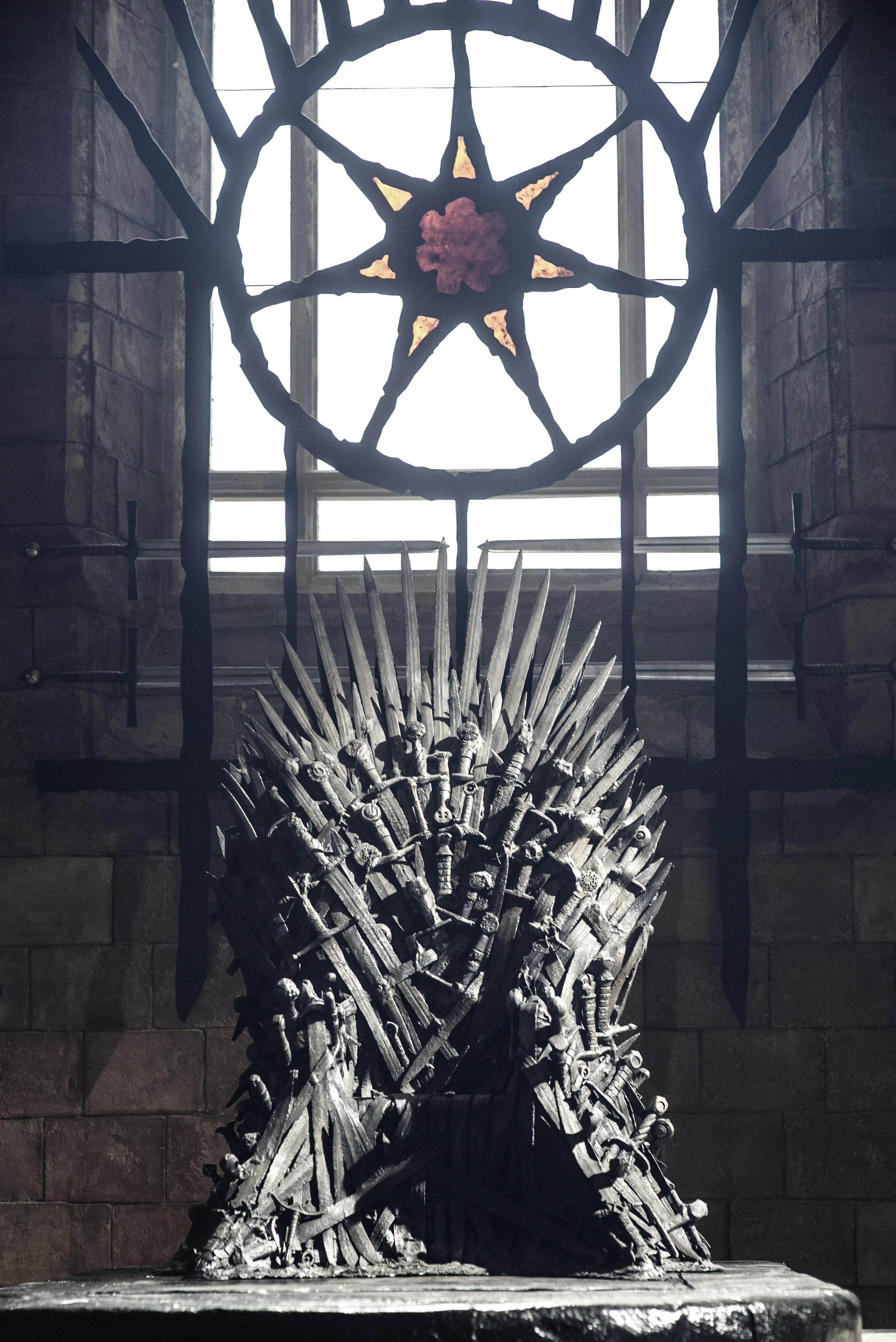
The crescendo of the pyrotechnic spell which the speakers had been steadily constructing over the course of the night came in the final empyreal performance by Moira Finucane, who fully earned her description as a ‘writer, director, performer and creator of volcanic and magic realist worlds … and intimate theatrical spectacles, internationally renowned for her arresting mix of provocation and entertainment.’ Bedecked in a shimmering black gown and headdress somewhere between the Statue of Liberty’s aureolic diadem and Westeros’ Iron Throne, she emerged onstage swaying and arm-waving in time to cosmic strains. ‘Kingdom Animalia,’ she intoned in the commanding resonant boom of an elven queen. ‘Phylum Chordata, just like us. Not like us, Class Aves,’ she continued as if reciting words of power. ‘Family Alcidae, Genus Pinguinnis, Species Impennis.’ This scientific classification of the now-extinct great auk launched an abstracted traipse through humanity’s relationship with the planet as viewed through writings both dramatic and innocuous, from Proverbs 26:11, to the cruel 1794 words of sailor Aaron Thomas on the ill-fated penguins, to Charles William Beebe on extinction in 1906, to Rachel Carson in 1962, to 2018 personal correspondence from another Indigenous environmental firebrand, Eleanor Dixon (‘a genius with 60,000 years of understanding of her land’) to Stan Grant in 2016 and Desmond Tutu in 1999.

Though her declamatory style courted the absurd and at times dipped into the ridiculous, Finucane performed with such ardor and conviction that a possibly skeptical audience stayed with her, tittering only, perhaps, as intended, when the monologue descended abruptly from the grand themes of environmental destruction to supplying the tangible details of how to contact the Northern Territory Chief Minister’s Office to express concern over the impact of fracking on the tourism industry, all while maintaining its grandiose delivery.

Paraphrasing Tutu as she slowly departed (perhaps significantly to stage left), she encouraged her viewers to keep ‘trending, trending, trending towards the good,’ and left the audience in the lingering strings and darkness to awaken with the lights as if from a dream.

If the gala is a sign of what we are to expect from the Wheeler Centre in 2018, it will be an impassioned, diverse, provocative, progressive year indeed.

Thanks for reading

LPL

Sunday, 5 August 2012

A small addendum for the los angeles review of books

Sunday 5 August 2012

This morning in the course of my internet rounds I came across a fascinating LA Review of Books article by Matthea Harvey investigating the relationship between tennis and poetry. I was disappointed, however, at the omission of my favourite tennis-related passage in literature, and what I think is one of the most beautiful tracts of prose in all Western literary canon. Continuing in the lazy (busy) man's blogging tradition I started with 'Cloud atlas and the left', I've decided to post this passage as a small redress for the overlooked literary tennisphile, Vladimir Nabokov.

The passage comes from Lolita, when a tennis game as decidedly mundane as the titular character's is transmuted in the eyes of the narrator Humbert Humbert into 'the highest point to which [he] can imagine a young creature bringing the art of make believe':

She would wait and relax for a bar or two of white-lined time before going into the act of serving, and often bounced the ball once or twice, or pawed the ground a little, always at ease, always rather vague about the score, always cheerful as she so seldom was in the dark life she led at home. Her tennis was the highest point to which I can imagine a young creature bringing the art of make believe, although I daresay, for her it was the very geometry of basic reality.

The exquisite clarity of all her movements had its auditory counterpart in the pure ringing sound of her every stroke. The ball when it entered her aura of control became somehow whiter, its resilience somehow richer, and the instrument of precision she used upon it seemed inordinately prehensile and deliberate at the moment of clinging contact. Her form was, indeed, an absolutely perfect imitation of absolutely top-notch tennis -- without any utilitarian results [...] My Lolita had a way of raising her bent left knee at the ample and springy start of the service cycle when there would develop and hang in the sun for a second a vital web of balance between toed foot, pristine armpit, burnished arm and far back-flung racket, as she smiled up with gleaming teeth at the small globe suspended so high in the zenith of the powerful and graceful cosmos she had created for the express purpose of falling upon it with a clean resounding crack of her golden whip. 

It had, that serve of hers, beauty, directness, youth, a classical purity of trajectory, and was, despite its spanking pace, fairly easy to return, having as it did no twist or stung to its long elegant hop. (262263)

Here we witness Lolita's deification, her ascension up the ranks of ancient mythology from nymphet to deity – the nymphs were, afterall, spawned of the gods  celestial and potent, beautiful and terrible, creator and destroyer of worlds, endowed with, instead of an ordinary tennis racquet, something altogether more divine, like Artemis' silver bow, a golden whip. 

I must say, though, I prefer to imagine Humbert talking about Ana Ivanovic here than little Dolores Haze.

This is, of course, Nabokov, so there's more going on here than just a celebration of tennis, or even the surface-level attraction of the narrator to 'his' Lolita. This ode to the game is wrapped up into the novel and imbued with meaning, like everything else. I think there's something in the way Humbert apotheosises Lolita, the way he immerses her in abstract systems which she manipulates and controls ('white-lined time', 'the very geometry of basic reality', 'her aura of control', 'a vital web of balance', 'the powerful and graceful cosmos she had created', even 'the service cycle' and the almost illicit 'act of serving') that speaks of agency. It's as though by empowering his victim, significantly just before Humbert is called away from the court by a fake phone call, a scheme of Lolita's to aid in effecting her escape, he makes it appear she is more in control of her situation than the we otherwise might think and, therefore, by extension, Humbert becomes less a villain.

References

Vladimir Nabokov's 1955 novel Lolita, published by Penguin.

Lucas Dawson's 2009 photograph of Ana Ivanovic.

Tuesday, 11 October 2011

Miranda devine: enemy of the heart, the mind, and vegetarianism (part one of three)

Tuesday 11 October 2011
(updated Friday 14 October 2011)

I've had a post about eating meat, in a fragmentary, incipient form, drifting around mournfully in Tintin's purgatory for some time now, awaiting that catalyst I was talking about in 'The urgency of nonfiction' to call it into being, when who should publish an article on the subject but my favourite News Limited columnist. Y'know. Just to get the content of this blog up to a healthy 300% responses to Miranda Devine. Articulating my views on the subject and critiquing Devine, however, caused this piece to swell to a gargantuan size, so I'll post it all in three parts instead, with part one focusing on deconstructing Devine's argument, and parts two and three responding to that argument in order to detail my own.

Devine's opinion piece, 'Everybody hurts, but we've all got to eat', delivered in her trademark casuistic style, is a critical response to an earlier article that appeared in The Australian, authored by Michael Kirby AC, CMG (that's Companion of the Order of Australia and Companion of the Order of St Michael and St George, for those of you not up on your orders of chivalry), highly respected public figure, influential academic, eloquent orator, former Justice of the High Court of Australia the highest court in the land and the final court of appeal in the Commonwealth, invested with the authority to rule on matters of the constitution, and possessing the recently demonstrated power to overturn the expressed will of the Parliament. Seriously, Miranda. Go home. You're out of your league, here.

But in examining the piece, I think I've come to a realisation about why it is, specifically, that Devine infuriates me so much. She constantly makes herself an enemy of the two characteristics I value above all else in life: empathy and critical thinking. And I think my criticisms of the piece can largely be organised along these lines, I suppose because the errors she makes in it are moral (empathetic) and rhetorical (critical).

Empathy first. The piece, which contains numerous derogatory references to 'sentimentality', makes Devine's contempt for 'excessive' compassion known from its opening, when she patronises Kirby for his sensitivity: 'It sounds very kind to swear off eating meat because you looked into the eyes of a cow, which former High Court judge Michael Kirby explains as the reason for his latter day vegetarianism'.


That crazy old coot! Getting all choked up, letting his emotions run away with him, going to all that trouble to make a drastic lifestyle change, and for what? 'Cause he got up a little too close and personal with a bloody bullock!

Now, as I said above, Kirby was a judge, and when you're working with the law, you have to be 'judicious' with language. Understandably that's a foreign concept for Miranda, but it doesn't give her licence to take what I'm sure were Kirby's carefully considered words, rearrange them, and then blame him for it. 'Animals raised for slaughter' she quotes from Kirby, 'cannot explain the suffering, pain and fear they feel. But humans who empathise sufficiently, can do so.'

'In other words', she garbles, doing what she does best, 'those of us who eat meat do not have sufficient empathy. Thanks, your worship.'

See, no. You don't get to do that. 'Other words' is right. I know someone as semantically challenged as you might find it hard to believe, but there's a subtle and important difference between 'not empathising sufficiently' and 'not having sufficient empathy'. By changing 'empathising' (verb) into 'empathy' (noun), you've also changed the word modifying 'empathising', the adverb 'sufficiently' into the adjective 'sufficient' and made the verb 'having'. You've taken it from not performing a process to the right extent, to not possessing enough of a quality. If Kirby had meant 'not having sufficient empathy', I'm sure that's what he would've said. Honestly!

Later Devine similarly misrepresents vegetarians and animal rights activists altogether, saying that 'this creeping idea that "meat is murder" is just moral vanity', that 'vegetarian moralising is [being] thrust down our throats' by the likes of Kirby and US author Jonathon Safran Foer, and that animal activism is simply the 'parasitical companion' of this moralising. Firstly, what a bitch! And secondly, did I just read a CONSERVATIVE CATHOLIC COLUMNIST complain about MORALISING!? I only ask because I couldn't concentrate properly over the sound of that pot and kettle being repeatedly smashed together in my ear. Far out.

Animal cruelty is continuing on a massive scale, and we know it is. The industry is a major contributor to climate change. Animals experience fear, pain, affection, and many of the other emotions we do, making the view that unnecessarily killing them for our own enjoyment is bad a reasonable one. To reduce the often heartfelt and profoundly personal decision of millions to forgo meat andor take up the fight of animal welfare, in the face of all of this and more, to a mere 'moral vanity' or 'parasite' is staggeringly callous and inaccurate. And to charge Kirby, of all people, with thrusting moralising down the public's throats is a sickening untruth. His articles are imbued with the sense of a wise, sensitive, loving man calmly laying out his ratio decedendi, submitting it to the public forum, gently coaxing you with carefully laid sentences to consider his point of view. Nothing like the coarse, poorly reasoned diatribes of Ms Devine, shamelessly appealing to the lowest common denominator thrice weekly.

It takes cold cynicism to misrepresent Kirby the way Devine does. I think he's best vindicated by a quote from another of his articles on the issue where he praises Australian philosopher Peter Singer for not seeking 'to convert the unwilling', for recognising that 'many people are at different stages on the issue of animal welfare.' Do those sound like the compliments of an absolutist ideologue determined to force-feed his opinions to the public like a bowl of vegetables?

Furthermore, the idea that meat is murder is actually quite a credible one. Fair enough, you don't have to agree but, you know, murder involves killing something and eating animals involves killing something. The similarities are remarkable! In fact, under the laws of logic Miranda usually subscribes to, that would make them exactly the same thing (cf Devine's Dictionary entry for definition of 'detrimental fatherlessness').

Which leads me to the critical thinking side of things. The keystone of Devine's argument in the piece is that 'scientists discovered that plants have feelings too'. She concedes that 'most people feel sadness at the death of animals' and confesses to her own brief stint with vegetarianism, which she says came to an end with the revelation that some plants can experience pain. Incidentally, I love how the results of a couple of studies by scientists are enough to convince her to recommence eating meat, but the overwhelming consensus of every national scientific association in the world, without any reputable dissenters, isn't enough to convince her of the threat of manmade climate change.

'The point is', Devine declares, 'that if you took sentimental thoughts about food to their logical conclusion, you wouldn't eat at all.' That sentence really does encapsulate her contempt for empathy in others and her inability to reason with any depth. I mean, if you take anything to its logical conclusion you get a ridiculous result. If you take political correctness to its logical conclusion, you get a stifled society. If you take Christianity to its logical conclusion, you get America. If you take capitalist-fuelled carnivorism to its logical conclusion, you get the KFC Double Down. It's about how far you want to take it; it's about which point along that line you think is right and reasonable.

Personally, I'm unconvinced that automatic hormonal reactions and chain sequences from one plant to another catalysed by external factors constitute any evidence of plant sentience, neither in terms of perception or communication; evolution has had many other incredible effects elsewhere without causing speculation that the organisms displaying those effects are somehow self-aware. Science may prove me wrong one day, but it's beyond the point: Devine's simplistic conclusion is that abstaining from meat doesn't make sense because no matter what you eat you are causing pain and killing something. This logic pretty much justifies cannibalism. If there is no scale of value for different forms of life, if killing a plant is the same as killing a pig, then so too is it the same as killing a person. This is starting to become a pattern in Devine's work: over-generalisation. It's a mistake infants make during language acquisition. Just as children whose fathers have abandoned them are the same, in Miranda's eyes, as children with two mothers, eating vegetables is just as bad as eating animals because they both 'feel pain', even though animals necessarily have a much greater capacity for suffering. I will expound upon these issues further in part three.

For now, vegetarianism is plagued by this kind of one-dimensional thinking. You either have to go the whole way or no way; you're carnivore or vegan; you're a realist or an idealist hippie, but this isn't the case. It reminds me of a clip from US talk show The View that I came across on YouTube one night in Santorini during a glut of 'cyperactivity' after too long without internet access, in which vegan actress Alicia Silverstone (seemingly) snubs former Survivor: Australia contestant Elisabeth Hasselbeck, one of the show's conservative panel members, over her earlier argument with Rosie O'Donnell. What she then says in terse response to Hasselbeck's comment that she always questions 'vegetarians that walk around with leather shoes' sums it up: 'Well I likeI'm happy when anybody does anything good, so it's okay if they are veggie and have leather shoes'. SHUT DOWN. More eloquent is a quote from vegan podcaster, Colleen Patrick-Goudreau, whose podcasts are available for free on iTunes, that I've been directed to by a newly vegan friend since I first wrote this post: 'Don't do nothing because you can't do everything. Do something. Anything.'

It's advice that could be used in any area of life. You don't have to be a vegetarian to acknowledge that it's the right thing to do, to aspire to that lifestyle. Kirby himself says

     I have not become a strict vegetarian. Still less a vegan. I eat eggs
     and see no moral problem with that whatseoever if the eggs are
     produced by free range chickens. I still eat fish, an inconsistency
     of which I am constantly reminded by my partner. But gradually,
     step by step, I continue to make moves towards the world of
     vegetarianism. But so far, I am not pure. Except when it comes to
     meat and poultry. They are out, banished entirely from my diet.

It's not about giving up meat 'cold-turkey', so to speak, in a blaze of self-righteousness. You can reduce your consumption, you can buy organic and free range, you can support animal rights, you can experiment with that magical set of ingredients that sometimes, somehow, can be combined in such a way as to make you not even realise there's no meat in your meal (cheese, tomato-based sauces, eggs, mushrooms, potato products and other carbs, and nuts).

But it's not enough for Devine to make an attack on empathy, to sully the debate with her one-dimensional arguments and distortions of those who disagree with her. No, she's got to take this opportunity to attack her most hated enemy, the educated, urban Left. It's one of her favourite topics. Particularly she revels in dichotomising it with good old fashioned, true blue, salt of the earth Aussie battlers. The farmers. The manufacturers. 'Labour's aspirational base'. It's something she knows all about, being a moneyed Liberal Partyvoting city-dweller who grew up in what she herself calls 'uber-urban' Tokyo. It's not those tye-dye-wearing, chai-latte-sipping, bicycle-riding, dreadlock-sporting, manmade-climate-change-believing, vegan-cafe-patronising, hyphen-using intellectually elitist Glebocrats like Kirby who empathise with the animals; it's the 'dwindling few who live on the land and grow our food'. Why? 'Because it is in their face every day.' It makes them 'more balanced people, more honest, more realistic than the citified others who prefer not to know.'

The citified others who prefer not to know. She does know how to turn a phrase, doesn't she?

'Not wanting to know' has nothing to do with Kirby, who cites animal welfare violations as one of the reasons behind his abandoning meat, and who YOU JUST QUOTED talking about 'the suffering, pain and fear' experienced by animals raised for slaughter.

IDIOT, GOSH!

And similarly, this citycountry binary has nothing to do with the issue; it just derails the argument. If it is wrong to eat animals, it is wrong regardless of whether people live in the country or the city. It's simply a way of Devine giving herself something to talk about. There are, I think, very few intelligent arguments you can make against vegetarianism (see part two), so she needs to find something she can sneer at and rail against in order to sound convincing and provocative. 

Devine's solution to 'bridging the gap' she has invented between city and country attitudes to death is poetry, a tactic I agree with but towards an end I don't. To deploy poetry, or any artform, against empathy seems to me a contradiction and, in a way, it does backfire. Her idea of 'bridging the gap' is city people realising that death is natural and shutting up about animal rights, but that didactic purpose is not necessarily served by the poem,'The Early Purges' by Seamus Heaney, which she credits Dr Greg Hertzler for citing:

     I was six when I first saw kittens drown.
     Dan Taggart pitched them, 'the scraggy wee shits',
     Into a bucket; a frail metal sound,

     Soft paws scraping like mad. But their tiny din
     Was soon soused. They were slung on the snout
     Of the pump and the the water pumped in.

     'Sure, isn't it better for them now?' Dan said.
     Like wet gloves they bobbed and shone till he sluiced
     Them out on the dunghill, glossy and dead.

     Suddenly frightened, for days I sadly hung
     Round the yard, watching the three sogged remains
     Turn mealy and crisp as old summer dung

     Until I forgot them. But the fear came back
     When Dan trapped big rats, snared rabbits, shot crows
     Or, with a sickening tug, pulled old hens' necks.

     Still, living displaces false sentiments
     And now, when shrill pups are prodded to drown
     I just shrug, 'Bloody pups'. It makes sense:

     'Prevention of cruelty' talk cuts ice in town
     Where they consider death unnatural
     But on well-run farms pests have to be kept down.

Any first-year literature student knows there's more to a poem than the surface-level meaning, and the narrator's voice is not necessarily the poet's, even in a highly autobiographical poem. 'The Early Purges' could just as easily be a lament for the loss of innocence, the hardening, the desensitising that comes with a hard life on the farm, as a criticism of 'prevention of cruelty' talk' and, in fact, I think the evidence supports that reading. If the subjects of the poem went to work killing the 'farm pests' with grim resignation, or even just indifference, perhaps Devine's interpretation would be more plausible, but first Dan Taggart and then the narrator exhibit a malignant attitude to the infant animals that goes beyond what they must do to maintain a 'well-run farm', calling them 'scraggy wee shits' and '[b]loody pups'. This suggests, perhaps, that the poem depicts the worldview that it does as a means of lamenting the necessity of this hardening of sentiment, this cycle of acquired callousness that must be perpetuated as a side-effect of farm life.

In part two and three, I'll respond to Devine's piece with my own outline of why I think vegetarian morality has it right.

References
Miranda Devine's 'Everybody hurts, but we've all got to eat', in The Sunday Telegraph, Wednesday 5 October 2011.

Seamus Heaney's 'The Early Purges'.

Michael Kirby's 'Animals deserve our protection', in The Australian, Saturday 1 October 2011.

Michael Kirby's 'Sense and sensibility about our fellow sentient creatures', in The Sydney Morning Herald, Friday 6 August 2010.